
What’s your plan for dealing with unforeseen circumstances in business?

What’s your plan when a business problem pops up that is totally unforeseen? What’s your order of response to an event that is unanticipated, troublesome, and not even your fault?

Who steps up to represent your organization? Who determines how you are going to react? What are you going to tell your customers? What are they going to say when media comes knocking on your door?

Few, if any, really foresee a “black swan” event

Nobody really expects a “black swan” – an unpredictable event beyond what is normally expected of a situation and that has potentially severe consequences for one’s business.

What kind of “black swans” are we talking about?

Events like COVID-19, a workplace accident that results in injury or even death, the actions of a disgruntled employee who is identified with your organization, slowdowns in the supply chain that affect your operations, to name a few.

The event does not even necessarily have to be your fault. It can be something that affects your industry, like a slowdown in the supply chain, a weather event that disrupts flights and operations, or an economic event that has an influence in your business category.

Unanticipated events happen and you need to have a basic outline prepared to deal with them.

When was the last time you looked at your crisis plan?

Good news: most organizations already have crisis communications plans prepared.

According to a PR crisis survey that PRNEWS and CS&A International, a specialist risk, crisis, and business continuity management consultancy, conducted in late 2019, about 62 percent of companies have crisis plans.

The bad news is that once the crisis plan has been prepared, it is often jammed into someone’s file and gathering dust and forgotten. According to the same PRNEWS survey, “it’s uncertain how many regularly update them (crisis plans). In addition, few companies consistently practice crisis scenarios.”

Why are these plans forgotten? Primarily because no crisis has occurred and there has been no reason to look at the plan. Or because personnel change and no one can remember who wrote the plan or where they put it.

No matter what the reason the plans “disappear,” crisis plans can easily become outdated or misplaced. And that puts you and your business in peril.

Crisis plans need to be reviewed annually…even if it takes only 15 minutes

Overseeing a crisis plan doesn’t require an entire day of your organization’s time.

In fact, it can take about 15 minutes a year once it has been prepared.

Your review needs to address questions like:

  • Is the general plan still current?
  • Has the contact information in the plan changed?
  • Who oversees the plan?
  • Do we know how to find the plan when we need it?
  • Has our industry or situation changed so that the changes require us to modify our plan?

Who’s in charge of your crisis plan? And who keeps it updated?

Theoretically, your CEO or COO is responsible for your crisis planning and response.

In reality, someone in the lower ranks, or an outside resource, is responsible for crafting the plan, testing it out, and keeping it updated.

It’s important to ensure that someone in, or connected to, your organization is clearly in charge of crisis communications planning and stays in touch with its basic response actions. This same person should be the one to review the plan and call management’s attention to any changes that require the buy-in of the entire organization.

So what does Wellons Communications have to do with crisis planning?

Wellons Communications serves to write crisis plans, test them out, freshen them up when required, and, in an actual crisis, act as either the spokesperson for your organization or prepare your designated spokesperson’s response.

In short, we stand at your side and help guide your response so you immediately can communicate your side of a story to four key audiences:

Your employees: let them know that your only point of communication is whomever is designated as your spokesperson.

Your customers: tell them what is going on and what you are doing to address it.

Media: Identify one person (by name, title, and contact information) who is your spokesperson and how to reach them. And keep in mind that media includes both consumer media and trade media.

Your industry: if your business category is caught up in the crisis moment, let your industry association know what you are doing and who is speaking on your behalf.

Pre-empt crisis response now…by reviewing your crisis plan

Chances are you already have a crisis plan in place…or have, at least, thought about it.

If you have a plan established, look at it and update it. If you don’t have a plan formalized, put one in place, even if it’s only one page.

If you anticipate that you need—or may need—crisis planning assistance and crisis response assistance, consider our Orlando PR firm and let us help you put a plan together, conduct a run-through to see how it works, and stand by your side in the event you need to respond to a crisis.

And remember, those “black swans” are only a moment way…and you need to be prepared to address them if they occur.

How up-to-date is your crisis communications plan?

If you run your own business—or oversee a significant operation of someone else’s business—you are always conscious that you are only one mishap away from an incident that could derail all the hard work you have put into establishing the good name and reputation of your enterprise.

It could be an accident that causes injury or death to a customer or an employee.  It might be someone losing control of a vehicle and crashing through your front window. It could be someone protesting a cause and selecting your business as the target of whatever they are espousing. It could be a tornado that sweeps through your location and causes major damage.

The point is that all businesses and organizations are subject to experiencing some form of crisis. And, in the face of that gloomy reality, it only makes sense that one needs to be prepared with a basic crisis management and communications plan.

Incidents may not necessarily be your fault

Crisis communications-related incidents know no boundaries.

As often as not, crisis situations are triggered by safety or operational issues that happen in your industry. And when they occur, you can potentially be caught in the flurry of communications that inevitably surrounds the crisis.

For example, unruly passengers acting out on airplanes trigger focus on the entire airlines industry and can even extend to other transportation businesses like trains and busses. An outbreak of salmonella or e-coli in a restaurant can result in media focusing on issues like “How clean are dining establishments in our area.” A cyberattack from a foreign nation could disrupt your ability to supply services to your customers.

You may not be at fault, but because someone else has experienced or created a bad outcome, you may get caught in the crossfire.

Be prepared….and stay prepared.

A survey conducted in late 2019 by PRNEWS and CS&A International, a specialist risk, crisis and business continuity management consultancy, reveals that while 62 percent of companies have a crisis communications plan, there is great uncertainty about how many organizations regularly update their plans.

The same survey suggests, in addition, few organizations consistently practice crisis scenarios.

In short, they put the plan on the shelf to gather dust and fail to review it frequently enough to be of any value. The survey also goes on to reveal that almost 40 percent of companies lack any kind of crisis response plan.

By failing to remain in touch with one’s crisis plan, should a crisis-related incident occur, one’s response to the incident will be slow, confused, lacking clarity, and likely putting an organization in a defensive posture.

If a crisis incident occurred, what would you do?

Who would you call? Who should be called? How do you reach them? Who will investigate what is happening? Who should be speaking with media? Who should be representing your organization? How do you reach legal representation to ensure that whatever you say does not put you at risk?

From an operational standpoint, what immediate changes must you undertake in response to the incident? Remain open? Modify your operation? What do you tell your customers? What do you tell your employees? Who will do the communicating?

These are only a sampling of the kinds of questions you would be faced with. And you can bet your bottom dollar these questions will need to be addressed in the first moments of a crisis.

Without a plan, events spiral out of control

Per Dirk Lenaerts, senior partner at CS&A International, who oversaw creation of the survey referenced earlier, “Many companies struggle with reacting quickly and getting organized when crises strike. This is yet another reason why practicing is so important,” he said. According to the survey, respondents chose “reacting quickly” as “the most difficult aspect of crisis response.”

No crisis communications planning, of course, can foresee all types of incidents, but there are common elements that one’s plan should contain that will provide an orderly and managed response to whatever has occurred.

In that context, it suggests that two actions can provide a foundation for crisis response:

  1. Create a plan
  2. Practice and review the plan elements

At Wellons Communications, we know how to deal with crisis management

Businesses like to state, “We’ve seen it all.”

That is an overstatement, of course, but we can confidently state that our team at Wellons Communications has certainly seen enough.

We have served clients who have been well-prepared for a crisis. We have also assisted clients who never envisioned having to deal with the media firestorm that erupts in the wake of a crisis incident.

We have created crisis plans from scratch. We have updated crisis plans. And we have served as the driving force to execute on crisis plans, as necessary.

If your business is prepared for a crisis, congratulations. We hope you stay prepared.

However, if your business needs a crisis plan or needs a partner to assist you in dealing with crisis communications, think of our Orlando PR agency.

We are experienced and well-versed in what actions to take (and not take) to help you maintain your reputation. And, in the end, maintaining your organization’s good name is what our job is about.

Crisis communications: How prepared is your business?

clipboardWhen you hear “crisis communications,” your first reaction might be “It won’t happen to me.” After all, you’re just a business—not the target of something you’d see on the news.

And you’re right—mostly. While you probably won’t suffer some kind of incident that will make major headlines, the rise of social media has made it much more likely that your business will face some kind of crisis situation.

Because there is a possibility, you need to have a crisis communications plan in place now.

What kinds of crises are we talking about?

There are different degrees and types of “crises.”

Any one of them could have an enormous impact your business. Indeed, any of these types of crises could happen to you and they don’t have to make headlines to have a meaningful, negative, effect on your business. Here are some examples of impactful, but often unseen, kinds of crises that affect businesses with more regularity than you might suspect.

Negative actions by a former employee. These can range from someone sending harmful emails to your key client database to someone going to the local media and spreading negative misinformation, creating a false image of your organization.

Criminal activity involving an employee. What would you do if you discovered that one of your employees had been arrested for embezzling organizational funds? Or had been arrested for sexual abuse against children? How would you respond if an ex-spouse showed up at your business and took threatening action against their ex?

Negative spotlight on your business category. How well prepared are you to respond to client or media inquiries about a sharp sales downturn in your product or service category? What about some kind of inquiry about the safety or reliability of products or services in your particular category?

It doesn’t have to be your fault to call attention to your business. Media often call on anyone in a particular industry to add context to a story.

Need specific examples? How about the safety of Johnson & Johnson’s baby powder? Or the recurrence of E. coli or salmonella in Chipotle’s restaurants? If you market a product related to parents or operate a restaurant, there’s a good possibility you can get caught in the news fallout, even if it is someone else’s problem.

Need examples closer to home? How about the shooting at Orlando’s Pulse nightclub? Or the disappearance of the 2-year old who was attacked by an alligator at Walt Disney World? What about the impact of hurricanes on Central Florida and their disruption of normal working cycles on businesses?

How to handle a public relations crisis

Thanks to the interrelationship of social media and mainstream media, an incident can morph into a full-blown crisis in just a few hours.

If you have a well-constructed crisis management strategy, backed-up by a regularly-conducted rehearsal program to test it out, you are in position to deal with the crisis.

Such a plan will enable to you quickly interact with your clients, the leaders and influencers in your category, media, and any other audiences that are important to you. Even a short, basic plan identifying your key audiences (along with their contact information) will position you to address an unseen crisis in a businesslike, responsible manner.

How do you create a crisis plan?

You can create your own plan.

Or you can call on the seasoned professionals at Wellons Communications to create a plan for you.

Our team members have served both sides of crisis management (the media side and the client side) and have first-hand knowledge of how effective a good plan can be. They have also seen the disastrous results that inevitably occur when a business lacks crisis planning.

We will be happy to provide you specific examples of the kinds of crises we have addressed in the past. More importantly, we will listen to you, learn about your business and better understand what kind of readiness you need to have to address a crisis situation.

Let’s discuss how we can ready your business to be prepared to address a crisis situation effectively and professionally—and before it ever happens.

Call us (407-339-0879) or email us at will@wellonscommunications.com to start on your crisis communications planning.

What do your customers really think of you?

Everyone wants to know what others think of them—and when they find out, they want the perception to be positive.

But how much time and effort do you put in to finding out how your customers know about and perceive you? How often do you ask yourself, “How much do I understand about the needs of my client and how do I address or solve that need?”

Do you make the time for your customers?

Marketing revolves around two parties: you and your customers.

Marketing your product or service will succeed only if your customer has a need for what you sell and understands how it meets their need.

That sounds simple enough, but as business quickens, it’s easy to find yourself spending all of your time addressing planning, production, organization, marketing, distributing, personnel management and other key business operating issues.

So, who gets left out? Often, it is your customer. Who is really talking to them or listening to what they have to say?

Your client is always number one

Meeting the needs of your customer is why you exist in business. If they succeed, you succeed…and grow.

Your customer is always the best source for feedback.

But how much do you know about your customer? Do you actively seek feedback? And what does that feedback say?

Central to everything is the satisfaction and well-being of your customer. They are, indeed, number one and should be treated accordingly.

Personal interaction is a must

If your customer is an individual, building that relationship can be as low-tech as a phone call once a month. It can be built by asking “How is your business doing?” or “What can we do differently that will help add to your business?”

Your client relationship can be enhanced by providing the customer with new and different information. If you recognize a trend that is an opportunity, let your client know. If you see a competitor doing something differently, be the first to tell your client.

The point? Interact with your client. Interact with them frequently. Encourage customers to make time to spend with you. Ask them questions. Listen for what’s important to them.

Seek feedback on a broader basis

Is your client plugged in to what their audience says about them? What are they saying? Are sales going up or down? What’s working? What’s not working?

Conducting research like this is essential in marketing, and it’s essential to share this information with your key marketing resources, like advertising and PR agencies. It is extremely valuable, and with it, you can drive sales to heights you never imagined.

We truly value our clients…and let them know it

At Wellons Communications, our clients are, indeed, why our business succeeds and grows. We value each and every one of them. We stay in close touch with them on the phone, in person, online, and in the actions we take on their behalf.

We want our clients to perceive us as a member of their staff—and not just any member, but a highly productive and valued staffer who is instrumental in their success and growth.

After all, our clients are the sole reason why we are in business.

Find out more about how we treat our clients and how we can help you further your overall marketing efforts with effective, results-oriented public relations and publicity programs. I’m available to help you improve the perception of your business at 407-339-0879 or at will@wellonscommunications.com.

UCF Knights: Marketing and Football Champions

While people across the country held their breath watching Alabama’s last-second defeat of Georgia in the College Football Playoff National Championship on Monday, some in Orlando slept soundly.

UCF Marketing ChampionsWe can only assume the athletic department staff at the University of Central Florida was among them. Why? They weren’t concerned with who would be named the national champion—because they had already declared themselves the true champions.
The Knights were the only undefeated team in college football this year. They took down the Auburn Tigers (who had previously beaten Alabama and Georgia) in the Chick-fil-A Peach Bowl. Without a chance to compete in the playoff, they did everything they could do.

While it’s true many have laughed UCF’s claims off, that’s not the point. Whether UCF deserves the title isn’t the point, either.

The point is that this is one of the best marketing moves of 2018 so far, and someone at UCF knows what they’re doing. With controversy comes discussion. So far, the announcement has given the school free publicity in top national publications, such as The Washington Post, Yahoo Sports, USA Today, and ESPN.

Now, the best season UCF has ever had—and might ever have—will result in obtaining top recruits, national recognition and better fan support.

What UCF does with that depends on what the Knights do next season—but they are certainly setting themselves up to have a better chance by making the most of their momentum now.

Building on momentum is something we do a lot here at Wellons, so if you have marketing questions of your own, let us help you take a page from UCF’s playbook. Don’t hesitate to reach out at 407-339-0879 or at will@wellonscommunications.com.

What companies can learn about crisis PR from the United Airlines leggings incident

On Sunday morning, a United Airlines gate attendant barred two teenage girls from boarding a flight from Denver to Minneapolis because they were wearing leggings. News of the leggings incident went viral, and within hours, United Airlines had a PR crisis on its hands.

The incident started when Shannon Watts, political activist and founder of Moms Demand Action, overheard the exchange and tweeted about the incident to her followers.


The airline responded to the public backlash with its own tweets to explain the incident.   


The company also issued a release explaining customers are welcome to wear leggings on its flights. The release explains that United views employee pass riders as representatives of the company and expects them to be appropriately dressed for flights.


Though United responded quickly to the crisis, customers, activists and even celebrities such as Chrissy Teigen and Patricia Arquette have expressed anger about the incident.

Jonathan Guerin, a United spokesperson, said himself the airline should have done a better job of responding to the situation. According to Reuters, Guerin said, “We’ll definitely take something away from today, but we’ll continue to engage with our customers (on social media).”

So what can other companies take away from this viral situation when facing their own crisis?

First, never underestimate the power of social media. Incidents today don’t stay contained, and with Facebook and Twitter, angry customers have an easy—and potentially viral—outlet.

Second, be sincere. Many considered United’s response to the issue stilted or unsympathetic. As per the Reuters article, Guerin said the company could have been more clear in its initial response to the issue.

Finally, have a plan for your social media outlets. United did a great job of responding to a potential issue quickly and telling its side of the story, but because the initial response was bungled, it backfired. Know what kinds of feedback you need to respond to, what you’ll say, and in what format you will respond.

After all, the best way to handle a crisis is to prepare for it before you’re facing it. If you need help crafting your plan, give us a call. At Wellons Communications, we have experience in social media and in handling crisis situations, and we can help you put your best foot forward. Give us a call today at 407-339-0879.

Have a Laugh: Use Humor on Social Media

Dr. Seuss once said “From there to here, and here to there, funny things are everywhere.” This couldn’t be more true for social media. When brands get in on the humor, social media is even more fun. Here are 3 reasons why your brand should consider using humor on social media:

Attention Grabber: We all mindlessly scroll through our social feeds during the day, sometimes it’s the same information, over and over again. When a funny video, picture or post pops up on the screen, you can bet we’re going to stop, read it and like it.

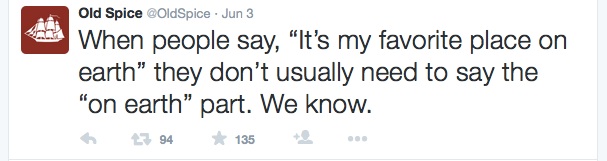
Old Spice TweetRelatable: Humor shows that brands have a human side. They don’t always take themselves too seriously, and can laugh. Relating to your audience is a guaranteed way to increase engagement.
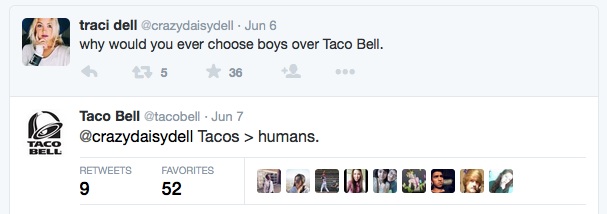


Taco Bell Tweet

Memorable: When your audience sees a funny post, they’re more likely to share it and remember it when it comes to making a purchasing decision. Take advantage of this by creating memorable content. Take this Virgin America post from Thanksgiving 2014, for example:

Virgin America Tweet

Taylor Swift: Always In The Spotlight

Taylor Swift Bad BloodTaylor Swift is everywhere. She’s won countless music awards, her songs play on almost all radio stations and her photos can be found online and in magazines. Clearly, she’s hard to miss.


Now it seems that Swift keeps getting into disagreements with other fellow musicians, such as Katy Perry and Nicki Minaj, although her feud with the former is ongoing.

So what’s the big deal? Why do people keeping “picking” on Swift? Are these musicians really jealous of her and her achievements? Or is there something underneath all the flustering?

Could it all be due to a typical Hollywood hoax, to stir up public attention for these artists?katy perry vs taylor swift

No information has been found to support such a theory, but the constant “hate” Swift gets seems somewhat intentional and timed.

For example, recently Nicki Minaj posted a tweet in which it was very apparent she was talking about Taylor Swift. Katy Perry decided to quickly jump in with a tweet to not so subtly offend Swift. Swift then responded by sending a tweet of her own basically denouncing Minaj for what she said. Minaj again tweeted a response to Swift saying that she wasn’t actually talking about Taylor and that she was still in her good graces, and Swift did the same. All in the same day.

These ladies all have PRtaylor vs minaj teams who monitor everything they wear, say or do, so wouldn’t these professionals stop them whenever these stars post controversial tweets or photos?

Or is it all part of the plan?

Every time a celebrity gets into a feud with another celebrity, it always becomes news. These “feuds” garner public attention, as well as admirers. Everyone loves a good show, and these situations provide just that: a good show!

If this were true, their PR teams show that they know what “sells”. They know how to get the public’s attention and keep it. This is an important skill for any PR professional. These artists’ PR teams know who they are targeting and will give them exactly what they want. Likewise, in other types of PR, it is also crucial that professionals know their target audiences and give them what they like, in the manner that want it, i.e. social media to reach millennials and younger generations.

Donald Trump: Promoting his Brand

donald trump photo

We’re all aware of the media circus surrounding Donald Trump these past few weeks. It seems that every day Trump makes yet another statement offending a specific group or person, such as those towards illegal immigrants and John McCain. Just yesterday he read aloud Republican presidential opponent, Senator Lindsey Graham’s private cell phone number. Traditional PR would condemn such practices, especially when a prospective candidate is trying to make a name for himself in the political arena; however, according to several political polls such as the Washington Post-ABC News polls, he is currently the GOP frontrunner.

People Love A Good Show

As a part of a good PR strategy, one must be able to attain and keep the public’s attention. No doubt Trump is doing that. His controversial statements seem to occur more and more frequently as time moves forward, ensuring that he is in the news constantly. All this attention is contributing to his early support.

Donald Trump is a business man. He knows how to market his products and services well. He knows how to promote his brand.  He has been able to keep himself in the public spotlight for many years, which is no small feat.

And while the Trump route is not the recommended path, it seems to be working for him for the moment.

The real question is will Trump’s recognition as a prospective political candidate for 2016 continue to increase? Or has he peaked in popularity?

PR Lessons: Ariana Grande says “I hate Americans”

Looks like Ariana Grande has one more problem. The singer was recently recorded as saying, “I hate Americans, I hate America.”

The security footage went viral, with Grande’s words making headlines.

In the video, you can see the former Nickelodeon star and her friends covertly licking a doughnut on a display counter. Grande was recorded licking the doughnuts not once, but twice. After inquiring about a tray of over-sized doughnuts, Grande was recorded saying “What the #^&% is that? I hate Americans, I hate America.”

Watch for yourself here:

As the video got more popular, Ariana Grande sent a statement to several outlets including BuzzFeed News, saying:

I am EXTREMELY proud to be an American and I’ve always made it clear that I love my county*. What I said in a private moment with my friend, who was buying the donuts, was taken out of context and I am sorry for not using more discretion with my choice of words. As an advocate for healthy eating, food is very important to me and I sometimes get upset by how freely we as Americans eat and consume things without giving any thought to the consequences that it has on our health and society as a whole. The fact that the United States has the highest child obesity rate in the world frustrates me. We need to do more to educate ourselves and our children about the dangers of overeating and the poison that we put into our bodies. We need to demand more from our food industry. However I should of* known better in how I expressed myself; and with my new responsibility to others as a public figure I will strive to be better. As for why I cannot be at the MLB show, I have had emergency oral surgery and due to recovery I cannot attend the show. I hope to make it up to all those fans soon. That being said let me once again apologize if I have offended anyone with my poor choice of words.

*Grande’s representative later corrected this to “country”.

*Grande’s representative later corrected this to “should have”.

What can we learn?

When fighting a public relations battle, apologizing is often a good course of action, but how you apologize will determine whether your apology falls flat. If your apology is not well-received, it can potentially do more harm than good.

Apologies should be sincere – In her statement, Grande never says that she is sorry for what she said, but only for how she said it. Whether her initial words were taken as anti-patriotic or as fat-shaming, no one got the apology they were looking for.

Quality of writing/medium is important – Grande’s statement had a few grammatical errors. This can be construed as a hurried, careless apology. Being thorough in a written, apologetic statement sets the tone for how your apology will be received.

Stay on topic – There was some speculation that Ariana Grande pulled out of performing at the MLB all-star game because of this incident. She says it is because of an oral surgery recovery. If the two are truly unrelated, there is no need to address the MLB performance in this apology.

2025 © Wellons Communications | Orlando PR Firm. All Rights Reserved.