
Crisis communications: How prepared is your business?

clipboardWhen you hear “crisis communications,” your first reaction might be “It won’t happen to me.” After all, you’re just a business—not the target of something you’d see on the news.

And you’re right—mostly. While you probably won’t suffer some kind of incident that will make major headlines, the rise of social media has made it much more likely that your business will face some kind of crisis situation.

Because there is a possibility, you need to have a crisis communications plan in place now.

What kinds of crises are we talking about?

There are different degrees and types of “crises.”

Any one of them could have an enormous impact your business. Indeed, any of these types of crises could happen to you and they don’t have to make headlines to have a meaningful, negative, effect on your business. Here are some examples of impactful, but often unseen, kinds of crises that affect businesses with more regularity than you might suspect.

Negative actions by a former employee. These can range from someone sending harmful emails to your key client database to someone going to the local media and spreading negative misinformation, creating a false image of your organization.

Criminal activity involving an employee. What would you do if you discovered that one of your employees had been arrested for embezzling organizational funds? Or had been arrested for sexual abuse against children? How would you respond if an ex-spouse showed up at your business and took threatening action against their ex?

Negative spotlight on your business category. How well prepared are you to respond to client or media inquiries about a sharp sales downturn in your product or service category? What about some kind of inquiry about the safety or reliability of products or services in your particular category?

It doesn’t have to be your fault to call attention to your business. Media often call on anyone in a particular industry to add context to a story.

Need specific examples? How about the safety of Johnson & Johnson’s baby powder? Or the recurrence of E. coli or salmonella in Chipotle’s restaurants? If you market a product related to parents or operate a restaurant, there’s a good possibility you can get caught in the news fallout, even if it is someone else’s problem.

Need examples closer to home? How about the shooting at Orlando’s Pulse nightclub? Or the disappearance of the 2-year old who was attacked by an alligator at Walt Disney World? What about the impact of hurricanes on Central Florida and their disruption of normal working cycles on businesses?

How to handle a public relations crisis

Thanks to the interrelationship of social media and mainstream media, an incident can morph into a full-blown crisis in just a few hours.

If you have a well-constructed crisis management strategy, backed-up by a regularly-conducted rehearsal program to test it out, you are in position to deal with the crisis.

Such a plan will enable to you quickly interact with your clients, the leaders and influencers in your category, media, and any other audiences that are important to you. Even a short, basic plan identifying your key audiences (along with their contact information) will position you to address an unseen crisis in a businesslike, responsible manner.

How do you create a crisis plan?

You can create your own plan.

Or you can call on the seasoned professionals at Wellons Communications to create a plan for you.

Our team members have served both sides of crisis management (the media side and the client side) and have first-hand knowledge of how effective a good plan can be. They have also seen the disastrous results that inevitably occur when a business lacks crisis planning.

We will be happy to provide you specific examples of the kinds of crises we have addressed in the past. More importantly, we will listen to you, learn about your business and better understand what kind of readiness you need to have to address a crisis situation.

Let’s discuss how we can ready your business to be prepared to address a crisis situation effectively and professionally—and before it ever happens.

Call us (407-339-0879) or email us at will@wellonscommunications.com to start on your crisis communications planning.
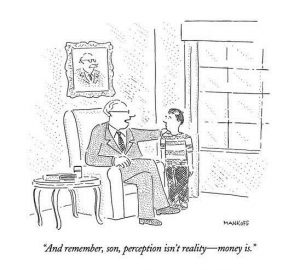

What do your customers really think of you?

Everyone wants to know what others think of them—and when they find out, they want the perception to be positive.

But how much time and effort do you put in to finding out how your customers know about and perceive you? How often do you ask yourself, “How much do I understand about the needs of my client and how do I address or solve that need?”

Do you make the time for your customers?

Marketing revolves around two parties: you and your customers.

Marketing your product or service will succeed only if your customer has a need for what you sell and understands how it meets their need.

That sounds simple enough, but as business quickens, it’s easy to find yourself spending all of your time addressing planning, production, organization, marketing, distributing, personnel management and other key business operating issues.

So, who gets left out? Often, it is your customer. Who is really talking to them or listening to what they have to say?

Your client is always number one

Meeting the needs of your customer is why you exist in business. If they succeed, you succeed…and grow.

Your customer is always the best source for feedback.

But how much do you know about your customer? Do you actively seek feedback? And what does that feedback say?

Central to everything is the satisfaction and well-being of your customer. They are, indeed, number one and should be treated accordingly.

Personal interaction is a must

If your customer is an individual, building that relationship can be as low-tech as a phone call once a month. It can be built by asking “How is your business doing?” or “What can we do differently that will help add to your business?”

Your client relationship can be enhanced by providing the customer with new and different information. If you recognize a trend that is an opportunity, let your client know. If you see a competitor doing something differently, be the first to tell your client.

The point? Interact with your client. Interact with them frequently. Encourage customers to make time to spend with you. Ask them questions. Listen for what’s important to them.

Seek feedback on a broader basis

Is your client plugged in to what their audience says about them? What are they saying? Are sales going up or down? What’s working? What’s not working?

Conducting research like this is essential in marketing, and it’s essential to share this information with your key marketing resources, like advertising and PR agencies. It is extremely valuable, and with it, you can drive sales to heights you never imagined.

We truly value our clients…and let them know it

At Wellons Communications, our clients are, indeed, why our business succeeds and grows. We value each and every one of them. We stay in close touch with them on the phone, in person, online, and in the actions we take on their behalf.

We want our clients to perceive us as a member of their staff—and not just any member, but a highly productive and valued staffer who is instrumental in their success and growth.

After all, our clients are the sole reason why we are in business.

Find out more about how we treat our clients and how we can help you further your overall marketing efforts with effective, results-oriented public relations and publicity programs. I’m available to help you improve the perception of your business at 407-339-0879 or at will@wellonscommunications.com.

Competing for attention in the Age of Distraction

Think for a moment about all the distractions that compete for attention in your work life.

Phone calls, texts, emails, meetings. Questions from employees. Questions from clients. Unanticipated interruptions. Add to this your personal life, which has the same ongoing level of activity.

WC#1-18, Jan 25, 2018The result? Very little time to stop and ask “Where are we, where are we going, how are we going to get there, and what are we going to say about ourselves that will help us achieve our goals?”

Now, put yourself in the mindset of your target audience and your clients. They suffer from the same busy professional and personal challenges you experience.

The point? Offices – and the people who manage and work in them – are enormously busy. In short, offices are centers of multi-tasking that offer little or no time to pause and contemplate the next steps.

Working in the Age of Distraction

Cal Newport, a computer scientist at Georgetown University, is the author of Deep Work: Rules for Focused Success in a Distracted World.

Newport points out that constant distractions that challenge our work life tend to dominate our work life. They take away from what Newport calls Deep Work, which is the ability to focus without distraction on a demanding task.

According to Newport, Shallow Work (the opposite of Deep Work) fragments and pre-empts one’s ability to come up with one of those benchmark “A-ha” solutions that can make your unique selling proposition stand apart.

Apply Deep Work to communications and you get a sense of how important it is to think differently and clearly, without distraction, and how it can transform how you go about your business and what you say about it.

You can get learn more about Deep Work in a fascinating report that recently was broadcast on National Public Radio.

Getting your message past the distractions

So, how does Wellons Communications help you succeed in the Age of Distraction?

We adhere to the notion of keeping it simple. We develop strategies, approaches, and messages aimed at battling through the communications clutter.

When possible, we use simple, declarative sentences. And we project the same message over and over again, using consistency to ensure that once we have captured attention, our message is reinforced until our audience has absorbed and agreed with it.

What does simplicity do for your marketing?

Our “keep it simple” approach delivers three key benefits to your overall marketing approach:

1. Simple messages are easy to understand.

2. Simple messages answer “What’s in it for me?”

3. Simple messages attract attention.

The most visual example of great message-making in its simplest form is a billboard. They are quick to read, present a single thought, and tell you what they think you need to learn.

Let us simplify your public relations and communications.

If you have read this far, you’ve been distracted enough. If our message has worked, we hope you will want to learn more about how Wellons Communications can assist you in marketing your product or service. You can reach me at 407-339-0879 or by email at will@wellonscommunications.com.

Believe me, I will be happy for the distraction.

UCF Knights: Marketing and Football Champions

While people across the country held their breath watching Alabama’s last-second defeat of Georgia in the College Football Playoff National Championship on Monday, some in Orlando slept soundly.

UCF Marketing ChampionsWe can only assume the athletic department staff at the University of Central Florida was among them. Why? They weren’t concerned with who would be named the national champion—because they had already declared themselves the true champions.
The Knights were the only undefeated team in college football this year. They took down the Auburn Tigers (who had previously beaten Alabama and Georgia) in the Chick-fil-A Peach Bowl. Without a chance to compete in the playoff, they did everything they could do.

While it’s true many have laughed UCF’s claims off, that’s not the point. Whether UCF deserves the title isn’t the point, either.

The point is that this is one of the best marketing moves of 2018 so far, and someone at UCF knows what they’re doing. With controversy comes discussion. So far, the announcement has given the school free publicity in top national publications, such as The Washington Post, Yahoo Sports, USA Today, and ESPN.

Now, the best season UCF has ever had—and might ever have—will result in obtaining top recruits, national recognition and better fan support.

What UCF does with that depends on what the Knights do next season—but they are certainly setting themselves up to have a better chance by making the most of their momentum now.

Building on momentum is something we do a lot here at Wellons, so if you have marketing questions of your own, let us help you take a page from UCF’s playbook. Don’t hesitate to reach out at 407-339-0879 or at will@wellonscommunications.com.

What companies can learn about crisis PR from the United Airlines leggings incident

On Sunday morning, a United Airlines gate attendant barred two teenage girls from boarding a flight from Denver to Minneapolis because they were wearing leggings. News of the leggings incident went viral, and within hours, United Airlines had a PR crisis on its hands.

The incident started when Shannon Watts, political activist and founder of Moms Demand Action, overheard the exchange and tweeted about the incident to her followers.


The airline responded to the public backlash with its own tweets to explain the incident.   


The company also issued a release explaining customers are welcome to wear leggings on its flights. The release explains that United views employee pass riders as representatives of the company and expects them to be appropriately dressed for flights.


Though United responded quickly to the crisis, customers, activists and even celebrities such as Chrissy Teigen and Patricia Arquette have expressed anger about the incident.

Jonathan Guerin, a United spokesperson, said himself the airline should have done a better job of responding to the situation. According to Reuters, Guerin said, “We’ll definitely take something away from today, but we’ll continue to engage with our customers (on social media).”

So what can other companies take away from this viral situation when facing their own crisis?

First, never underestimate the power of social media. Incidents today don’t stay contained, and with Facebook and Twitter, angry customers have an easy—and potentially viral—outlet.

Second, be sincere. Many considered United’s response to the issue stilted or unsympathetic. As per the Reuters article, Guerin said the company could have been more clear in its initial response to the issue.

Finally, have a plan for your social media outlets. United did a great job of responding to a potential issue quickly and telling its side of the story, but because the initial response was bungled, it backfired. Know what kinds of feedback you need to respond to, what you’ll say, and in what format you will respond.

After all, the best way to handle a crisis is to prepare for it before you’re facing it. If you need help crafting your plan, give us a call. At Wellons Communications, we have experience in social media and in handling crisis situations, and we can help you put your best foot forward. Give us a call today at 407-339-0879.

Don’t be a dope: drug scandal leads to sponsor fall out

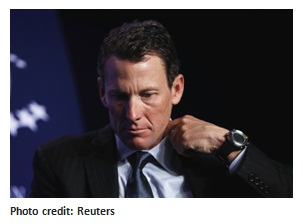
Lance Armstrong. American professional road racing cyclist. Seven-time winner of the Tour de France. World champion of the sport. And a bona fide dope.

In light of strong evidence of the use of performing-enhancing drugs, the U.S. Anti-Doping Agency has banned Lance Armstrong from competing and will strip away all his titles earned throughout his career.

For years Armstrong has craved the spotlight, but now he’s making front-page coverage in leading media across the country for all the wrong reasons. And sponsors are taking notice. Endorsers – such as RadioShack, Anheuser-Busch, and longtime friend Nike – are bailing on the popular former cyclist in light of these allegations.

This controversy surrounding Lance Armstrong shows how a reputation built over time can be destroyed in mere seconds. Especially in today’s digital world where headlines jump from your computer screen to your daily morning paper in less than a day, it can be hard to hide from the truth.

Organizations fight fake reviews

The value of a good review for a business is priceless. How many of us browse Yelp when choosing where to grab a bite to eat, scout TripAdvisor to plan a vacation, or check out reviews of the local auto mechanic down the street just to see what others are saying? People rely on the opinions of others (instead of just advertisements) to decide on where to spend their money, which is why online reviews are so important.

However, don’t let the urge to get more buzz around your business sway you to the dark side. Fake reviews can tarnish your brand, and organizations have been cracking down to weed out fraudulent posts.

All the sites I mentioned already have algorithms and human moderators in place to fight fake reviews. Yelp in particular is very aggressive, with 20% of their reviews never making it to public display. In fact, Yelp is planning to punish repeat fraudsters by exposing them and shaming the businesses that employ these deceitful tactics. It is also against Federal Trade Commission guidelines, which states that you must disclose if you have been paid to endorse a product or service. Not doing so entitles you to steep fines, like a $250,000 one the FTC slapped Legacy Learning Systems in 2011.

But an even greater damage that outweighs any monetary concerns is the damage to your reputation. Years of building your business as a credible organization would instantly evaporate and instead be replaced with public scrutiny. Make sure to only employ reviews from credible sources and not engage in deceptive practices to ensure that the next business exposed online and shamed for fake reviews is not yours.

Facebook frenzy in the Zimmerman case

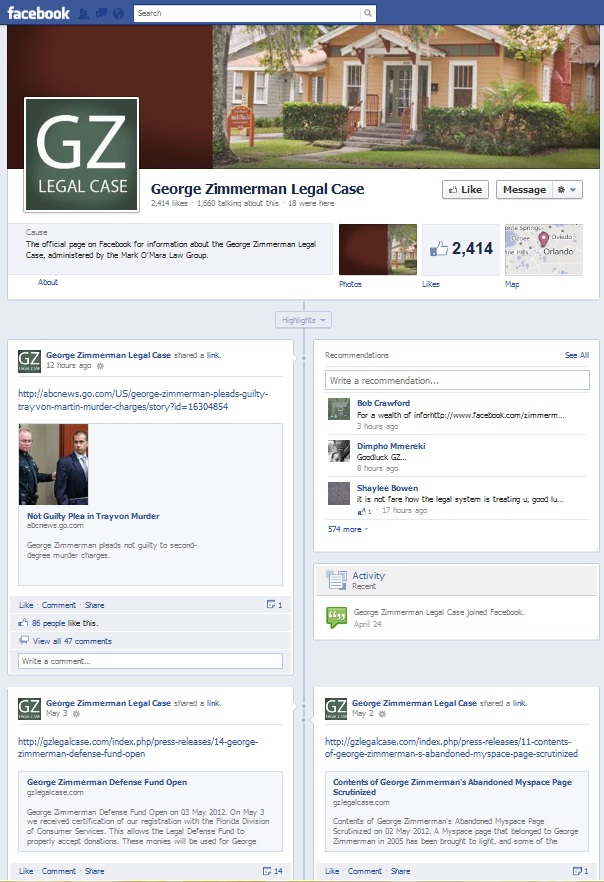
Social media sites have transpired past our everyday lives and into the courtrooms. Just look at the Trayvon Martin case and current trial against his killer George Zimmerman. Zimmerman’s team of lawyers has now entered the social media fray by creating a blog, Twitter and Facebook accounts to interact with the public, sparking interest and conversation. Recently, the George Zimmerman Legal Case shared a link on their Facebook to a blog article about Zimmerman’s abandoned Myspace page. In just four hours, the post had one share, seven “likes” and 93 comments.

With that said, the Zimmerman defense team may have bitten off more than it can chew. Media exposure has made George Zimmerman a household name and the face of evil. Their tactic of trying to shape public opinion of the most vilified man in the nation is an admirable effort, but the consequences have revealed that these social media labors can be detrimental to their cause. With dozens (sometimes hundreds) of comments popping up every time something is posted, we can see that the perception of Zimmerman continues to spread and swell. The handler of the Facebook account is threatening that any discussion or speculation on the facts of the case will be deleted, but that is not enough to control the catalyst of negative opinions brought on by every post.

Only time will tell how George Zimmerman’s legal defense team will handle such heightened criticism of their high-profile client and whether their online efforts will pay off. Either way, this case has certainly proven to be an interesting experience showcasing the evolution of social media.

Reputation Management in a Modern World

“Glass, china and reputation are easily cracked and never well mended.”
– Benjamin Franklin, “Poor Richard’s Almanack”

Long gone are the days where figureheads of corporations remain in the shadows. Now, news outlets and the public are putting the spotlight on these bigwigs, often exposing their misdeeds in the process.

Best Buy is a recent example of this. Two weeks ago, the CEO of the consumer electronics giant, Brian Dunn, resigned after the company opened an investigation into his “personal conduct.” There was speculation that he misused company assets to contribute to an alleged relationship with a female subordinate.

Another high-profile case involves University of Arkansas head football coach Bobby Petrino, who was recently fired from his multi-million dollar gig for violating a morals clause. The crime? He had a secret affair with a recruiting coordinator for the Arkansas football team.

These examples highlight two important lessons related to reputation management and the media. First, political leaders are no longer the only ones to have their personal lives catapulted to the front page; no one is safe from the scrutinizing eyes of the customers or shareholders. In fact, everything from financial records to emails to cell phone text messages can sometimes be fair game to the press thanks to the Freedom of Information Act.

Good reputation management involves being aware of the fact that nefarious activities in your personal life can easily cross-pollinate to news outlets and spread like a virus. It takes just one blow to your credibility to dismantle the years of hard work building that reputation.

Secondly, we learn how personal reputation is not the only concern in these scenarios. As shown from the Dunn and Petrino issues, organizations believe their image is tied to that of their employees. This is nothing new, as noted by Cees B.M. van Riel and Charles J. Fombrun in their 2007 publication, “Essentials of Corporate Communications.” They termed the phrase “media mania” to refer to this trend of how companies and their top executives now perform in the media spotlight. The book also states that chief executive officers in particular act as spiritual and emotional symbols of the organization, so it is especially important that these figures adhere to the same values and ethics of the companies they represent.

In this day and age, technology has allowed media outlets to report and deliver news instantly, which means they are quick to pounce on breaking scandals in politics, corporations and even football fields. Organizations have certainly taken notice and become more critical with media monitoring and reputation management, showcasing how they may react to threats by removing scandal-plagued employees from payroll, like what Best Buy and the University of Arkansas did to their offenders.

It also helps if the immoral acts weren’t committed in the first place, either.

Groupon: Accounting principles up to 50 percent off

Ok, so maybe the headline of this is tad unfair and technically incorrect. However, there is no denying that Groupon’s reputation has stung in recent days because the popular Chicago-based online coupon company overstated its financial position in its first quarter as a public company.

The Wall Street Journal reported that Groupon’s auditors discovered that the coupon company suffered a “material weakness in its internal controls” and did not set aside enough money for customer refunds.  The size of this oops-worthy mistake was more than $14 million, the newspaper reported.

For companies that are trying to polish their accounting numbers to make them look as good as possible, there is a deep downside – bad PR that travels quickly. Reputations are hard to earn and quickly lost.

The numbers might have frustrated Google’s investors if the company had recorded their financials right the first time; however, it would also not be shown in a negative light at the front page of the leading financial newspaper.

Groupon should leave the deep discounting to specials. Deep discounting on accounting practices will lead to negative publicity that will last longer than the daily deal.

2025 © Wellons Communications | Orlando PR Firm. All Rights Reserved.