Marketing to Mommies

Besides the usual suspects of Facebook, Twitter and traditional outlets, two big time fast food giants are marketing to the person who knows best – mom. We_Can_Do_It!

Recently McDonald’s rolled out a down-sized French fry portion and added apples to every kid’s meal. Burger King just announced a new ad campaign focusing on fresher and healthier food options.

Both of these chains are refocusing their messages to mom. Now, mom bloggers are regarded as key influencers with the ability to spread news quickly. According to the BSM Media, moms are the family decision makers for everything from food products to cars and electronics, spending trillions each year.  Another study revealed 96 percent of moms value the recommendation they find on blogs.

In an age of social media, as marketers we have to embrace non-traditional media, because some mom bloggers have more readers than city newspapers.

In short, mommy dearest is a force to be reckoned with.

What can marketers learn from Oprah?

oprah-goodbye2After a 25-year reign on daytime television, Oprah said goodbye in May. Even if she’s off the small screen, Oprah’s influence leaves a lasting impression.

As we reminisce about freebies and star-studded specials it’s important to consider the lessons we’ve learned from the queen of talk.

Communication – After 25 years, and countless awards and nominations, Oprah knows how to connect with her guests and audience through the art of communication. Her ability to make people laugh, or bring them to tears is a testament to her ability to connect and appeal to millions.

Be transparent – Honesty was key with Oprah, not only for herself, but for her guests as well. She made sure anyone appearing on her show played by that rule or she would call them out without a second thought. Through her transparency she became more relatable and trusted.

Be personable – Oprah was constantly opening up her life to her audience. Whether it was about her hair, weight or her troublesome upbringing, her ability to share details about herself engaged her audience even more.

Suspense is everything – The word Oprah just stirs up a buzz. Down to her “Secret Show” finale Oprah knew how to generate attention and intrigue.

The power of a review – Oprah was famous for showering her audiences with extravagant, red-carpet gifts. If she happened to mention one of your products, that product would soon fly off store shelves. On the flip side, if she happened to criticize your product, hold on for a heck of a dry spell.

Reputations can change in the blink of an eye

Haywood branding blog imageA week ago Mike Haywood had the reputation as a great young football coach with a very bright future. After all, he was the first choice to be the next football coach at the University of Pittsburg – a top program in the Big East Conference.

Now, Haywood’s professional career and personal life is in shambles. He was arrested in a domestic dispute and shortly thereafter fired from his prominent job before he even had a chance to coach his first practice – let alone his first game for Pittsburg.

What happened? The brand Mr. Haywood had built on the field did not match the actions he is accused of exhibiting off the field.

We must all keep in mind that carefully worded messages generated from high powered branding sessions pale in comparison to the living court of public opinion. The lessons businesses can take away from the actions of the now former Pitt football coach – brands are built by the everyday actions of every member of an organization.

The University of Pittsburg is back to square one with its football coach search and a little bit of its reputation of a quality athletic program has a been tarnished.

Having a brand statement, mission, vision and values are all extremely important. At Wellons Communications, we have helped craft these messages for ourselves and our clients.  But the most important step is backing up your brand both on and off the field.

Rocketing your way to a PR problem: Taking liberties with the truth before Congress

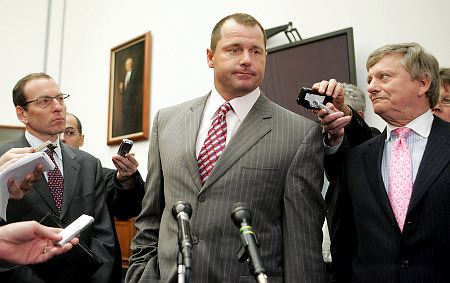
What’s happening to Roger Clemens is a Public Relations teaching opportunity. roger-clemens.79740099

Clemens has been indicted on lying before Congress.

The seven-time Cy Young award-winner was the most dominating pitcher of the steroid era in baseball. That goes to figure, because his former trainer Brian McNamee said the star player took steroids.  Even good friend and former teammate Andy Pettite, who has admitted taking steroids, has confirmed Clemens said he took steroids.

So what does all of this have to do with Public Relations?

Try Rule One of crisis PR: Tell the truth.

My 13-year-old son loves baseball. He plays it every day and lives the game.

Recently, I heard him debating with his friends who the best players of all time might be. When talk turned to Roger Clemens, my son could not figure out what the fuss is all about.

“Everybody knows he took steroids,” my son said. “He should just tell the truth and move on.’’

Great point. When stuck in bad public relations situations, it is paramount to tell the truth as quickly as possible and move on.

But the trouble Clemens faces is not that he is accused of telling a fib to friends, or even a member of the media. The Texas flamethrower is accused of lying to Congress. So now the full force of a federal investigation is bearing down on him.

Clemens proclaims that he never took performance-enhancing drugs. But we have heard that story many times from athletes who later admitted they lied.

The fan in me still hopes that Clemens is being honest. The PR person in me wishes everyone would learn to tell the truth from the beginning.

We’ll see how this plays out. No matter what happens, Clemens’ All-American reputation will never be the same.

alg_roger_clemens

No PR…er Soup…for You

About 100 people stand in line for the reopening of the Original SoupMan gourmet takeout that inspired the Soup Nazi character on "Seinfeld." (AP Photo/Bebeto Matthews)

When positive press comes along, most businesses see it as a good thing. After all, a lengthy story in let’s say The New York Daily News or a 2-minute slot on CBS’s The Early Show can do wonders in terms of public image and the bottom line. And who doesn’t like that?

Turns out—the “Soup Nazi.”

After a six-year absence, the man who inspired the Soup Nazi episode of “Seinfeld,” Al Yeganeh, is back. He reopened his original soup stand doors this month in Manhattan, and the media started slurping it up.

Yet come opening day, Yeganeh (now known as The Original Soup Man) was nowhere to be seen.

Add that to The Wall Street Journal article that published a list of rules for interviewing Yeganeh, including:

  1. No tabloids
  2. No use of the word Nazi
  3. No personal questions
  4. No follow-up questions

Plus, the fact that Jerry Seinfeld has had trouble in the past getting through the door, according to a recent NPR story. Yeganeh has dismissed the “Seinfeld” episode as an unfair character assassination. Once saying on CNN, that his product didn’t need “that clown” Jerry Seinfeld—that it spoke for itself for a quarter of a century.

For Yeganeh, it really does seem like “No PR for you.” Yet, we wonder, with all this media attention centered on his anti-PR ways, could that be his strategy?

Either way, at $20 for an extra-large cup of crab bisque and a line topping 100 eager customers, it looks like media attention is paying off.

Larry King is Hanging up his Suspenders

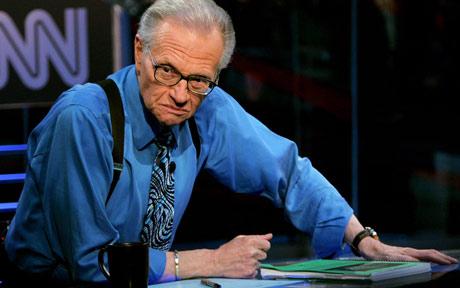
Larry King announces his retirement after 25-year gig on CNN.

Larry King announced that he is retiring from his prime-time cable TV interview show on CNN, where he has been asking the tough questions to celebrities, world leaders and people in the news for a quarter century.

For me, the announcement is not just a sad note for King, but also an indicator of how long I have been in the news business. While all the American media have been talking about how King is a pioneer in cable news, I was stuck with the thought that I remember King vividly as a national late-night/early morning radio talk show host. It was on radio that he deftly honed his interview skills making him adept at talking with anyone and everyone.

Larry King is also a study in media trends. His career has successfully spanned different mediums, but his ability to draw on the latest newsmakers and storylines kept him current for decades.

In the media—as well as in public relations—the mode of how news is delivered is ever changing.  Yet, the power of the story and the storytelling will determine its success.

Good luck, Larry on your next chapter. Who knows? King might start doing interviews on Twitter.

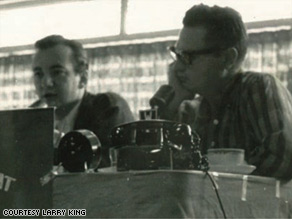
In 1959, Bobby Darin, left, was Larry's first major guest on his WKAT radio program.

The World Cup of Reputation Management

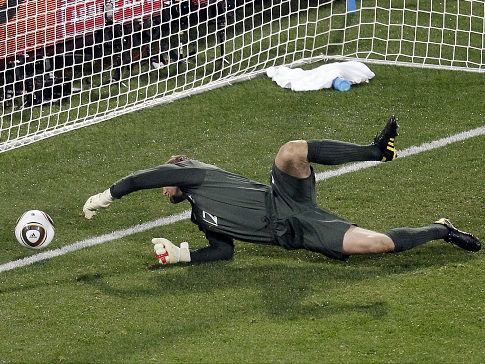
Shot bounces off Robert Green's hands and into the net in the U.S. vs. England's 1-1 tie. (Sohn/AP Robert)

Advertisement for the 2010 World Cup touts that one game changes everything.

How right they are. One defender caught napping—or an unfocused goalie (need we mention England’s Robert Green?)—and a game, if not an entire cup, can be lost.

Lose a game. Lose a chance at greatness.

The same tagline also applies to reputation management.

Just ask Helen Thomas, the veteran White House correspondent, who made some inappropriate and untimely comments about Israelis. She was forced to hastily retire – ending her more than 50-year journalistic career in disgrace.

Just ask the BP CEO Tony Hayward, whose multiple gaffes have made him such easy pickings that the late night joke writers don’t even have to try.  A leadership change at BP would not surprise many insiders.

The only people likely happy with BP’s troubles are Toyota, who have fallen off the front page because their recent mistakes have been washed away by bigger, newer examples of poor reputation management.

One misstep…and years of golden reputation and favorable public image can be tarnished forever.

The Power of a Good Mea Culpa

-by Frank Wolff, Media Relations Director

BP CEO Tony Hayward
“What the hell did we do to deserve this?” BP CEO Tony Hayward

Here’s a PR tip that applies to BP and all businesses big and small: don’t underestimate the power of a good mea culpa.

Merriam-Webster defines mea culpa as a formal acknowledgment of personal fault or error.

Let’s say you happen to spill a few million gallons of crude oil into the ocean. That requires a super-size mea culpa. That’s the source of a lot of the public’s frustration right now. They’re hearing everything from excuses to rhetoric to things they can’t believe are coming out of the mouth of BP CEO Tony Hayward. Here are some Hayward quotes from a Newsweek story.

“What the hell did we do to deserve this?”

“…the Gulf of Mexico is a very big ocean. The amount of volume of oil and dispersant we are putting into it is tiny in relation to the total water volume.”

“…the environmental impact of this disaster is likely to be very, very modest.”

“…there’s no one who wants this over more than I do. I would like my life back.”

And the company wonders why the public is livid?

best-buy
"The manager at a major electronics store (we’ll call it 'Best Buy') would have been wise to opt for mea culpa"

Mea culpa also does wonders on a smaller scale. For instance, the manager at a major electronics store (we’ll call it “Best Buy”) would have been wise to opt for mea culpa after discovering that a customer (we’ll call him “me”) has been waiting for three weeks for an item to arrive that he was told would arrive two weeks ago. After several unreturned phone calls and two trips to the store, the manager discovered that her expert salesperson ordered the wrong item for the customer and the item that customer really needs can only be ordered online. She could be a graduate of the Tony Hayward school of PR , as she opted for a “not my fault” attitude. The customer was given $5 in free shipping, but all he really wanted was a sincere mea culpa and her best effort to make the situation right.

Regardless of whether you’ve fouled up a customer’s day or fouled an entire ecosystem and the livelihood of thousands of people, the advice is still the same: always start with a good mea culpa.

Fact is—The Media Likes Facts

arena-bathroomI enjoy The Count column in The Wall Street Journal. The column has interesting numbers and stats about sports or the sporting community. On Wednesday, WSJ reported in a big bold red number a fun fact about the new Consul Energy Center in Pittsburgh:

250Number of local college students that are being recruited to simultaneously flush all the toilets in the Pittsburgh Penguins’ new arena to test water flow.

The sophomoric teenager still lingering inside of me (thanks in part to my 12-year-old son) will always stop at a flushing toilet fact. But more importantly, people interested in getting quality public relations buzz should remember that facts – especially those that are easy to understand – will often get the attention of the media.

So don’t flush potential media coverage by filling your copy with marketing speak instead of facts.

A lesson in bad media relations

There was an old Saturday Night Live sketch that featured a character named Leonard Pinth-Garnell . He was an arts critic who showcased the worst in everything; Bad Playhouse, Bad Cinema, Bad Opera, etc. The audience got to witness a truly awful performance.

Today we’ll borrow a page from Leonard Pinth-Garnell for an installment of Bad Media Relations. KGO-TV in San Francisco was doing a story looking at how money in a hospital patient gift fund was being spent.

Watch as the hospital community relations director touches investigative reporter Dan Noyes a couple dozen times and then shoves his hand in a camera lens. It’s one of the most bizarre PR-media encounters you’ll ever see.

The station says it went to a community meeting to try and get an interview after the hospital ignored its phone calls. This is a standard practice, and an excellent reason to not ignore repeated phone calls from a reporter. Not calling back is basically an invitation for the I-Team to show up unannounced.

The PR person says the reporter purposely disrupted the meeting and the hospital says the story was unfair and distorted the facts. You can read statements from both here.

This ugly scene was easily preventable. Call the reporter back and find out what they are working on. Work with the hospital administrators and defend your position if you believe what you’re doing is right. Do a sit-down interview with the reporter, or at least provide a statement or written answers to his questions.

Handle your media relations properly and you have a story that you may not like on one TV station. Bungle your media relations and your story is now all over major news sites and the video of your bizarre tactics are there for all to see.

To quote Leonard Pinth-Garnell: “Stunningly bad!”

2025 © Wellons Communications | Orlando PR Firm. All Rights Reserved.