The massive earthquake in Japan once again shows the power and speed of social media. When people – no matter where they are in the world – need to communicate, they are turning to Facebook, Twitter and other forms of social media to reach their loved ones.
This weekend, there was story after story about Japanese citizens reaching their family members from the tragedy-stricken country through Facebook, Twitter or YouTube.
The lesson for small businesses becomes clear – they can either learn how to communicate through this medium or their business might be swept away against the competition that does.
Facebook, Twitter and other social media vehicles prove their value in the middle of an emergency. We are all about to see what role social media will play in the rebuilding of a country.
By now everyone’s heard of the self destructive, downward spiral of beloved Two and a Half Men star and Golden Globe winner, Charlie Sheen.
Just in the past month Sheen’s reputation has gone from notorious bad boy to infamous binge drinking, coke smoking, ever in the presence of porn stars partier. To put the icing on the cake, all this comes as he’s still on probation for his domestic violence spat with ex-wife Brooke Mueller.
Recently, a video surfaced of Sheen dancing, with three scantily clad women at the inception of his 36-hour cocaine fueled party binge last week. Of course, this marathon resulted in a trip to the hospital and rehab.
Now, Charlie’s speaking up about the rumors saying, “All crap. Believe nothing. I will never speak about any of this as long as I’m alive. You’re all gonna have to keep towing the same redundant line, guessing wrong.”
Later his rep spoke on Sheen’s behalf of his remorse and new work ethic.
“I have a lot of work to do to be able to return the support I have received from so many people. I want to say thank you to my fellow cast members, the crew of Two and a Half Men and everyone at CBS and Warner Bros., especially [CBS CEO] Les Moonves and [Warner Bros. TV President] Bruce Rosenblum for their concern and support. And to my fans, your good wishes have touched me very much. Like Errol Flynn, who had to put down his sword on occasion, I just want to say thank you.”
Right now his reps need to put on their best public relations hats to turn his reputation around, which will not be an easy fix.
But here’s a little encouragement, look at Robert Downey, Jr., Ben Affleck, Drew Barrymore, Brittany Spears and Whitney Houston.
The series of press conferences after the shooting of Congresswoman Gabrielle Giffords and 19 others at a congressional meet-and-greet over the weekend was a study in proper media relations and crisis communications.
Especially well done were the media briefings from the University Medical Center in Tucson . The doctors walked the fine line between giving the facts, but also respecting the privacy of the patients.
Business owners can learn a great deal about media relations by watching breaking news and how it is handled. The briefings handled key point of media relations very well, including:
Stick with the facts
Protect the business. In this case, the medical center protecting the privacy of the patients was masterfully done.
Answer the questions. In the press conference I viewed, never did the words “no comment” come from any spokesperson.
Well-briefed spokespeople. The spokespeople also kept control of the media by keeping the briefing to a limited number of questions.
Keep everyone informed. The hospitals and law enforcement agencies promised updates as events changed.
What is next? Each of the briefings ended with announcing the time of the next briefing so the media can plan schedules.
Briefing the media takes balance, but winning media friends starts with giving the facts of the story in a timely manner.
This weekend’s tragic shooting in Tucson is a reminder of why being prepared is so important in PR. Just like a fire station tries to prepare for any situation, so too should PR professionals.
Consider just some of the issues that came from this incident:
Sportsman’s Warehouse has to defend its position that Jared Lee Loughner passed his FBI background check before one of its employees sold him the gun that was used kill six people and injure 14 more.
Pima Community College has to determine if it did enough when Loughner was a student there, as classmates and at least one instructor were disturbed by his bizarre, threatening behavior.
Gun rights supporters must defend their stance that Arizona’s lenient gun laws are in the best interest of the public.
Gun opponents will ramp up their efforts at changing laws and swaying public opinion.
All political parties must examine their use of rhetoric and its possible impact on individuals and society.
Lawmakers must defend legislation under consideration that would expand a ban on symbolic threats from just the President to congress.
Congress will have to consider new levels of security for all its members, and how to deal with issues of extreme importance while one its own lies in a hospital bed fighting for her life.
These are just a handful of the societal issues that will be dealt with and an important reminder as to why you always plan for the best and prepare for the worst when it comes to PR.
A week ago Mike Haywood had the reputation as a great young football coach with a very bright future. After all, he was the first choice to be the next football coach at the University of Pittsburg – a top program in the Big East Conference.
Now, Haywood’s professional career and personal life is in shambles. He was arrested in a domestic dispute and shortly thereafter fired from his prominent job before he even had a chance to coach his first practice – let alone his first game for Pittsburg.
What happened? The brand Mr. Haywood had built on the field did not match the actions he is accused of exhibiting off the field.
We must all keep in mind that carefully worded messages generated from high powered branding sessions pale in comparison to the living court of public opinion. The lessons businesses can take away from the actions of the now former Pitt football coach – brands are built by the everyday actions of every member of an organization.
The University of Pittsburg is back to square one with its football coach search and a little bit of its reputation of a quality athletic program has a been tarnished.
Having a brand statement, mission, vision and values are all extremely important. At Wellons Communications, we have helped craft these messages for ourselves and our clients. But the most important step is backing up your brand both on and off the field.
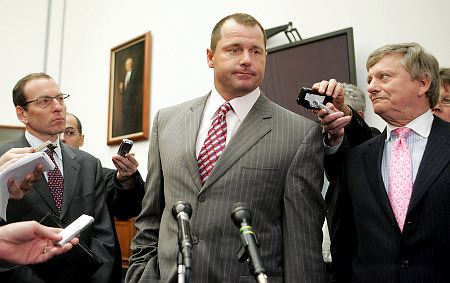
The seven-time Cy Young award-winner was the most dominating pitcher of the steroid era in baseball. That goes to figure, because his former trainer Brian McNamee said the star player took steroids. Even good friend and former teammate Andy Pettite, who has admitted taking steroids, has confirmed Clemens said he took steroids.
So what does all of this have to do with Public Relations?
Try Rule One of crisis PR: Tell the truth.
My 13-year-old son loves baseball. He plays it every day and lives the game.
Recently, I heard him debating with his friends who the best players of all time might be. When talk turned to Roger Clemens, my son could not figure out what the fuss is all about.
“Everybody knows he took steroids,” my son said. “He should just tell the truth and move on.’’
Great point. When stuck in bad public relations situations, it is paramount to tell the truth as quickly as possible and move on.
But the trouble Clemens faces is not that he is accused of telling a fib to friends, or even a member of the media. The Texas flamethrower is accused of lying to Congress. So now the full force of a federal investigation is bearing down on him.
Clemens proclaims that he never took performance-enhancing drugs. But we have heard that story many times from athletes who later admitted they lied.
The fan in me still hopes that Clemens is being honest. The PR person in me wishes everyone would learn to tell the truth from the beginning.
We’ll see how this plays out. No matter what happens, Clemens’ All-American reputation will never be the same.
AP – Tiger Woods pauses during a press conference.
Two recent news stories reminded me of a good lesson for people facing critical questioning from the media: don’t take the bait.
We expect the media to ask tough, fair questions. It’s their job and that’s what they should do. But sometimes journalists ask questions that go too far or try and bait the interview subject into an uncomfortable situation.
The first story involves Tiger Woods. A reporter at a press conference in Ireland asked him if all his indiscretions has been “worth it” since it cost him his marriage and endorsements.
Obviously, the reporter’s goal is to get him to go ballistic so they can splatter the story all over the British tabloids.
Tiger didn’t take the bait. Woods handled it well, saying “I think you’re looking too deep into this,” and followed up with a very sharp “thank you.”
The second story comes from Sports Illustrated. It’s a Gary Smith article on the Gulf oil spill (yes, an oil spill story in SI, and well worth reading). Smith went on an oily field trip with BP’s crisis commander Bob Dudley, Louisiana Governor Bobby Jindal and a couple of network TV crews.
They wade into a large pool of oil, survey the damage and talk about having to see it to really get a feel for the damage that has been done.
Smith describes the scene after that:
Kerry Sanders, the NBC correspondent, wanted more. “Look over your shoulder,” Sanders ordered Dudley , camera rolling. “What do you see?”
“It’s devastating … it’s very emotional.”
"This is oil from right here." - BP’s crisis commander Bob Dudley
Not enough. “Can we see it on your hands,” demanded Sanders, “and can you tell us what it is?”
Dudley, on a contrition mission, scooped up the goo and gave NBC its money shot, blood on his hands. “This is oil from right here,” he recited dully.
Not enough. From the railing of a boat that the group had climbed aboard, CBS’s Harry Smith pointed to a phalanx of orange, fist-sized tar balls. “This is your oil,” declared Harry. “Do you feel guilty?”
Dudley, hangdog but litigation-leery: “I just feel sad.”
Dudley took the bait from Sanders and shoved his hands in the oil when asked. With BP’s lack of PR preparedness, Sanders probably could have had him in the oil floating on a raft sipping a cocktail – “now hold your drink in one hand and that dead bird in the other.”
Dudley should have gone out there and stuck with professional, responsible answers and not played into the hands of TV reporters trying to manufacture a “moment” for their stories.
I’m not trying to defend Tiger Woods or BP. The point is that anyone in the media spotlight better be able to recognize when the bait is tossed in front of them and know how to avoid it.
We don’t have an oil problem; we have a public relations problem.
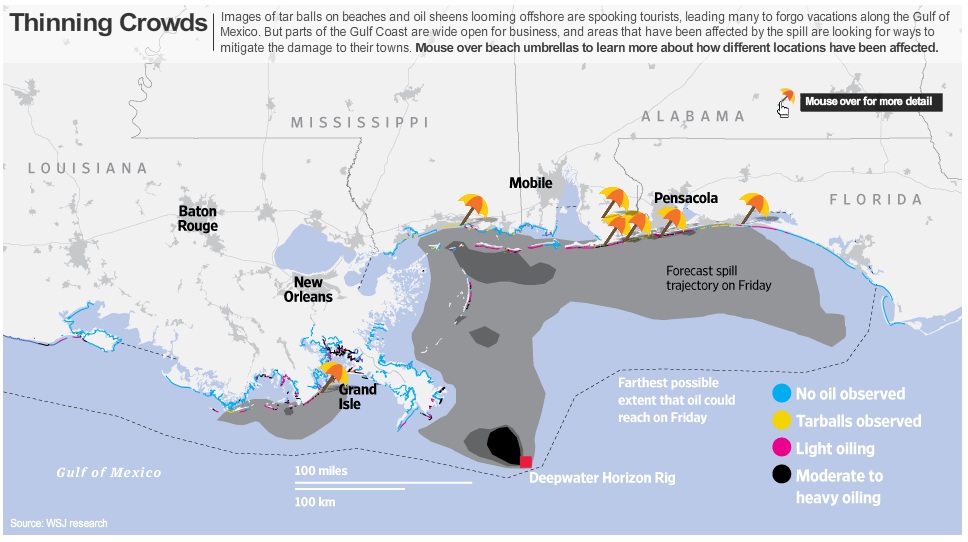
The summer travel season is well underway this weekend with big 4th of July celebrations planned. But how many people will be vacationing along the Gulf Coast in Louisiana, Alabama, Mississippi and our home state of Florida?
Independence Day for many this year means independence from the bustling crowds of tourists. That is just a crying shame. Julian MacQueen, a hotelier in Pensacola Beach, Fla., proclaimed to The Wall Street Journal this week, “Our biggest problem is a public relations problem, and not an oil problem.’’
MacQueen could not be more right on – at least in Florida there are hundreds of miles of beautiful Gulf beaches completely unaffected by the BP oil disasters. But for tourists looking at one shot at a great summer vacation, many have voted with their pocketbooks that the Gulf is too big a risk.
Actually, smart tourists looking to save big money should come on down. In many places, Florida beaches are more likely to be littered with deals than tar balls.
For resort owners affected by the oil either in perception or reality, they must stay vigilant in trying to get their message out to tourists. BP had funded $25 million for advertising in major drive markets and Florida’s governor is seeking more.
While getting the message out on a large scale is appreciated, vacation home managers, small inn operators and restaurant owners have issues closer to home – how to keep revenue up!
Possible PR steps should include:
· Regular web site updates with shots of their deals
· Training and talking points for your front desk and reservation staff
· Direct marketing and e-blasts to past guests
· Social media updates on Facebook and Twitter
· Making yourself available to stories about tourism and the oil impact in your area
· Honesty with your customers
· Crisis and customer care plan in place for refunds
No one can tell how or when this oil crisis will end for the travel, tourism and hospitality businesses along the Gulf Coast. Treating the customers right and providing the best information possible as fast as possible will be the best PR of all.
There is hope that the Gulf Coast can celebrate independence from the oil leaks as soon as possible.
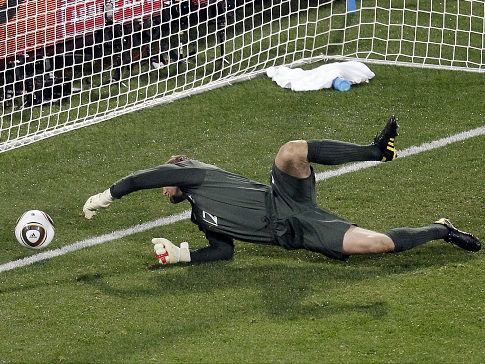
Shot bounces off Robert Green's hands and into the net in the U.S. vs. England's 1-1 tie. (Sohn/AP Robert)
Advertisement for the 2010 World Cup touts that one game changes everything.
How right they are. One defender caught napping—or an unfocused goalie (need we mention England’s Robert Green?)—and a game, if not an entire cup, can be lost.
Lose a game. Lose a chance at greatness.
The same tagline also applies to reputation management.
Just ask Helen Thomas, the veteran White House correspondent, who made some inappropriate and untimely comments about Israelis. She was forced to hastily retire – ending her more than 50-year journalistic career in disgrace.
Just ask the BP CEO Tony Hayward, whose multiple gaffes have made him such easy pickings that the late night joke writers don’t even have to try. A leadership change at BP would not surprise many insiders.
The only people likely happy with BP’s troubles are Toyota, who have fallen off the front page because their recent mistakes have been washed away by bigger, newer examples of poor reputation management.
One misstep…and years of golden reputation and favorable public image can be tarnished forever.
“What the hell did we do to deserve this?” BP CEO Tony Hayward
Here’s a PR tip that applies to BP and all businesses big and small: don’t underestimate the power of a good mea culpa.
Merriam-Webster defines mea culpa as a formal acknowledgment of personal fault or error.
Let’s say you happen to spill a few million gallons of crude oil into the ocean. That requires a super-size mea culpa. That’s the source of a lot of the public’s frustration right now. They’re hearing everything from excuses to rhetoric to things they can’t believe are coming out of the mouth of BP CEO Tony Hayward. Here are some Hayward quotes from a Newsweek story.
“What the hell did we do to deserve this?”
“…the Gulf of Mexico is a very big ocean. The amount of volume of oil and dispersant we are putting into it is tiny in relation to the total water volume.”
“…the environmental impact of this disaster is likely to be very, very modest.”
“…there’s no one who wants this over more than I do. I would like my life back.”
And the company wonders why the public is livid?
"The manager at a major electronics store (we’ll call it 'Best Buy') would have been wise to opt for mea culpa"
Mea culpa also does wonders on a smaller scale. For instance, the manager at a major electronics store (we’ll call it “Best Buy”) would have been wise to opt for mea culpa after discovering that a customer (we’ll call him “me”) has been waiting for three weeks for an item to arrive that he was told would arrive two weeks ago. After several unreturned phone calls and two trips to the store, the manager discovered that her expert salesperson ordered the wrong item for the customer and the item that customer really needs can only be ordered online. She could be a graduate of the Tony Hayward school of PR , as she opted for a “not my fault” attitude. The customer was given $5 in free shipping, but all he really wanted was a sincere mea culpa and her best effort to make the situation right.
Regardless of whether you’ve fouled up a customer’s day or fouled an entire ecosystem and the livelihood of thousands of people, the advice is still the same: always start with a good mea culpa.

 The massive earthquake in Japan once again shows the power and speed of social media. When people – no matter where they are in the world – need to communicate, they are turning to Facebook, Twitter and other forms of social media to reach their loved ones.
 A week ago