
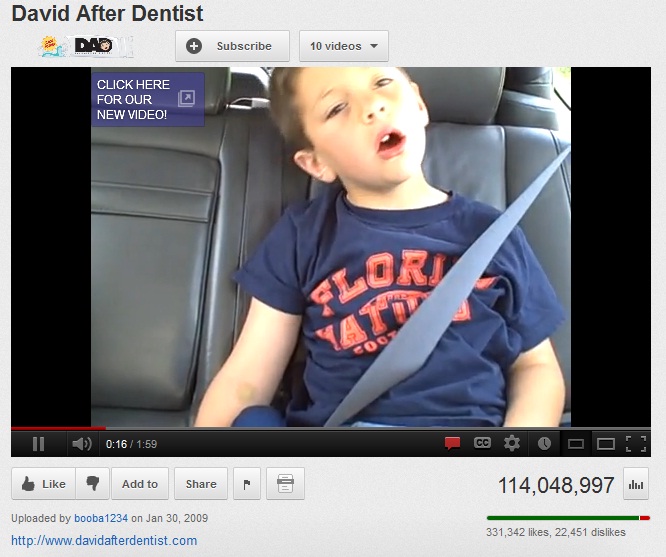
“There is a permanent record today and it is called the Internet”

Privacy is a commodity. In today’s world dominated by the Internet, anything and everything can be posted instantaneously and shared with millions in mere seconds. David from “David After Dentist” would agree. However, privacy concerns are no laughing matter. Vigilance should be taken to ensure that the next breaking news scandal that hits the front page of Yahoo does not revolve around you, which is why we’re shaking our heads at Mitt Romney this week.

After secretly recorded comments from a private Boca Raton fundraiser leaked of Mitt Romney saying that 47% of Americans are victims dependent on the government, we can’t help but wonder why the aspiring President would vocally disparage almost half of his country. Here’s a tip for you Mitt Romney: if you are running for President, everything you say and do WILL be held against you in the court of public opinion, thanks to the Internet. The video was leaked to the press, and now everyone from Jon Stewart to Diane Sawyer is spreading the remarks to their audiences; meanwhile the Mitt Romney campaign has spun its gears to full-on damage control.

Another unfortunate recent example of the royal lack of privacy today comes from an Italian magazine publishing topless photos of Kate Middleton. The Duchess of Cambridge was simply enjoying a sunbathing session on a secluded French chateau getaway when a paparazzi photographer captured the scene. Now, the British royal family is taking the matter to court with hopes to stop further publications from printing the photos, but you can’t take back what has already been done. Amazing what a zoom lens and internet connection can do to the public image of a Princess.

Even the common person is not immune to the repercussions of online activity. Everything that you post, from Facebook cover photos to the latest Tweet about what you had for dinner, becomes fair game when you click “publish.” Alan Dershowitz, a Harvard law professor and lawyer for high-profile defendants, says that young people nowadays don’t seem to value privacy. “They put stuff on Facebook that 15 years from now will prevent them from getting the jobs they want,” he said. “They don’t understand that they are mortgaging their future for a quick laugh from a friend.”

And that’s nothing to laugh about.
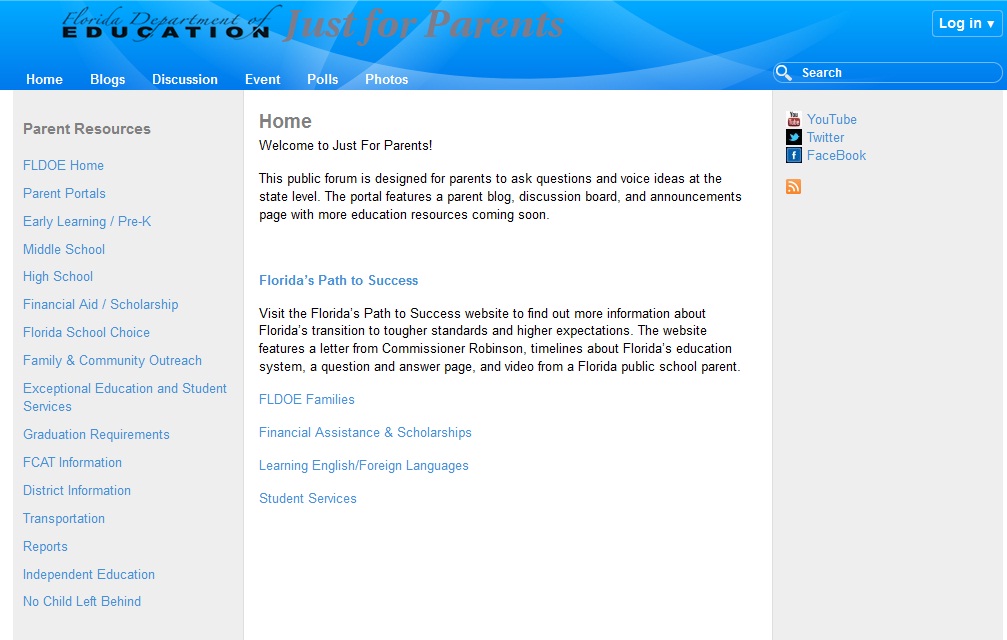
Social media a part of FCAT’s Path to Success to better communication

In light of public outrage from FCAT scores drastically plunging this year, the Florida Department of Education launched two websites Monday as part of its campaign to communicate with parents. One website, floridapathtosuccess.org, provides them with information about the department’s goal of transitioning to tougher standards, while the other, parents.fldoe.org/home, serves as an outlet for them to ask questions and express concerns on a discussion board. In less than 24 hours of its debut, three topics were posed by parents on the discussion forum, with a FLDOE representative already replying to two of them.

This response by the Florida Department of Education showcases how the organization is taking steps to communicate better with its core audience and increase transparency in the communication process. At a time when many parents are up in arms about recent headlines, creating these channels to interact directly with parents is a smart move on FLDOE’s part to take control of the situation. Instead of letting all the worry and frustration from parents fester, the department is tackling this challenge head on and trying to remedy the situation by supplying an appropriate space for them to vent and get answers to their questions from an authorized source – a commendable effort by the FLDOE and certainly a good public relations example of using online resources to foster two-way communication.

Reputation Management in a Modern World

“Glass, china and reputation are easily cracked and never well mended.”
– Benjamin Franklin, “Poor Richard’s Almanack”

Long gone are the days where figureheads of corporations remain in the shadows. Now, news outlets and the public are putting the spotlight on these bigwigs, often exposing their misdeeds in the process.

Best Buy is a recent example of this. Two weeks ago, the CEO of the consumer electronics giant, Brian Dunn, resigned after the company opened an investigation into his “personal conduct.” There was speculation that he misused company assets to contribute to an alleged relationship with a female subordinate.

Another high-profile case involves University of Arkansas head football coach Bobby Petrino, who was recently fired from his multi-million dollar gig for violating a morals clause. The crime? He had a secret affair with a recruiting coordinator for the Arkansas football team.

These examples highlight two important lessons related to reputation management and the media. First, political leaders are no longer the only ones to have their personal lives catapulted to the front page; no one is safe from the scrutinizing eyes of the customers or shareholders. In fact, everything from financial records to emails to cell phone text messages can sometimes be fair game to the press thanks to the Freedom of Information Act.

Good reputation management involves being aware of the fact that nefarious activities in your personal life can easily cross-pollinate to news outlets and spread like a virus. It takes just one blow to your credibility to dismantle the years of hard work building that reputation.

Secondly, we learn how personal reputation is not the only concern in these scenarios. As shown from the Dunn and Petrino issues, organizations believe their image is tied to that of their employees. This is nothing new, as noted by Cees B.M. van Riel and Charles J. Fombrun in their 2007 publication, “Essentials of Corporate Communications.” They termed the phrase “media mania” to refer to this trend of how companies and their top executives now perform in the media spotlight. The book also states that chief executive officers in particular act as spiritual and emotional symbols of the organization, so it is especially important that these figures adhere to the same values and ethics of the companies they represent.

In this day and age, technology has allowed media outlets to report and deliver news instantly, which means they are quick to pounce on breaking scandals in politics, corporations and even football fields. Organizations have certainly taken notice and become more critical with media monitoring and reputation management, showcasing how they may react to threats by removing scandal-plagued employees from payroll, like what Best Buy and the University of Arkansas did to their offenders.

It also helps if the immoral acts weren’t committed in the first place, either.

Starbucks Beetle Juice has Vegans Seeing Red

The world’s largest coffeehouse chain has the vegan community in an uproar…over Strawberry Frappuccinos®.

It was recently discovered that Starbucks has been using ground-up beetles for the coloring of this tasty treat. As disgusting as that sounds, the Cochineal Beetle is actually a very common, government-approved food coloring used in familiar foods, such as Yoplait Yogurts and Kellogg’s Pop-Tarts. It is also used to make more than 300 bright red lipsticks.

With the vegan community frothing over what was thought to be a veg-friendly drink, Starbucks now has an unexpected PR crisis on its hands. ThisDishIsVegetarian.com, among other websites, is buzzing about the beetle juice and announced to their readers not to drink it anymore. They are not trying to cause trouble; they just want to alert members.

Starbucks made the switch to using beetles in January to help get rid of artificial ingredients in their food and drinks. The coffee giant maintains it was simply trying to do the right thing. Nutrition experts say it was the right idea, but the wrong execution.

Starbucks’ good intentions have left them with a completely unintended public relations problem.

The Role of PR in the Susan G. Komen Foundation vs. Planned Parenthood Debate

Recently, the Susan G. Komen Foundation for breast cancer research has come under attack for their decision to revoke funds allotted to Planned Parenthood for breast-health services. After a public attack on the Komen Foundation, leaders quickly revoked their previous decision to discontinue funding for Planned Parenthood (which totaled $680,000 just last year).

The controversy surrounding this debate is a great lesson in crisis communication.

The quick reversal of statements made by the Komen Foundation after considerable backlash implies that the decision to make the statements in the first place was not fully thought through. If a corporation publically announces any intentions, the intent behind the announcement and the reaction the announcement will generate should be thoroughly considered. Good PR means that a corporation can communication effectively and without reservation.

On the other hand, the Komen Foundation’s realization that the brand has been tarnished by this decision indicates that the foundation understands the importance of maintaining a brand image. The role of PR is pointless if a corporation’s brand does not correlate with its audience. Angering or displeasing your following can be the downfall for any organization.

PR is more than just the free flow of information between business and client. It is the direct reflection of a business as a whole, and communicating the values and beliefs of that business is an essential to success. As the Susan G. Komen Foundation has demonstrated, sending out the right message the right way is the key to good PR.

Netflix #fails with fans

Netflix was instrumental in changing the movie rental process. The old corner video store was out – DVD delivery by mail and instant online streaming was in. However, in the midst of backlash against a recent price hike, Netflix has ignored changing methods of communication, putting consumers in a permanent queue.

Netflix logoAfter announcing a 60 percent price increase to consumers via a company blog, Netflix has since remained stunningly silent on the issue. But Netflix users have grown loud, blasting Facebook and Twitter with angry rants directed at the company. According to CNET, pages have since formed with titles like, “Cancel Netflix” and “I used to love Netflix until they decided to rip me off.” Angry tweets announcing subscription cancellations are trending on twitter. Thousands of comments have been posted to the company’s blog. Netflix has not responded to a single complaint.

As communications professionals, we should be just that: communicators. In the midst of consumer disappointment, don’t ignore the power of social media. Embrace it as a source for immediate interaction with customers. The simplest response could make all the difference, allowing you to retain customers despite upheaval.

Public Relations 101: Don’t be a Weiner

Okay, you have just been caught with your pants down – pun intended. When the world finds out about your wrong doing or your company’s wrong doing, you should:

A.      DenyUSREPORT-US-USA-POLITICS-WEINER

B.      Blame the media

C.      Say it was someone else

The correct answer in communications is D. None of Above.

Rep. Anthony Weiner was caught tweeting a photo of his underpants to a young woman and admitted to flirtatious online exchanges with several women. He took all the actions of someone who thought he could outsmart the public. For days he claimed he had not sent the racy photos and that he was hacked, before finally coming clean in a garden-variety tearful apology.

Why not just start with the truth – the story cycle ends quicker that way.

PHOTO COURTESY OF REUTERS

GoDaddy’s Elephant in the Room

Buzz is nothing new to internet domain host, GoDaddy. This time, however, the controversy is not over a racy Super Bowl ad, but over videos of the company’s chief executive, Bob Parsons, hunting big game.

Last month Parsons posted a video of him killing an elephant in Zimbabwe along with a photo of the dead animal on his blog. He then tweeted about it, setting off a firestorm of bad publicity.

This immediately sparked a backlash from animal rights organization, PETA, who is calling for a boycott of GoDaddy until Parsons agrees to abandon the annual hunts.

Parsons is unapologetically brushing aside the criticism, calling the remarks misinformed.

“I think that most people, when they see this video, will understand what’s happening,” said Parsons. “These people are on the brink of starvation; they need their crops and need to eat. Elephants are not endangered and probably there are too many of them. A lot of people are up in arms about this. Their hearts are in the right place but they don’t understand the situation. If they’d go on one of my trips to Zimbabwe, they’d understand.”

GoDaddy’s competition is now firing off deals for GoDaddy customers to switch to their companies, including free domain hosting, discounted transfer rates and donations to charities that protect elephants. Poaching GoDaddy’s customers is a smart way for smaller firms to take advantage of the negative PR surrounding Parsons and the company.

As communications professionals this story brings about the important message to keep your audience in mind. If Parsons would have kept his hunting excursions to himself, GoDaddy clients would not be in the sites of animal enthusiasts.

Babies being served booze

boozing babesIt’s a parent’s nightmare and an instant public relations crisis.

This article on USA Today looks into a couple of these restaurant mishaps – babies being served booze! Something most of us never thought would happen is now front page news and on the minds of a lot of parents.

Within one month two different incidents were reported at two of the nation’s largest casual dining chains, Applebee’s and Olive Garden.

So how do these restaurants win back the loyalty of worried parents? Well, they can either ignore the issue and release statements like this one made by Applebee’s.

“In an industry that serves more than 150 million meals every day, these are two extremely rare occurrences. However, we believe that even one incident like this is too many.”

Or they could face the issue, react quickly and positively. A couple of suggestions from restaurant operators: retrain staff, rethink alcoholic drink policies, limit bar use, be forthcoming and involve consumers in new regulations. Concerning communications get your messaging clear – from the hostess and servers on the front line, to your media statements.

After all, this juicy story is out and now diners want to know, what restaurants will do to ensure their child will never be served anything more to drink than a soft drink.

@S.O.S.

SOS JapanTwo tweets to @AmbassadorRoos were all it took to mobilize aid from U.S. troops to Kameda hospital in Japan.

A USA Today article explores the ways help was deployed through social media and more specifically, Twitter, after Japan’s catastrophic earthquake.

Nine days after the disaster hit two urgent pleas for help appeared on the Twitter stream of U.S. Ambassador John Roos.

“Kameda hospital in Chiba needs to transfer 80 patients from Kyoritsu hospital in Iwaki city, just outside of 30km(sic) range.”

“Some of them are seriously ill and they need air transport. If US military can help, pls contact (name withheld) at Kameda.”

These tweets instantly sent an S.O.S. to the top U.S. diplomat in Japan.

During all the chaos Twitter proved to be more reliable than phones, emails and even, Facebook. Two hours after the disaster Red Cross teams in Virginia seized a tweet from a housewife in Japan who reported the roof of a school gym in Kokubunzi had collapsed with students trapped inside. Soon after helicopters were hovering overhead, rescuing everyone inside.

Twitter is quickly leading the way in sharing breaking news and communicating in times of emergency. It’s only been five years and Twitter is already alerting first responders to emergencies, creating crisis maps for rescue teams in disaster zones and helping friends and family find lost loved-ones. What we are learning is it’s not the experts who know something; it’s someone in the crowd.

2025 © Wellons Communications | Orlando PR Firm. All Rights Reserved.