Conscious Containers Introduces New Eco-Friendly Lunchboxes

LAGUNA BEACH, Calif. –Packing a lunch has never been greener. Conscious Containers, the makers of the eco-friendly U-TURN 2 TAP water bottles, is introducing a sleek, easy-to-store and environmentally friendly lunchbox—known as Munchbox.

Children throw away an estimated 75 pounds of lunch trash per school year, including water bottles, plastic baggies and plastic cutlery. Munchbox allows for easy storage of snacks, sauces and sandwiches in its 100% food-grade stainless steel compartments.

Since there’s no plastic, the lunchboxes are Bisphenol A (BPA) free. And they come in a slim, chic design that easily fits into any backpack or locker. It even has side clips to prevent any food from falling out.

Each purchase comes with the larger Munchbox, along with a smaller snack-size container that fits inside.

“Our goal has always been to reduce plastics from our landfills, and Munchbox does just that,” said founder and co-owner Jessica Mulligan. “Its reusable, long-lasting design minimizes unnecessary waste. This gives parents the opportunity to talk about how small steps can make a big difference when it comes to caring for our environment.”

Munchbox uses sustainable, toxin-free materials. The lunchboxes are available at www.uturn2tap.com/product.htm and at select stores. Munchbox containers cost $19.95.

For more information on Munchbox, visit www.uturn2tap.com.

About Conscious Containers

Conscious Containers was founded in 2008 in Laguna Beach, Calif. to create an eco-friendly line of housewares for the natural product consumer. Using sustainable, toxin-free materials, Conscious Containers provides safe, reusable products that minimize unnecessary waste. The company integrates the work of contemporary artists into all product designs to promote the fine arts, as well as environmental awareness. Conscious Containers continues to research innovative ways to enrich the quality of consumer life using sustainable practices.

Contact:

David Holmes

Conscious Containers

(949) 494-3464

david@uturn2tap.com

Schmidt Design Studio Completes Interior Design of Vince Carter’s Restaurant

ORLANDO, Fla. – Schmidt Design Studio announces that it has completed the interior design of Vince Carter’s restaurant in Daytona Beach, in coordination with architects Cuhaci & Peterson.

The upscale-casual restaurant—owned by the Orlando Magic star and his business manager Michelle Carter-Scott—evokes a contemporary, high-end lodge feel with the use of rustic stone-and-wood elements, a 30 ft. glass wall, and dramatic lakefront views.

“Vince Carter is a hometown hero, and we wanted to make sure his restaurant had all the pizzazz that he’s shown on the court,” said Anna Schmidt, the designer and owner of Schmidt Design Studio. “That’s why we created larger-than-life structures suspended from 30-ft. high ceilings and darting 15 ft. up walls.”

Patrons at Vince Carter’s will enjoy Schmidt’s handiwork throughout the interior, including:

Six wood-and-stainless metal structures suspended on aircraft cables from the 30-ft.-high ceiling.  These custom-designed pieces of art incorporate LED ‘star field’ lights inset into a faux painted backdrop.

A majestic woven metallic grid that rises 15 ft. up a vertical wall in the main dining area. The structure is backlit to show off glimmers of its stainless aluminum and bronze panels.

Four featured booths create the “spine” of the main dining room with arched ladder-like overhangs that add a dose of drama. Alongside the booths, the Gallery Wall features contemporary art.

The Owner’s Box, or VIP dining area, features an exquisite, custom 17-ft. spiraled chandelier with individually hung lit globes.

Mikala’s piano lounge near the entry features an intimate setting with private tables, glistening light fixtures, and unexpected colors and finishes.

Schmidt Design Studio specializes in designing the interior spaces of restaurants and has been instrumental in the rebranding of major nationwide restaurant chains. Located in Orlando, Fla., Schmidt Design Studio also works with independent restaurants across the country.

Vince Carter’s opened earlier this year at 2150 LPGA Blvd. in Daytona Beach. The menu features a wide variety of chef created specials inspired by top-quality ingredients such as Certified Angus Beef.

For more information on Schmidt Design Studio, visit http://www.schmidtdesignstudio.com, or learn more about Vince Carter’s at http://www.vincecarters.com.

ABOUT SCHMIDT DESIGN STUDIO

Schmidt Design Studio is a professional interior design firm specializing in restaurant and bar interiors with a secondary emphasis on corporate spaces. Located in Orlando, Fla., Schmidt Design Studio has worked extensively with nationwide chains, franchises, and upscale independent restaurants throughout the country. Whether Schmidt Design Studio is rebranding an entire chain or updating a look for a single-location vendor, clients receive exceptional service from the initial project meeting to final completion. Founded in 2003 by interior designer Anna Schmidt, Schmidt Design Studio has worked with clients such as Olive Garden, Smokey Bones, Seasons 52, Red Lobster, Ruth’s Chris Steak House, Ruby Tuesday, FOX Sports Grill, among others. For more information, visit

http://www.schmidtdesignstudio.com.

Contact

Grace Bade

Designer/Project Manager

Schmidt Design Studio

(407) 872-2448

grace@schmidtdesignstudio

Rocketing your way to a PR problem: Taking liberties with the truth before Congress

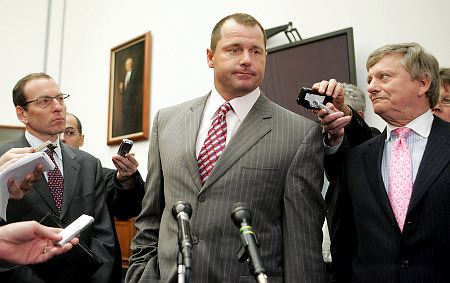
What’s happening to Roger Clemens is a Public Relations teaching opportunity. roger-clemens.79740099

Clemens has been indicted on lying before Congress.

The seven-time Cy Young award-winner was the most dominating pitcher of the steroid era in baseball. That goes to figure, because his former trainer Brian McNamee said the star player took steroids.  Even good friend and former teammate Andy Pettite, who has admitted taking steroids, has confirmed Clemens said he took steroids.

So what does all of this have to do with Public Relations?

Try Rule One of crisis PR: Tell the truth.

My 13-year-old son loves baseball. He plays it every day and lives the game.

Recently, I heard him debating with his friends who the best players of all time might be. When talk turned to Roger Clemens, my son could not figure out what the fuss is all about.

“Everybody knows he took steroids,” my son said. “He should just tell the truth and move on.’’

Great point. When stuck in bad public relations situations, it is paramount to tell the truth as quickly as possible and move on.

But the trouble Clemens faces is not that he is accused of telling a fib to friends, or even a member of the media. The Texas flamethrower is accused of lying to Congress. So now the full force of a federal investigation is bearing down on him.

Clemens proclaims that he never took performance-enhancing drugs. But we have heard that story many times from athletes who later admitted they lied.

The fan in me still hopes that Clemens is being honest. The PR person in me wishes everyone would learn to tell the truth from the beginning.

We’ll see how this plays out. No matter what happens, Clemens’ All-American reputation will never be the same.

alg_roger_clemens

news test

exclude test

Unlocking the PR Power of #Twitter

From your mood to the movement of your favorite rapper, there’s a lot we can learn from Twitter.

For one, the U.S. West Coast is happier than the East Coast—or so say Northeastern and Harvard researchers, who mapped out a way to quantify and visualize happiness all based on real-time Twitter comments (although I’m happy to say—and Tweet—that the map shows we’re pretty content here in Central Florida).

Then, there’s rapper Kanye West. He joined the popular social media site after a visit to its headquarters—and received instant coverage. Then, a few weeks later, Stephen Homes, a Twitter user from England, became a minor celebrity when he tweeted West to ask what kind of toothpaste he used on his diamond teeth. That question made Holmes the only person West himself chose to follow—and earned him a mention on NPR.

It goes to show you: social media’s pull is strong when it comes to media coverage and public awareness, and it should be an integral part of your overall strategic public relations campaign. So how do you build your brand on Twitter? Here are a few social media starter tips:

Kayne Tweet

  1. Decide how you want to brand your company: Fill out your entire profile and design your background—this makes your page look legitimate and extends your brand image onto Twitter.
  2. Become known as an expert/resource: Mashable writes that Twitter is a shorter and more viral form of blogging, so the same rules still apply.
  3. Establish a Twitter marketing plan: This includes adding Twitter links to e-mail signatures, Web sites, newsletters, presentations, business cards, promotion products, etc. Just like with any social network or blog, the more people who follow you, the easier it is to grow your already existing community.
  4. RT and Hashtags: Retweets, hashtags and following other people are essential ways to get new followers (What are hashtags? They’re the # signs placed in front of key search terms).

Ad Age calls promotion and public relations through Twitter “a souped-up word of mouth.” So start talking—140 characters at a time—and begin to unlock the PR power of Twitter.

For more social media and public relations advice, contact Wellons Communications at 407-339-0879. And don’t forget to follow us on Twitter @Wellons_PR.

Going Gaga for PR

310

Head over to Entertainment Weekly or MTV’s Buzzworth Blog, and you may notice: America’s favorite poker face is looking a little pixilated these days.

Media attention has swarmed around Ripley’s Believe It or Not! and its recent acquisition of a Lady Gaga portrait made of 61,509 BB gun pellets.

Gainesville, Fla., artist John O’Hearn created his Gaga masterpiece using just five colors, and now, it’s set to hang in Ripley’s Hollywood, Calif., Odditorium this Spring.

Goes to show you…there’s no Bad Romance when it comes to Gaga (and other “it” celebrities) and public relations power.

Can I get a “Rah, rah, ah, ah, ah?”

Death of the Internet? I think not.

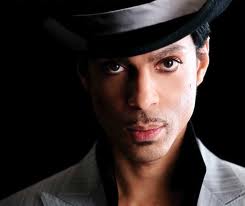
Prince: “The Internet’s like MTV. At one time, MTV was hip, and suddenly it became outdated.”

Prince is getting a lot of headlines for proclaiming the Internet is outdated. “The Internet’s like MTV,” he said to a reporter from The Mirror. “At one time, MTV was hip, and suddenly it became outdated.”

He should probably take that back – along with The Black Album. Sorry Prince, the Internet will be dead when pigs fly – or doves cry.

This is especially true for people who work in public relations. Online media provides some of the most valuable targets for media relations and PR campaigns – despite being undervalued in the eyes of some clients, who think it’s all about TV and daily papers.

Online media opportunities continue to grow as the traditional media continue to deal with shrinking space and cuts in staff and budget. Internet media offers so many terrific opportunities, probably 1999 or more, including:

· Connecting directly with customers through social media: Facebook, Twitter, Foursquare, Tumblr, Yelp, LinkedIn, etc.

· Reaching out to a targeted, niche audience through blogs (some of which have tremendous followings)

· Generating brand buzz and awareness through online video: YouTube, etc.

· Posting company news through online press releases (all while building SEO)

· Promoting events through community and national calendars

· Garnering the benefits of user-generated content

Who knows what the future will bring with the explosion of smart phones, iPads and the next big thing being cooked up by Apple and Google.

The (purple) reign of the Internet will last for a long time. Make sure to seize the many PR opportunities it offers.

The only thing that’s outdated for sure is this:

130px-Prince_logo.svg

No PR…er Soup…for You

About 100 people stand in line for the reopening of the Original SoupMan gourmet takeout that inspired the Soup Nazi character on "Seinfeld." (AP Photo/Bebeto Matthews)

When positive press comes along, most businesses see it as a good thing. After all, a lengthy story in let’s say The New York Daily News or a 2-minute slot on CBS’s The Early Show can do wonders in terms of public image and the bottom line. And who doesn’t like that?

Turns out—the “Soup Nazi.”

After a six-year absence, the man who inspired the Soup Nazi episode of “Seinfeld,” Al Yeganeh, is back. He reopened his original soup stand doors this month in Manhattan, and the media started slurping it up.

Yet come opening day, Yeganeh (now known as The Original Soup Man) was nowhere to be seen.

Add that to The Wall Street Journal article that published a list of rules for interviewing Yeganeh, including:

  1. No tabloids
  2. No use of the word Nazi
  3. No personal questions
  4. No follow-up questions

Plus, the fact that Jerry Seinfeld has had trouble in the past getting through the door, according to a recent NPR story. Yeganeh has dismissed the “Seinfeld” episode as an unfair character assassination. Once saying on CNN, that his product didn’t need “that clown” Jerry Seinfeld—that it spoke for itself for a quarter of a century.

For Yeganeh, it really does seem like “No PR for you.” Yet, we wonder, with all this media attention centered on his anti-PR ways, could that be his strategy?

Either way, at $20 for an extra-large cup of crab bisque and a line topping 100 eager customers, it looks like media attention is paying off.

Don’t Take the Bait

AP – Tiger Woods pauses during a press conference.

Two recent news stories reminded me of a good lesson for people facing critical questioning from the media: don’t take the bait.

We expect the media to ask tough, fair questions. It’s their job and that’s what they should do. But sometimes journalists ask questions that go too far or try and bait the interview subject into an uncomfortable situation.

The first story involves Tiger Woods. A reporter at a press conference in Ireland asked him if all his indiscretions has been “worth it” since it cost him his marriage and endorsements.

Obviously, the reporter’s goal is to get him to go ballistic so they can splatter the story all over the British tabloids.

Tiger didn’t take the bait. Woods handled it well, saying “I think you’re looking too deep into this,” and followed up with a very sharp “thank you.”

The second story comes from Sports Illustrated. It’s a Gary Smith article on the Gulf oil spill (yes, an oil spill story in SI, and well worth reading). Smith went on an oily field trip with BP’s crisis commander Bob Dudley, Louisiana Governor Bobby Jindal and a couple of network TV crews.

They wade into a large pool of oil, survey the damage and talk about having to see it to really get a feel for the damage that has been done.

Smith describes the scene after that:

Kerry Sanders, the NBC correspondent, wanted more. “Look over your shoulder,” Sanders ordered Dudley , camera rolling. “What do you see?”

“It’s devastating … it’s very emotional.”

"This is oil from right here." - BP’s crisis commander Bob Dudley

Not enough. “Can we see it on your hands,” demanded Sanders, “and can you tell us what it is?”

Dudley, on a contrition mission, scooped up the goo and gave NBC its money shot, blood on his hands. “This is oil from right here,” he recited dully.

Not enough. From the railing of a boat that the group had climbed aboard, CBS’s Harry Smith pointed to a phalanx of orange, fist-sized tar balls. “This is your oil,” declared Harry. “Do you feel guilty?”

Dudley, hangdog but litigation-leery: “I just feel sad.”

Dudley took the bait from Sanders and shoved his hands in the oil when asked. With BP’s lack of PR preparedness, Sanders probably could have had him in the oil floating on a raft sipping a cocktail – “now hold your drink in one hand and that dead bird in the other.”

Dudley should have gone out there and stuck with professional, responsible answers and not played into the hands of TV reporters trying to manufacture a “moment” for their stories.

I’m not trying to defend Tiger Woods or BP. The point is that anyone in the media spotlight better be able to recognize when the bait is tossed in front of them and know how to avoid it.

Independence Day on Publicity Stained Beaches

We don’t have an oil problem; we have a public relations problems.
We don’t have an oil problem; we have a public relations problem.

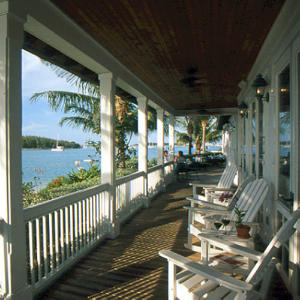
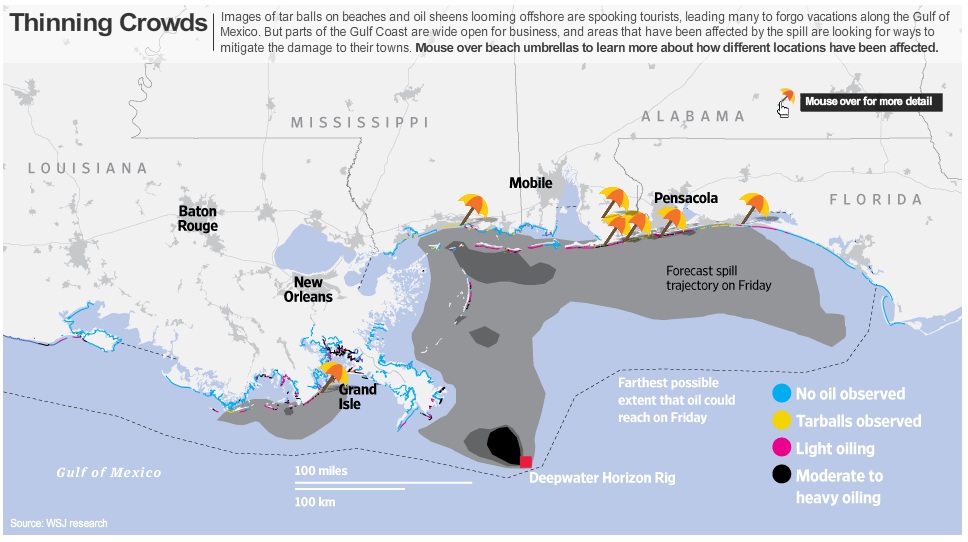
The summer travel season is well underway this weekend with big 4th of July celebrations planned. But how many people will be vacationing along the Gulf Coast in Louisiana, Alabama, Mississippi and our home state of Florida?

Independence Day for many this year means independence from the bustling crowds of tourists. That is just a crying shame. Julian MacQueen, a hotelier in Pensacola Beach, Fla., proclaimed to The Wall Street Journal this week, “Our biggest problem is a public relations problem, and not an oil problem.’’

MacQueen could not be more right on – at least in Florida there are hundreds of miles of beautiful Gulf beaches completely unaffected by the BP oil disasters. But for tourists looking at one shot at a great summer vacation, many have voted with their pocketbooks that the Gulf is too big a risk.

Actually, smart tourists looking to save big money should come on down. In many places, Florida beaches are more likely to be littered with deals than tar balls.

For resort owners affected by the oil either in perception or reality, they must stay vigilant in trying to get their message out to tourists. BP had funded $25 million for advertising in major drive markets and Florida’s governor is seeking more.

While getting the message out on a large scale is appreciated, vacation home managers, small inn operators and restaurant owners have issues closer to home – how to keep revenue up!

Possible PR steps should include:

·         Regular web site updates with shots of their deals

·         Training and talking points for your front desk and reservation staff

·         Direct marketing and e-blasts to past guests

·         Social media updates on Facebook and Twitter

·         Making yourself available to stories about tourism and the oil impact in your area

·         Honesty with your customers

·         Crisis and customer care plan in place for refunds

No one can tell how or when this oil crisis will end for the travel, tourism and hospitality businesses along the Gulf Coast. Treating the customers right and providing the best information possible as fast as possible will be the best PR of all.

There is hope that the Gulf Coast can celebrate independence from the oil leaks as soon as possible.

From The Wall Street Journal

2025 © Wellons Communications | Orlando PR Firm. All Rights Reserved.