Pokémon Go marketing lessons: You gotta catch ‘em all

Pokémon Go is less than a month old, and there’s almost no chance you haven’t heard about it.

The game became an overnight sensation, quickly topping Twitter’s daily users and grabbing at Facebook’s engagement. Some millennials have been calling it their “second childhood.”

Brands and companies haven’t been far behind, using the game as a point to launch themselves into the conversation. And it’s not surprising. The game is loaded with lessons for the PR and marketing worlds. Here are a few we see:

Don’t underestimate the power of pop culture.

We saw it with the dress. We’re seeing it with Pokémon Go now. We just can’t always predict what will capture the attention of the nation. If brands want to make the most of the opportunity, it’s important to act and act fast.

Many business have been doing just that with Pokémon Go, looking to see if they are a spot gamers will want to visit or taking matters into their own hands and setting up lures to get more Pokémon to come to them. There’s even a startup, LureDeals, dedicated to attracting gamers to businesses. Knowledge on pop culture phenomena is power, and in this case, money.

Have a little fun on social media.

Pokémon Go is a game, after all, and it should be fun. Social media is the perfect place to take advantage of that. Many brands have put up clever posts that tie into the game and promote their services or products.

Best Buy Pokemon

Even police departments are using Pokémon Go humor to talk about safety issues.
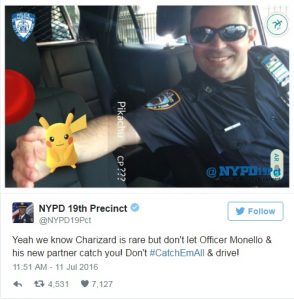
Pokemon police

See more examples at PR Week.

Don’t try to force it.

But while social media can be a fun place to tap into the craze, media pitches aren’t always the best way to do it. If your company has news related to the trend, sure. But don’t force it. Grasping at straws can have the opposite effect, angering journalists.

Know that new technology won’t be perfect at first.

You’ve probably already heard some of the concerns about Pokémon Go. Gamers have caused accidents driving while hunting for Pokémon. Girlfriends have broken up with boyfriends. People have targeted and robbed players.

There are probably other issues that will arise, as well. But that doesn’t mean you can’t use the game to help your business. All new technologies have some unexpected bugs. Just keep up to date with the news and use your judgement.

Be ready for more.

Pokémon Go is the first taste of what augmented reality can do in the gaming world, but with its meteoric rise, it won’t be the last. Brands and companies should be ready to use the lessons learned from Pokémon Go in the future. If the game proves anything, it’s that marketing and PR strategies are always evolving.

Communication Checkup 2016

As business owners, many of us assume that our customers and potential customers know what we do. Nothing could be further from the truth.

Only a small fraction of clients fully comprehend the scope of the services that your company can provide. In fact, if you polled your own family members, only a small percentage understand what your business does.

What does this mean?

You have to keep telling your story. You have to tell it so many times you’re probably almost sick of it yourself. It’s an uphill battle – it takes multiple engagements with your audience before they grasp the message. communicate

As we start a new year, it’s the perfect time for a simple checkup on your company message:

  • Does the “about us” section on your website actually reflect what the company does?
  • Are your services up-to-date?
  • Are you actively engaged in your social media or blog?
  • Do you have news that you think everybody should know, but nobody does?

In 2016, be committed to telling your story. Toot your own horn. Communication leads to sales. Most businesses grow best by word-of-mouth, but after you get that positive referral, people hustle to your website or your Facebook page to confirm what someone told them and find out more.

If you’re looking to get your communications in top form, we’d love an opportunity to help.

Have a Laugh: Use Humor on Social Media

Dr. Seuss once said “From there to here, and here to there, funny things are everywhere.” This couldn’t be more true for social media. When brands get in on the humor, social media is even more fun. Here are 3 reasons why your brand should consider using humor on social media:

Attention Grabber: We all mindlessly scroll through our social feeds during the day, sometimes it’s the same information, over and over again. When a funny video, picture or post pops up on the screen, you can bet we’re going to stop, read it and like it.

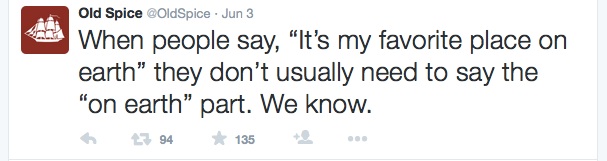
Old Spice TweetRelatable: Humor shows that brands have a human side. They don’t always take themselves too seriously, and can laugh. Relating to your audience is a guaranteed way to increase engagement.
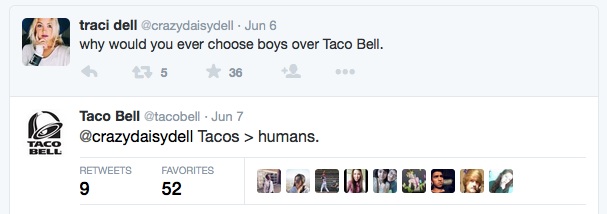

Taco Bell Tweet

Memorable: When your audience sees a funny post, they’re more likely to share it and remember it when it comes to making a purchasing decision. Take advantage of this by creating memorable content. Take this Virgin America post from Thanksgiving 2014, for example:

Virgin America Tweet

Binge Watching: A Sign of Changing Media Times

We’ve all done it. Watched hours on end of a show discovered on Netflix that we’re obsessed with and we need to know what happens next.

binge watching

Mornings turn into evenings, which turning into mornings again. Another day spent streaming.

Ah yes, this is now the modern-day practice for the younger crowd who typically don’t work full time and have varying schedules with classes.

Now that summer is over, will people stop their streaming habits?

Not likely.

This trend in streaming and quickly digesting television shows and movies also points to our cultural demand to have information at our fingertips at all times. Is this a new challenge for marketers across all channels?

Most definitely.

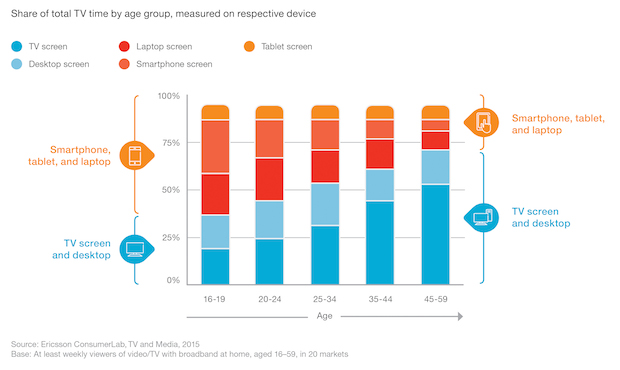
American teens spend 55% of their viewing time on tablets, laptops and smartphones. In contrast, adults age 45 and over spend half their time viewing via regular TVs.Viewing

Video on demand subscription services are growing too, with 87% of people subscribing to Netflix, Amazon Prime, HBO Go or HBO Now.

Streaming is now the norm, over traditional show viewing such as cable television, because people don’t have to wait a week or a season to find out what happened to a beloved character on their favorite show.

And when you’re done with one show, you can immediately start with the next.

All you have to do is click “play” or let the countdown end.

With every form of entertainment at our disposal 24/7, individuals have become their own editors for entertainment and news. It’s not likely to end anytime soon.

netflix

Domino’s: Using digital and social media to change the way we order pizza

Domino’s latest ad has the usual big brand flair of celebrities, bright colors and social media. Richard Sherman tweets a pizza emoji, Eva Longoria orders a pizza from her TV remote, Sarah Hyland texts the pizza emoji to place her order and Clark Gregg orders with his smartwatch. In short, Domino’s wants to change the way we order pizza.

dominos logo

While fans have been able to order via phone and through Domino’s website for some time, they can now order through Twitter, Samsung Smart TV, Pebble or Android Wear smartwatch apps, the Ford SYNC AppLink and through voice ordering via a smartphone. Even the pizza emoji can be texted to DPIZZA (374992) to complete an “Easy Order.”

Pizza emoji

This marketing move, coined as “AnyWare” ordering is set to rival Pizza Hut, who has more digital awareness than Domino’s. These new ordering capabilities have secured Domino’s brand association with smartphones and social media ordering.

This new form of ordering is set to take a hold on brands everywhere. The average millennial checks their mobile device 43 times per day. Millenials also value brands that have positive social interactions. These statistics are growing by the day, and with Domino’s new way of ordering pizza, the use of social media and digital media devices is sure to continue to rise.

Taylor Swift: Always In The Spotlight

Taylor Swift Bad BloodTaylor Swift is everywhere. She’s won countless music awards, her songs play on almost all radio stations and her photos can be found online and in magazines. Clearly, she’s hard to miss.


Now it seems that Swift keeps getting into disagreements with other fellow musicians, such as Katy Perry and Nicki Minaj, although her feud with the former is ongoing.

So what’s the big deal? Why do people keeping “picking” on Swift? Are these musicians really jealous of her and her achievements? Or is there something underneath all the flustering?

Could it all be due to a typical Hollywood hoax, to stir up public attention for these artists?katy perry vs taylor swift

No information has been found to support such a theory, but the constant “hate” Swift gets seems somewhat intentional and timed.

For example, recently Nicki Minaj posted a tweet in which it was very apparent she was talking about Taylor Swift. Katy Perry decided to quickly jump in with a tweet to not so subtly offend Swift. Swift then responded by sending a tweet of her own basically denouncing Minaj for what she said. Minaj again tweeted a response to Swift saying that she wasn’t actually talking about Taylor and that she was still in her good graces, and Swift did the same. All in the same day.

These ladies all have PRtaylor vs minaj teams who monitor everything they wear, say or do, so wouldn’t these professionals stop them whenever these stars post controversial tweets or photos?
Or is it all part of the plan?

Every time a celebrity gets into a feud with another celebrity, it always becomes news. These “feuds” garner public attention, as well as admirers. Everyone loves a good show, and these situations provide just that: a good show!

If this were true, their PR teams show that they know what “sells”. They know how to get the public’s attention and keep it. This is an important skill for any PR professional. These artists’ PR teams know who they are targeting and will give them exactly what they want. Likewise, in other types of PR, it is also crucial that professionals know their target audiences and give them what they like, in the manner that want it, i.e. social media to reach millennials and younger generations.

New Facebook Videos Will Generate Ad Revenue

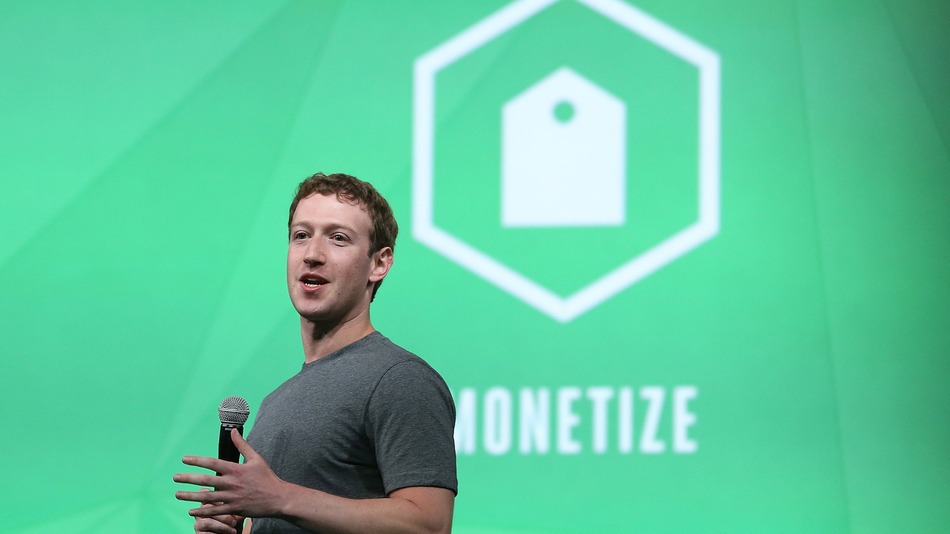
Four million users a day watch videos on Facebook. The social media site now wants to cash in and more aggressively compete with Google Inc.’s YouTube.


Mark Zuckerberg talks about Facebook Video and it's plan to share revenues with it's users.Facebook announced a revenue sharing model this week similar to YouTube’s where they will share ad revenue with video creators in a move, according to the Wall Street Journal, designed to attract more polished content and more ads. If successful, Facebook is a more daunting threat to the Google owned online video site.



 

While many people are mesmerized by family moments and funny animal stories, the Titans of digital media clearly see your videos as a strong revenue stream. Interesting fact to note: smart phones are the source of 65% of all video views on Facebook.


For more details on the changing landscape of what you’re seeing online go to Fortune.

Tracking the Invisible – Analytics for Social Media Images

Social media has become increasingly more image-based. This fact can be attributed to why platforms like Instagram and Vine are increasingly on the rise. Here are some quick stats:

  • According to 2014 research published on eMarketer, photos accounted for 75% of content posted by Facebook pages worldwide.
  • Photos and images are also the most engaging type of content on Facebook, with 87% interaction from fans.
  • For Twitter, adding a photo URL to your tweet can boost retweets by 35%.

Knowing this is great for content marketers. However, for those attempting to track mentions from followers and engage their brand in the conversation, this is a challenge.Analytics

How do you find a great post to “regram” on Instagram if no one tags or adds a #YourBrandHere to their post? How do you respond to customers on Twitter who don’t include your handle? How do you respond to Facebook users who don’t post directly to your page? How do you track the analytics to show your boss that social media is worth the time?

Nearly 85% of posts that contain a logo contain either no text or no text that is relevant to your brand, according to Brian Kim, director of product management for ad-tech startup GumGum.

If the visual elements going on social media largely elude the tracking and analytics brands use to keep tabs on what people are saying, how can we give an accurate picture to our clients about what’s being said about them?

Our recommendations:

mantii_th4

Enter the new social media analytics platform, Mantii. This platform is an offshoot of GumGum. Mantii looks for all or part of brand logos contained in social media posts, whether they mention the brand in text or not.

reverse google image search

Another method is to track your own images being shared through a reverse Google Image search. Google’s search by image can easily give you the information you need about your own pictures being shared by others.

curalate logo

A final method is to use the platform Curalate. Curalate applies image-recognition algorithms to social media platforms, much like Mantii. However, this platform is officially recognized by Pinterest, Tumblr and Instagram.

Have you used, or plan to use any of these platforms? Or are you using a different platform to track your images? Let us know in the comments.

The Importance of Knowing Your Audience in PR

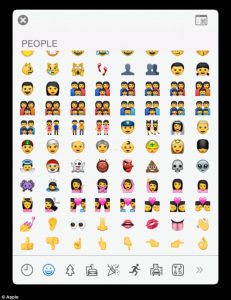
So you got the new iPhone update which includes the new emoji keyboard and you’re really excited about it.

However, you wouldn’t send your grandmother a text full of emojis when you know that:

  1. She doesn’t understand that EMOJIS means that you did not enjoy waking up this morning.
  2. Her cell phone doesn’t receive text messages.

You would simply pick up the phone and tell her that information. It doesn’t make sense to send her a message she doesn’t understand through a medium she would never see.

The same is true in public relations. Knowing who you’re speaking to – knowing your audience – is a critical part of the PR practice.Apple new emoji keyboard.

No matter what strategy or tactic you are using, the best message in the world won’t be effective unless it’s in front of the right people in a way they understand. From collateral to social media campaigns and press releases, knowing your audience is crucial.

For example, when choosing outlets to send press releases to, we choose the ones most relevant to the client’s audience. A food blogger isn’t going to want to know about an upcoming marathon race. A CEO of a company probably doesn’t read or watch the same material that a college student does.

It’s important therefore to know where your audience gets their information and what channels they frequent. Facebook seemed like it was going to be the end-all-be-all of social media, but did you know that today’s teenagers don’t see Facebook to be as important as their parents do? If your product appeals to a younger demographic, it’s important to follow the trends of social media platforms. In the long run, these teenagers will hold major buying power 5-10 years from now. How will we adapt?

It’s also important to ensure that your message and tactics are appropriate for you audience. Messaging that is humorous isn’t always going to translate well for serious non-profits or business people. Similarly, a text-only ad for a children’s breakfast cereal isn’t going to communicate to toddlers.

In public relations and marketing, knowing your audience is step 1 in a successful campaign.

ICYMI – Social Media Platforms Widening Advertising Options

Instagram introduces carousel ads, Pinterest expanding promoted pins

In case social media advertising and marketing wasn’t complicated enough, more platforms are expanding their promoted content offerings. Instagram and Pinterest are both expanding their promoted content services, and they are both making their advertisement options unique.

Instagram Logo, Instagram carousel adsInstagram:

Earlier this month, Instagram introduced their new idea for promoted content: “Carousel Ads.”

Carousel ads give brands using promoted content advertising more flexibility in telling their stories.  Viewers of these ads will be able to swipe left to see additional images and link to a website of the brands choice. Instagram says that this will “bring the potential of multi-page print campaigns to mobile phones.”

The new kind of ad will allow advertisers to be more creative. For example, a fashion company could deconstruct the individual pieces in a “look” and link to where potential customers could by them.

Click-through links give advertisers another way to drive traffic to their website and drive sales.


Pinterest:

Our Pinterest home-feeds have become flooded with Promoted Pins.pinterest-logo-transparent

As of the first of this year, Promoted Pins became widely available to advertisers. These pins are paid for by advertisers and appear in the dashboard of users that match the advertisers’ brand’s interests and relevant search results. Much like Facebook, Pinterest allows you to target your promoted pins and uses analytics so advertisers can see how their campaign is going.

Now, Pinterest claims that Promoted Pins perform just as well and sometimes better than organic pins, and that brands across all industries saw results. But if your consumer base is anything like this blogger, they will have nixed most of the “Pins Based on Your Wedding/Food/Style Board” pins in no time flat.

Time will only tell how well Promoted Pins does and whether it’s worth investing in. In the meantime, we’ll be watching for more research.

On a related note, Pinterest said that their Auction-based Promoted Pins (CPC), or cost-per-click model is seeing impressive results for their beta users. However, they’re not quite through working out the kinks, and it’s not ready for mass use.


So if you didn’t have enough on your plate with Facebook’s ever-changing algorithms and advertising options, we’ve just added two more to your list. Do you think these options are viable for your business? How do you plan on keeping up with different social media platforms?

2025 © Wellons Communications | Orlando PR Firm. All Rights Reserved.