
Bring your story to life with visuals

People often think of public relations and journalism in terms of the written word.

Mention “public relations” and people immediately think of “press releases.” Say “journalism” and people connect it with “stories.”

Both perceptions are only the tip of the iceberg. Public relations firms and print journalists are, indeed, centered around the written word. We certainly value the importance of what you say, but in today’s contemporary Big Data environment, at Wellons Communications, we place equal emphasis on using visuals to project your story.

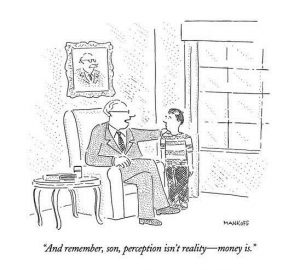
Here’s an example, as illustrated by London-based NeoMam Studios, a leading graphics design communications firm based in the UK:

The picture, indeed, is worth a thousand words.

Your brain craves visuals

Written communications are designed to conjure up a picture or image. With that in mind, let’s cut to the chase and examine just how important visuals are in telling people about your business:

• The human brain processes images 60,000 times faster than text.

Ninety percent of information transmitted to the brain is visual.

• We can get the sense of a visual scene in less than one-tenth of a second.

• Color visuals increase the willingness to read by 80%.

• People following directions with text and illustrations do 323% better than people following directions without illustrations.

Visuals make your information more engaging

Organizations that specialize in visual communications have a name for communicating visually: infographics.

Infographics are particularly effective at communicating complex ideas. Non-experts better comprehend and understand information that requires long, complex explanation when graphics present the idea. Statistical information, e.g. trends in your industry or key points about why your product or service is superior, are more easily understood by laymen when presented visually.

An example of the power of infographics is the popularity of the informational graphics published regularly by USA Today. Not only is your eye attracted to the graphics, the ideas they project are quickly and easily understood. Even if you have little interest in the subject or know nothing about it, once you look, you come away with an image and information that you cannot easily forget.

Put Wellons to work on making your story easy to see … and understand

Our team at Wellons Communications firmly believes in making your message as easy to understand as possible. Simplicity in understanding is augmented by visuals. And that’s why we look for the best way to visualize your story and get people to notice you and your organization’s key attributes.

If you want to make your story come to life and possess qualities that will make people look at you a first—and second—time, keep Wellons Communications in mind. Contact us (407-339-0879 or will@wellonscommunications.com) and let us show you how we can blend words and pictures into memorable stories aimed at increasing your bottom line.

Why you need to keep your PR plan fresh and flexible

Let’s start with an assumption we can all agree upon.

You must have a plan to succeed in business. If you don’t know what you want to accomplish, you will never arrive at your destination.

It’s no different in public relations. A public relations program must have well-defined, realistic and measurable objectives before strategies and tactics can be developed.

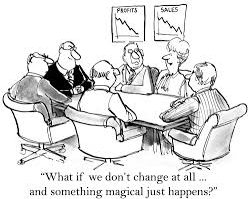
At the same time, it’s important to remain cognizant that nothing remains written in stone. Marketing environments are constantly changing. New competitors come forth. Old competitors change their products or introduce new ones. Regulatory mandates change. Social conditions change and new attitudes emerge.

Simply stated, change is the only constant upon which you can depend.

A three-step approach to PR planning

At Wellons Communications, we keep our clients’ plans updated by conducting a three-step process:

  1. We review and assess what’s happened in the past year.
  2. We consider our client’s overall business objectives and use them as a basis for revising and developing the next steps in our client’s PR plan.
  3. We develop a plan of attack for the upcoming year.

The public relations plan that develops from our three-stage approach helps you know where your PR program is headed and, from our vantage point, helps us verify what we do is in concert with your overall business objectives.

“Everybody has a plan…until they get punched in the mouth.”

— Former heavyweight boxing champion Mike Tyson

Successful business leaders likely would not deign to take advice from an individual with a history like one-time boxing great Mike Tyson. But Tyson’s memorable quote is particularly well-suited when it applies to keeping your PR plans up to date.

Tyson’s quote serves as a reminder that PR plans, particularly plans that address crisis, must be capable of being activated quickly and must be flexible enough to adjust to uncertain situations. Your business must be mindful of all possible negative scenarios and have appropriate responses prepared.

Plans, indeed, are important, but they also must be flexible enough to deal with challenging situations you might not ordinarily address.

If you believe a crisis cannot happen to you, think again.

Start with Hurricane Dorian.

How did the hurricane affect your business? How did you interact with your customers before and after the hurricane’s visit to Central Florida? Were there opportunities (e.g. increased sales to meet unusually high demand for storm-related products)? Were there special concerns you needed to identify and resolve before the storm (e.g. what your clients needed to do in relation to your product or service)?

Were there messages you needed to convey to your target audiences? Was there information you needed to remind your clients about? Did you take any action to let your clients know how they could reach you or ask questions of you before and after the storm?

One of our roles is to ensure our clients are aware of the need for some sort of crisis plan and crisis procedures, even to the point of conducting a test run to help iron out any holes in the plan. Like Tyson said, plans are great until you have to actually use them.

2020 is fast approaching. So, start your PR planning for the new year now.

The new year will be here before you know it.  And that means your PR planning needs to be thought out now in order to get it underway in January.

If you don’t have a PR program, consider augmenting your overall marketing plan with a PR initiative. And if you already have a PR program, it’s time to dust it off and ensure your PR action plan is in sync with your other marketing activities.

Not sure how to develop a robust, affordable and doable plan?

Call us at Wellons Communications. We serve a great number of mid-size businesses that have regional and local needs…and will be happy to review your business’ current situation and see how we can affordably and realistically help you meet your needs.

Crisis communications: How prepared is your business?

clipboardWhen you hear “crisis communications,” your first reaction might be “It won’t happen to me.” After all, you’re just a business—not the target of something you’d see on the news.


And you’re right—mostly. While you probably won’t suffer some kind of incident that will make major headlines, the rise of social media has made it much more likely that your business will face some kind of crisis situation.

Because there is a possibility, you need to have a crisis communications plan in place now.

What kinds of crises are we talking about?

There are different degrees and types of “crises.”

Any one of them could have an enormous impact your business. Indeed, any of these types of crises could happen to you and they don’t have to make headlines to have a meaningful, negative, effect on your business. Here are some examples of impactful, but often unseen, kinds of crises that affect businesses with more regularity than you might suspect.

Negative actions by a former employee. These can range from someone sending harmful emails to your key client database to someone going to the local media and spreading negative misinformation, creating a false image of your organization.

Criminal activity involving an employee. What would you do if you discovered that one of your employees had been arrested for embezzling organizational funds? Or had been arrested for sexual abuse against children? How would you respond if an ex-spouse showed up at your business and took threatening action against their ex?

Negative spotlight on your business category. How well prepared are you to respond to client or media inquiries about a sharp sales downturn in your product or service category? What about some kind of inquiry about the safety or reliability of products or services in your particular category?

It doesn’t have to be your fault to call attention to your business. Media often call on anyone in a particular industry to add context to a story.

Need specific examples? How about the safety of Johnson & Johnson’s baby powder? Or the recurrence of E. coli or salmonella in Chipotle’s restaurants? If you market a product related to parents or operate a restaurant, there’s a good possibility you can get caught in the news fallout, even if it is someone else’s problem.

Need examples closer to home? How about the shooting at Orlando’s Pulse nightclub? Or the disappearance of the 2-year old who was attacked by an alligator at Walt Disney World? What about the impact of hurricanes on Central Florida and their disruption of normal working cycles on businesses?

How to handle a public relations crisis

Thanks to the interrelationship of social media and mainstream media, an incident can morph into a full-blown crisis in just a few hours.

If you have a well-constructed crisis management strategy, backed-up by a regularly-conducted rehearsal program to test it out, you are in position to deal with the crisis.

Such a plan will enable to you quickly interact with your clients, the leaders and influencers in your category, media, and any other audiences that are important to you. Even a short, basic plan identifying your key audiences (along with their contact information) will position you to address an unseen crisis in a businesslike, responsible manner.

How do you create a crisis plan?

You can create your own plan.

Or you can call on the seasoned professionals at Wellons Communications to create a plan for you.

Our team members have served both sides of crisis management (the media side and the client side) and have first-hand knowledge of how effective a good plan can be. They have also seen the disastrous results that inevitably occur when a business lacks crisis planning.

We will be happy to provide you specific examples of the kinds of crises we have addressed in the past. More importantly, we will listen to you, learn about your business and better understand what kind of readiness you need to have to address a crisis situation.

Let’s discuss how we can ready your business to be prepared to address a crisis situation effectively and professionally—and before it ever happens.

Call us (407-339-0879) or email us at will@wellonscommunications.com to start on your crisis communications planning.

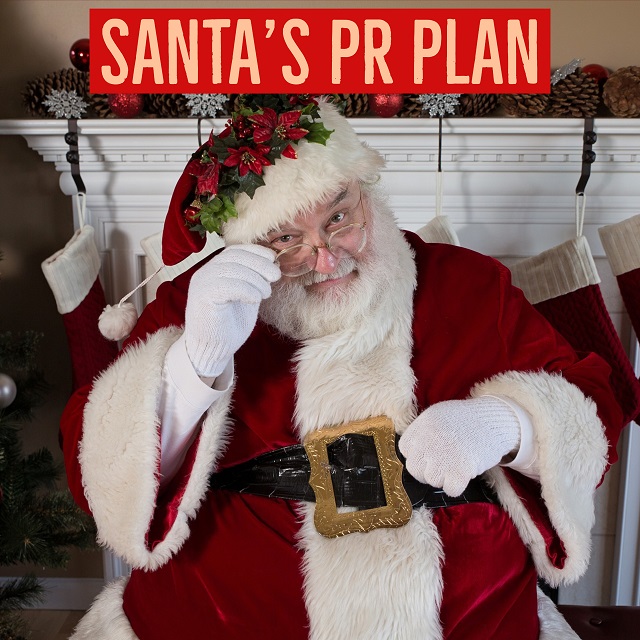
How would Santa use public relations?

Santa needs PR?

“C’mon,” you scoff. “Santa needs PR like I need a hole in the head.”

But, when you step back and think more about it, even Santa has a genuine need for public relations assistance, just like your business needs public relations to both build sales and address issues that potentially could get in the way of sales.

So what kinds of challenges might Santa face?

  • Start with the elves. Are they happy with what Santa pays them? And what if they go public with their salary concerns? How does Santa react? What does he tell the public? And how does Santa communicate how the elf challenge is being resolved in time for Christmas?
  • What about the reindeer? Animal activists may frown on how Santa puts the flying reindeer to work each Christmas. How does Santa treat the reindeer the other 364 days of the year? Are they overworked? Should they even be used to deliver gifts, or should they be retired in favor of advanced technical solutions for delivery?
  • Weather challenges. How will Santa’s journey south be affected by winter storms that may be lurking in his flight plan? Who will serve as Santa’s spokesman to relay reassurance that the presents will, indeed, make it to their rightful place under the Christmas tree?
  • Credibility. At what age will children begin to ask, “Is Santa real?” And what do parents tell their kids when it becomes obvious that they will be soon facing some tough questions?

How would public relations help Santa?

The world as we know it changes every moment, which creates ever-changing challenges.

A well-organized, thoughtful and up-to-date public relations plan backed by knowledgeable professionals provides a means of dealing with those challenges.

Santa’s brand image ranks second to none, and it would be PR’s job to keep it that way.

Because of his high visibility, everything about Santa – and we mean everything – is subject to public scrutiny. Santa’s PR team would need to anticipate the tough questions that potentially can emerge and be prepared to address them. At the same time, the PR team needs to find new and different ways to ensure that Santa continues to hold his leadership position.

So why do you need public relations?

As you prepare to address the 2019 business year, ask yourself the same kinds of questions Santa’s PR team would ask themselves as they look ahead.

Those questions would include:

  •  How can public relations help me market my product or service?
  • What kinds of newsworthy issues and challenges can hurt my business? And am I prepared to address them?
  • Are there newsworthy issues upon which I can capitalize?
  • Are my messages clear and understandable?
  • Will information about my product or service withstand intense scrutiny?
  • Am I missing an opportunity to affordably and effectively market my product or service by not including public relations?

Put public relations into your marketing mix for 2019

With the turn of the annual calendar right around the corner, now’s the time to look over your existing public relations plan and freshen it for 2019—or to create one altogether.

A practical action plan can be put into place to augment your overall marketing activities for a fraction of the cost of what you would invest in advertisements.

What’s more, when you bring an experienced, knowledgeable PR team to your side, you get considerably more than simply a publicity team. You acquire a team of marketing professionals who proactively help you sell your ideas while covering your back to fight off challenges that prove damaging to your enterprise.

Our recommendation: add PR to your marketing mix in 2019…think of it as a present for your enterprise.

Best wishes for a happy holiday season and a great 2019

At Wellons Communications, we have been fortunate to assist – and learn from – extraordinary clients whose successes we have been pleased to contribute to. We are, indeed, grateful for their business and we remind ourselves every day that it is a privilege to serve our clients and help them attain success.

We wish you the same kind of success for your business in the coming year.

Merry Christmas…and a prosperous and fruitful New Year.

How to get the most out of your elevator speech

Quick! When someone asks you “What do you do?”, what’s your answer?

Do you tell the questioner, in a single sentence, what you do – or do you focus on the benefits you provide your clients? Are you able to define, in as few words as possible, the results you deliver on behalf of your clients? Do you stick to that definition?

Emphasize the value you bring to your clients

We’ll start with our own business. When people ask members of our public relations account team “What do you do?” we respond, “We help our clients sell things.”

If the questioner wants more information, they will ask—and we’ll respond with a broader explanation of how we develop and distribute information that helps our clients reach their key audiences and helps them sell their products, services and ideas.

Too much information and too little time to absorb it

The avalanche of communications that has emerged in the 21st century demands your communications be clear, simple, to the point and quickly and easily understood. No surprise, social media has led the way in creating the crowded competition for attention, to wit:

  • Every second, on average, around 6,000 tweets are tweeted on Twitter, which corresponds to over 350,000 tweets sent per minute, 500 million tweets per day and around 200 billion tweets per year.[1]
  • Every minute on Facebook: 510,000 comments are posted, 293,000 statuses are updated, and 136,000 photos are uploaded.[2]
  • 3,607,080 Google searches are conducted worldwide each minute of every day.[3]
  • Ninety percent of all data was created in the past two years (that adds up to 2.5 quintillion bytes of data every day.) [4]

The result of all this electronic overload has upended and revolutionized print and broadcast media, as well as other communications industries.

On one hand, social media and electronic communications provide an entirely new means of reaching one’s audience. On the other hand, the sheer volume of information generated by electronic communications weigh down one’s ability to take it all in, much less make sense of so much information.

“Just show me the baby”

The communications overload places a premium on presenting your message in a quick, easy-to-understand format.

To illustrate, there was a leading executive in the theme park industry who was regarded as a terror for those who insisted on long, windy explanations. The theme park exec would, in front of everyone in the room, cut them off and say, in a loud voice, “Enough. Just show me the baby.”

While it wasn’t pleasant to hear, it was his way of saying “get to the point.”

We agree with his philosophy (if not his manner of management); it’s important to present your message quickly and simply, as well as memorably.

Brevity is king

Eons ago, one of the key tools for PR folks was Strunk & White’s Elements of Style. The book’s benefit can be summed up as “omit needless words.” It’s an old philosophy, but it’s one that holds true today.

Because of the crowded communications field, we have shifted to presenting and absorbing information in headline fashion. We cannot communicate simply enough. And that means communicating in as few words as possible.

In a day and age when we want people to read white papers that detail everything you would like them to know about your product and service, no one has time to read them.

They’d rather get a postcard with one sentence and an interesting graphic that drives your point home.

We work simply, but effectively

Our team at Wellons Communication recognizes how quickly communications is changing.

We understand how to craft a message that will cut through the clutter, gain recognition from your target audience, and provide them the reasons it is important for them to do what you want them to do.

If you want to start communicating with simplicity and clarity, think about our approach at Wellons Communications. We keep it short and to the point, focused on making your message more powerful in its simplicity.

We help you sell things, which is the whole point of being in business.

[1] http://www.internetlivestats.com/twitter-statistics/
[2] https://blog.microfocus.com/how-much-data-is-created-on-the-internet-each-day/
[3] https://blog.microfocus.com/how-much-data-is-created-on-the-internet-each-day/
[4] https://web-assets.domo.com/blog/wp-content/uploads/2017/07/17_domo_data-never-sleeps-5-01.png

Four things you need when distributing your company’s news

Suppose you tweaked your product or service so it made you the leader in your particular industry…and no one heard the news. Suppose you landed a huge client that elevated your position to a leader in your field…but couldn’t get the news out quickly enough.

Distributing important information is often as critical as the news itself. Current information, like vegetables in the supermarket, does not remain fresh for long.

If information sits around too long, it’s old news. And media has no interest in information that occurred very far in the past.

Distribution of information is one of those tasks that looks, on the surface, to be mundane, but for clients who want their news and information conveyed to their particular audiences, distribution the right way is critical.

Distribution requires a sense of urgency

If something important is happening with your business and you want others to learn about it, you must work quickly to get the information out.

That requires two (and sometimes three) components:

  • Developing the information you want to share
  • Distributing the information to media who can use it
  • And, if appropriate, illustrating the information

All of this has to come together while your information is still fresh.

If your information gets to media after it’s “use by” date, media view the information as “expired.” If it happened yesterday or in the past week—and is still relevant—it’s news. If it happened last month, it’s not news.

And keep in mind, the media is not sitting on pins and needles waiting for information about your enterprise. It is up to you (or your PR team) to get the information prepared and distributed to the media.

Distribution requires proper targeting

The act of distribution, unlike an advertising campaign, is inexpensive. What does cost, however, is the thought put into distribution.

Are you reaching all the targets who can use your news? Are there targets who may not be immediately visible to you? Are you including media that might have a tangential interest in your news?

Conversely, are you needlessly distributing your news to outlets who would have no conceivable interest in your news?

Your PR team should have the expertise to develop your news distribution plan, as well the tools that can accomplish distribution quickly, efficiently, and at a reasonable cost.

Timing is essential for distribution

When you submit your information to media is another key factor in generating coverage.

There is no exact formula for timing dissemination of news, other than to avoid issuing news to arrive when no one is in the newsroom to receive it or act on it. Other factors, such as breaking news on a national or local scale, make a huge difference, too, and sometimes there are other industry aspects to consider.

Generally speaking, Tuesday is the best time to issue a press release, followed by Thursday. The worst day to send your information is on Friday. Similarly, the best time to send your press release is early in the morning – at 9 a.m. to be exact, or later in the day at 8 p.m., Eastern Standard Time.

Distribution requires tools to effectively reach media

Technology has transformed how news and information is conveyed to media.

Thanks to social media, a click can reach media around the world in an instant.

But there’s more to it than simply emailing words to media outlets. Distribution should include graphics that bring your story to life and provide media with the ability to illustrate your story to their audience.

Follow up, on an individual-by-individual basis, is also important. Aggressive publicity requires telephone calls, texts, or emails to specific reporters who will have a special interest in your news. This, in turn, requires that your PR team know your product or service and know who will have a specific interest in your news.

We have the tools and the know-how to get the word out

At Wellons Communications, we offer the whole enchilada when it comes to getting the word out.

We employ national resources that can be tailored to reach just the audience you want, whether it’s distribution to a broad consumer category or a precisely-targeted trade category.

Further, we can arrange to have graphics prepared and attached to your story so that media can use the illustrations to bring your story to life.

When you have news to share, keep us in mind. We’ll be happy to help you craft a news distribution plan that will be affordable, cost-efficient, timely, and well-targeted.

How to make the most of your next media event

When people think of public relations, the image that often comes to mind is working a media event, pulling things together while reporters prepare for an on-camera interview. And while those in the biz know that’s certainly not an everyday occurrence, media events can be one of the most fun parts of the job.

They can also be the most challenging, with long hours and lots of logistics.

At Wellons Communications, we’ve worked our share of media events, from restaurant openings with big celebrities to most recently, Altamonte Springs’ Red Hot & Boom. With that solid experience behind us, we have developed a process to help media events go as smoothly as possible.

Here are some of our tips to help your next event go off without a hitch—and with a ton of media coverage.

Target your messages.

What matters to TV reporters might not matter to a freelancer photographer, and what’s important to a blogger might not be what a newspaper reporter wants to know. That is to say, when you’re telling the media about your event, make sure you’re giving them the information they need to do their job. Showing that you understand what they need and will make sure things go smoothly once they’re there goes a long way for getting media to cover your event.

Avoid the one and done.

When it comes to media events, you can’t send it and forget it. Getting live, in-person coverage is harder than getting a publication to run a press release because it involves a lot more coordination on both sides. Make sure you send all of the information multiple times, and don’t be afraid to call to make sure there aren’t any questions.

Be prepared.

When you’re working off-site and out of your element, this step can’t be overlooked. You have to think of everything. Make sure you have a hard copy of any press materials you might need to distribute, but make sure you can access any docs you might need digitally, too. Chance of rain? Think about plastic folders or laminating key documents (yes, we’ve walked out of events with soaking, ruined notebooks before…lesson learned!). Batteries or back-up chargers are always a good idea. And don’t forget to take care of yourself, too! You can’t do your job if you aren’t feeling well. Bring water and snacks, if you need to, and wear weather and event appropriate clothing.

Brief the whole team.

Even if only a few team members will be working on-site, make sure your entire team is in on the plan. They should know what to do if media members call the office, how they can assist you if needed and how they can reach you in any circumstance.

Celebrate success.

At the end of a long event, we just want to kick off our shoes and relax. But too often, it ends there. People don’t look back on the event and learn. What went well? What can we do better next time? Where did we have success? Experience is the best teacher, and this is the team’s chance to reap the rewards from a hard day’s work.

With this checklist in mind, we’ve had some seriously successful media events, and with these tips in mind, we know you’ll be able to maximize your next live media opportunity.

What do your customers really think of you?

Everyone wants to know what others think of them—and when they find out, they want the perception to be positive.

But how much time and effort do you put in to finding out how your customers know about and perceive you? How often do you ask yourself, “How much do I understand about the needs of my client and how do I address or solve that need?”

Do you make the time for your customers?

Marketing revolves around two parties: you and your customers.

Marketing your product or service will succeed only if your customer has a need for what you sell and understands how it meets their need.

That sounds simple enough, but as business quickens, it’s easy to find yourself spending all of your time addressing planning, production, organization, marketing, distributing, personnel management and other key business operating issues.

So, who gets left out? Often, it is your customer. Who is really talking to them or listening to what they have to say?

Your client is always number one

Meeting the needs of your customer is why you exist in business. If they succeed, you succeed…and grow.

Your customer is always the best source for feedback.

But how much do you know about your customer? Do you actively seek feedback? And what does that feedback say?

Central to everything is the satisfaction and well-being of your customer. They are, indeed, number one and should be treated accordingly.

Personal interaction is a must

If your customer is an individual, building that relationship can be as low-tech as a phone call once a month. It can be built by asking “How is your business doing?” or “What can we do differently that will help add to your business?”

Your client relationship can be enhanced by providing the customer with new and different information. If you recognize a trend that is an opportunity, let your client know. If you see a competitor doing something differently, be the first to tell your client.

The point? Interact with your client. Interact with them frequently. Encourage customers to make time to spend with you. Ask them questions. Listen for what’s important to them.

Seek feedback on a broader basis

Is your client plugged in to what their audience says about them? What are they saying? Are sales going up or down? What’s working? What’s not working?

Conducting research like this is essential in marketing, and it’s essential to share this information with your key marketing resources, like advertising and PR agencies. It is extremely valuable, and with it, you can drive sales to heights you never imagined.

We truly value our clients…and let them know it

At Wellons Communications, our clients are, indeed, why our business succeeds and grows. We value each and every one of them. We stay in close touch with them on the phone, in person, online, and in the actions we take on their behalf.

We want our clients to perceive us as a member of their staff—and not just any member, but a highly productive and valued staffer who is instrumental in their success and growth.

After all, our clients are the sole reason why we are in business.

Find out more about how we treat our clients and how we can help you further your overall marketing efforts with effective, results-oriented public relations and publicity programs. I’m available to help you improve the perception of your business at 407-339-0879 or at will@wellonscommunications.com.

Why you need to include PR in your marketing plan

Let’s face it.

When you put pencil to paper in developing your marketing program, the first question usually is “How much do we have to budget for advertising?”

The answer, inevitably leads to spending an inordinate amount of time (and money) on advertising, which, in turn, often leads to results that are inconclusive or, at best, difficult to quantify.

Often overlooked in the marketing equation is public relations. But PR, if properly employed and conducted on a consistent basis can give you the most bang for your buck.

PR doesn’t cost much and can deliver huge payback

Public relations, usually in the form of publicity, has enormous potential. Positive publicity can amplify your brand name, distinguish your service or product from everyone else’s, and validate what you say about yourself.

The good news is that PR costs considerably less than advertising. The challenge is that PR is not totally predictable. Getting your name in the news depends on what is happening in the news and requires that your product or service has information of news value to share.

And in order to remain in the news, your company has to keep making news. That is where having a qualified PR firm can help. Any qualified firm has strong relationships with the media. They know how to reach the right people and find the angle that maximizes the chance of coverage.

That is another way PR professional can make a big difference– by identifying and clarifying what your product or service does for your target audience. It’s a message that needs to be told many different ways and tailored to fit the particular audience that is reached by a specific media (e.g. transportation company execs gravitate toward business and transportation news outlets).

Further, you have to tell your story again and again. PR professionals are experts at finding new ways to tell your story and keep your name in the news.

How much should I be spending on PR?

No two budgets are exactly alike, just as no two companies are exactly alike. A precise budget for PR is difficult to pin down. A review of basic costs, however, will give you some idea of what’s involved and what you pay for when you use a qualified public relations firm.

Generally speaking, there are two primary costs you will incur when hiring a PR firm:

Monthly fee: A modest number of account service hours times an hourly rate that falls within your budget capabilities.

Out-of-pocket expenses (billed at net): Basic costs like travel, mileage, copying, postage, graphic design costs, etc.

So what does that translate to in terms of a monthly budget? Start with something affordable, say, $750-1,000 per month for a combination of fees and out-of-pocket expenses and revise the budget accordingly as your relationship and results develop.

What should you expect in terms of results?

Unless you have a blockbuster story to tell, results usually do not manifest themselves for about 90 days.

It takes that long to get information prepared, distributed, absorbed by media, and followed up upon.

Why 90 days? For print media, it takes that long to get ahead of print deadlines. For online media, the deadline is much shorter, but it requires some time to break through the messy, competitive clutter of information that online news outlets receive and must consider. For broadcast media, results require video or audio that lends itself to TV, radio or online broadcast.

The point is that PR, if given an adequate budget and sufficient time, can serve as a marketing tool that can equal, exceed, or at a minimum, complement your entire marketing program. In terms of cost-effectiveness, PR is often the best bet for ROI.

Call me (407-339-0879) or email me and allow me to pass along some vivid examples of how (and why) PR must be a key element of your marketing mix.

How PR can help you capitalize on unexpected opportunities

Unexpected marketing opportunities are akin to natural disasters like earthquakes, hurricanes, and cold weather events. You know they are coming, but they are impossible to predict when and where they will happen.

So, how do you forecast unexpected opportunities? How do you take advantage of them when they occur? And how can public relations serve as a means of seizing the moment and putting your product or service into the mind of your target audience?

Do you have the ability to see change before it happens?

Probably not. In fact, very few are blessed with that kind of intuition and those who possess that trait often are as lucky as they are intuitive.

That leaves the overwhelming majority of us relying on our inherent skills and experience to see an opportunity and then figure out a way to take advantage of it. While it may be difficult to foresee opportunities that are not immediately apparent, there are ways and means to sharpen your forward-looking skills.

Anticipate change

We’ve all heard the old adage “the only constant is change.”  It’s just as true today as it was when someone first coined it.

We must remind ourselves that change is never-ending and ask ourselves “What kind of changes should we anticipate?” and “How can I take advantage of the changes?”

As we charged into the 21st century, for example, we all recognized that the onset of digital communications was changing how we do business. Those who embraced the changes that digital communications brought to how we obtain information, what we do with the information, and how we interact with one another have become business legends.

Those who didn’t anticipate change or quickly respond to change (e.g. Kodak, Sears, Nokia, Blackberry) suffered. For an insightful recap relating the stories of corporate giants rooted in the belief that “some things never change” take a glance at an interesting story that appeared in 2013 in Fortune magazine: http://fortune.com/2013/05/08/why-corporate-giants-fail-to-change

How does PR help you change?

Public relations practitioners, like those of us at Wellons Communication, are constantly on the lookout for how the marketplace is changing for their clients and asking “What trends and new directions are newsworthy? Or could be newsworthy?”

Real-time marketing incorporates brand messages into current events – events that your clients and potential customers care about. If these messages are strategically crafted and quickly distributed, public relations can serve as a powerful tool to help you enhance your product or service.

Public relations can react quickly, often involving quick turnaround and on-the-fly responses to immediate events, but they can put your organization’s name at the top of the list in those media that matter to you and your clients.

We all become somewhat numb to the day-to-day experience of business, but for PR practitioners, it is all new.

PR folks don’t see what you see every single business day. From a distance, they can see what is working for you—and see those things that could be working even harder on your behalf. They can visualize unexpected opportunities.

Look and listen. And profit.

Our team at Wellons communications works hard at remaining abreast of current events, both in the everyday consumer workplace, as well as the more limited surroundings of the market category served by of our clients.

We enjoy digging into the news to see what is of interest to media. We look for how the mundane can suddenly be interesting. And we search within the market categories served by our clients for what media could—and should—be covering and how our clients can fit in.

We look and listen for opportunities. And when we see them, we articulate them and seize them. And when we succeed, our clients succeed.

Find out how we can help you succeed. Call or e-mail me (407-339-0879 or will@wellonscommunications.com) and let me share some additional stories about how PR can help you find unexpected opportunities and help you capitalize upon them.

2025 © Wellons Communications | Orlando PR Firm. All Rights Reserved.