
The importance of pitching stories

When we sit down with clients, one of the first things we hear is some version of “We want media to recognize who we are, what we do and what we offer our customers. What we do is important, and people need to know about it.”

Those are noble ambitions and we agree with that objective.

However, the biggest challenge to attracting media attention is that everyone wants recognition. And by everyone, we mean all products and services in virtually every category. In other words, your product or service competes with everyone and everything in the world for attention.

Our job is to drill down and find out what really makes you unique and how to project that unique attribute to the media. And that leads to pitching – contacting media on a one-to-one basis to let them know how and why you stand out.


Pitching differs completely from simply issuing press releases.
The information within press release stands on its own. If the information is newsworthy, a press release will serve as an effective and useful means of generating news.

Press releases, however, are impersonal. They do not necessarily lead to or promote in-depth or feature coverage about your product or service.

A more tried-and-true method of using your information to achieve greater coverage about you is pitching, which means calling or meeting one-on-one with relevant news sources.

A pitch is a description of a story idea (and why it should matter) to an editor or reporter. A pitch can be delivered over-the-phone or sent via email. It should be crafted to appeal to both reporters and the editors they serve. And, importantly, it should be short and to the point.

Unique and compelling media pitches can lead to coverage that goes far beyond what a press release can provide. Small businesses, in particular, can gain a greater exposure and a larger audience by enabling their public relations team to conduct aggressive pitching.


The benefits of pitching
Media pitching provides three key benefits.

First, pitching provides information tailored for particular media outlets. It serves up news about you that is relevant to their audience. Pitching allows your PR team to raise and answer the question “Here’s why this is important news for you and your audience.”

Second, pitching allows your public relations team to identify what kinds of stories media outlets are seeking. Knowing what media are looking for is valuable information and provides insights into how your information can be employed to answer that need.

Creating real relationships with reporters, bloggers and journalists is invaluable to anyone in the business world. But to build those real relationships you need to be genuine and think more of their needs than your own.

Like everyone else, reporters only have 24 hours in a day, and they’re looking out for their own interests. They want to write about things they are interested in and that will drive lots of traffic and get them paid.


Reason number three: the human dimension
The third reason pitches are effective is that they provide editors and reporters with an actual name and face they can call upon as a reliable, informed source. They create real relationships between you and the media.

When media need someone to comment on a particular story or seek background or clarification on story, they inevitably rely on sources they know, recognize and respect. This kind of relationship often results from having previously presented a newsworthy pitch.

Pitching is a key part of establishing and maintaining those kind of relationships.


So, who actually does the pitching?
The reality is that you simply don’t have time to pitch the media. If that were the case, you would already be talking with them.

The solution is to rely on your PR team to identify which media make most sense for you and which stories make the most sense to the media and then turn your PR team loose to pitch, pitch and pitch some more.

Generating results from pitches can take time, but the results can exceed expectations and have an enormously favorable impact on what you market.


Call us and let us pitch you
Want to get acquainted with our pitch? Call or email me (407-339-0879 or will@wellonscommunications.com) and tell me the kinds of stories you want others to know. Let us listen to your story and share with you how we can go about expanding the kind of marketing-oriented, ongoing news coverage you seek.

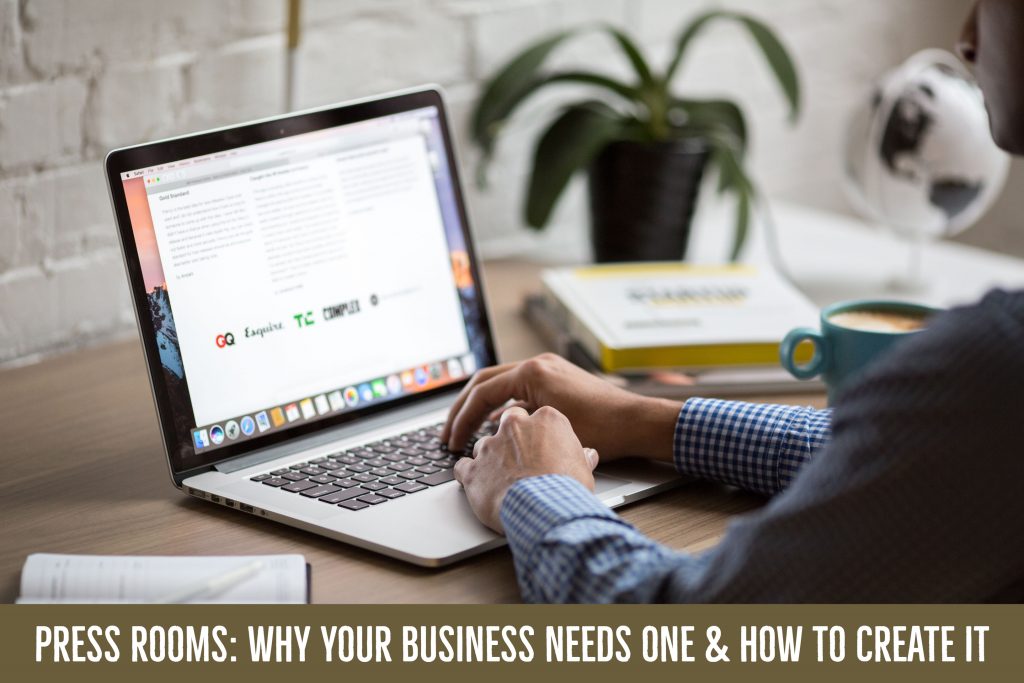
Why your business needs a press room, and how to create one

How many times have you gone online to research a prospective client’s organization only to find yourself mired in promotional gobbledygook that fails to clearly state what the organization does?

Now, put yourself in the shoes of an enterprising journalist under the gun on a rapidly-approaching deadline. Imagine how they must feel while slogging through materials laced with trade jargon, especially if they aren’t familiar with your industry.

That raises an even more basic point: where, on your website, do journalists go to find out the most basic information about you and your organization?

Do you have a press room clearly marked? Or do journalists have to scour your site to find it? And, once they’ve found your press room, what’s in it?

Do you even have a press room?

Press rooms contain the basics

At Wellons Communications, we organize press rooms under the premise that they cannot be too simple.

We approach their development with the same mindset as a journalist: who, what, when, where, why and how.

Like Jack Webb in the now-ancient television series Dragnet, we stick to the facts, ma’am. We put the answers out there as plainly and simply as possible.

Why the simplicity in press rooms?

The information in press rooms is basic for the simple reason that journalists often want the simplest possible explanation to extract and convey to their audience. This is particularly important if a journalist is on deadline or unfamiliar with your organization or industry.

Another important reason simplicity is paramount in press rooms is that you control the information being conveyed. Or, to say it another way, by making the answers available before the question is asked, you have made it as easy as possible for the journalist to say about you what you say about yourself.

This does not mean that you use over-the-top hyperbole. It means you boil your elevator speech down to a phrase or a few well-chosen words that will accurately and clearly tell people who you are and what you do.

What do you put in a press room?

No two press rooms are exactly alike, but there are basic elements that should serve as a foundation. These include:

  • Copy blocks, in varying length, that allow journalists to cut and paste information (a big help if they are on deadline). The blocks can range from 25 to 100 words in length and should include your website address. The purpose of the copy blocks is to define who you are, what you do, and how to get more information about you.
  • A fact sheet that provides the 5 W’s and H in succinct phrasing that can be adopted for use by journalists. The fact sheet should be free of hyperbole and contain only relevant factual information that is important to you, your industry, and your clients.
  • An undated overview release that provides a basic introduction about your organization. Keep it short (two pages max) and readable. The key element is to keep the release undated and limited to information that will not change very often.
  • Recent news. Include a list of the most recent press releases in chronological order. This allows journalists to see what you’ve been saying.
  • Press contact. Who should journalists call for more information? Name, phone number, email address and any other relevant information should be included. This should be one page, no more, and easy to find.
  • Graphics. It’s always nice to include a downloadable logo, photos, and a short video (:20 seconds is plenty).

Let media know you have a press room

The fact that you even have a press room provides a legitimate excuse to contact media and let them know that a) you exist and b) you are a readily available source of information for your organization, your industry, and any related topics that might be important to the media.

You can communicate this via an email, or you may want to go a little further and send the information out via some memorable tchotchke that will linger on a journalist’s desk and have a lengthy life span (i.e. a magnetic bookmark, a mousepad, pen cup or magnetic calendar).

If you are on a tight budget (who isn’t?), create two levels of tchotchkes: a more expensive tchotchke for your A-list media and a less expensive notification for everyone else.

So how do you create a press room?

We’re glad you asked. That’s what we do.

We are experienced and knowledgeable in developing and maintaining press rooms. That’s because we’ve been on the other side (the journalist’s side) combing through the web (and everywhere else) seeking information necessary to create a story about something that we just learned was important.

We know what journalists want and how to format a press room that meets their needs.

If your press room needs updating – or if you simply need a press room for the very first time – call on us.

We will be happy to look over what you have in mind—or even recommend what you need—and furnish you with a press room that will be valuable to you and the media you want to reach.

Are you too much in love with social media?

Social media—and its hold on businesses that are seeking to sell to those millions of fans—has dramatically changed how we market to wanna-be clients.

Businesses like to call on social media because it is relatively inexpensive, allows rapid formulation of messages and makes it easy to distribute information.

But how effective is social media? Does it really sell things and ideas? Or is it more “white noise” in a world where communications have become overloaded?

Social media’s sheer volume offers opportunities to influence customers 

Consider this: According to Social Media Today, “…. (the) total time spent on social media beats time spent eating and drinking, socializing, and grooming.”

That’s a lot of time. And that huge chunk of everyone’s daily life offers a tremendous marketing opportunity. But simply lobbing information on an indiscriminate basis without an organized plan and strategy is not the answer.

Because social media is so prevalent, businesses in love with social media often spew out tons of information that may not, in fact, be “share-worthy” or even interesting. That leads to less-than-satisfactory (or no) results and wastes the time and energy of the business.

In short, there’s more to it than simply “Let’s post a lot of news, information, and graphics on Facebook and Instagram.”

Social media CAN work, but only if it is based on newsworthy information

Cision, who prospered for decades as a leading press release distribution company, has morphed to a distributor of information via electronic resources.

Even though the means of distribution has changed, Cision has never varied from its belief that whatever information is shared, it has to have some value to both the reader and the organization that is issuing the news.

Cision’s philosophy is encapsulated the still-relevant article 7 PR mistakes to avoid in 2017. The theme of the article can be summed up in two ideas: you have to distribute information to reach your audience and your information has to be relevant.

So how do we approach social media at Wellons Communications?

We still subscribe to the old 5 W’s—who, what, when, where, why and how—but supported by modern technology and adjusted to fit prevailing attitudes.

When you put the new technology and attitudes aside, it still comes down to  clearly identifying who can use your information, when they can use it, and clearly stating and explaining why your message matters.

How we go about that is more complex. How and what revolves around putting together a well-thought out plan that integrates messaging and timing and generates results…. all without breaking your bank

We certainly believe social media is paramount in today’s communications environment.

But we look at social media as a means of distribution, not the “magic bullet” that makes people buy products, services and ideas. Posting information on the Internet doesn’t necessarily mean sales will skyrocket. It simply means you have distributed information.

At Wellons Communications, we take a total approach to public relations. We recognize the power of social media, but we also understand the value of traditional public relations, marketing, content, SEO and more.

They all work together to move the needle for clients, and no one plan fits all. There is only one plan that works—and that plan is the one that is best suited to accomplish your marketing goals, within your budget, and delivering the kinds of results that will enable your profitability and success.

Social media is more than likely part of that plan—but if you’re only doing that, and if you don’t have a clear idea of why, it may be time to rethink the relationship.

As you plan ahead and seek to more actively involve public relations in your overall marketing, keep Wellons Communications in mind.

We’re mindful that you only have so much money to invest in marketing and eager to help you use PR to serve as an affordable and reliable means of augmenting and strengthening your overall marketing program.

Why you need a head shot – and tips to take one yourself

If someone needed a professional headshot of you, do you have one? Not a picture of you cropped from a group photo or a selfie, but a quality, professional headshot. Surprisingly, many people don’t. Living in the busy world we do, it’s easy to let things that seem trivial slip through the cracks. However, headshots are more important than you think. 

Say you earn a big promotion or land your dream job. Chances are your employer is going to need a headshot of you on file, ready to go. Your new company might want to prepare a press release to announce your hiring, send an internal announcement or share the news on social. If you don’t have a photo, or if you only have a poor-quality shot, you could delay the process—and timing is essential in news. That could be a missed opportunity for your business.

It’s not only important to have a headshot for your company, but it’s also helpful for yourself. Most business professionals have a LinkedIn profile to network. This should reflect your background, accomplishments and brand—and a headshot goes a long way in telling your story.

So, how do you get a headshot that works? Your first option is to research local photographers and set up a session. Professionals truly know how to work with elements and put you in your best light, and because headshot sessions are extremely focused, they can be more affordable than you think. Try searching your local area to find a photographer whose method and style speaks to you.

Need something quicker? If you’re on a deadline or a budget, you can even recruit a friend to take a quality headshot.

Recently the Wellons team took new headshots for our website. Our little secret – we took all the photos ourselves, on an iPhone!

While working with a photographer will still produce the best results, here are some tips for taking your headshot:

  • Quality control

While having an expensive, professional camera isn’t necessary, photo quality is still important. Luckily, most smart phones come equipped with cameras that will suffice. You’ll want a high resolution, 300 DPI photo for your headshot.

  • Natural lighting

Lighting can make all the difference. When taking your photo, go outside and find a nice bright spot. It’s best to avoid the middle of the day when the sun is directly overhead. Many photographers shoot for morning or just before sunset when lighting is softer.

  • Simple background

Try to avoid busy backgrounds for your headshot. You’re the star of it, so pick a place where you stand out. Some of our suggestions: a brick wall, shrubbery or solid color panel.

  • Vertical and horizontal

Don’t forget to take two versions of your headshot – horizontal and vertical. You’ll want to have both in order to be prepared for the specific needs of any publication or purpose.

At Wellons Communications, we’ve written our share of new hire press releases, submitted announcements for placement in dozens of publications, and sent out news internally and externally—so we know how important it is for everyone from a new hire to the CEO to have a quality headshot.

Got another question about what you can do to best prepare and position your company? Shoot us an email or give us a call at will@wellonscommunications.com or 407-339-0879.


How would Santa use public relations?

Santa needs PR?

“C’mon,” you scoff. “Santa needs PR like I need a hole in the head.”

But, when you step back and think more about it, even Santa has a genuine need for public relations assistance, just like your business needs public relations to both build sales and address issues that potentially could get in the way of sales.

So what kinds of challenges might Santa face?

  • Start with the elves. Are they happy with what Santa pays them? And what if they go public with their salary concerns? How does Santa react? What does he tell the public? And how does Santa communicate how the elf challenge is being resolved in time for Christmas?
  • What about the reindeer? Animal activists may frown on how Santa puts the flying reindeer to work each Christmas. How does Santa treat the reindeer the other 364 days of the year? Are they overworked? Should they even be used to deliver gifts, or should they be retired in favor of advanced technical solutions for delivery?
  • Weather challenges. How will Santa’s journey south be affected by winter storms that may be lurking in his flight plan? Who will serve as Santa’s spokesman to relay reassurance that the presents will, indeed, make it to their rightful place under the Christmas tree?
  • Credibility. At what age will children begin to ask, “Is Santa real?” And what do parents tell their kids when it becomes obvious that they will be soon facing some tough questions?

How would public relations help Santa?

The world as we know it changes every moment, which creates ever-changing challenges.

A well-organized, thoughtful and up-to-date public relations plan backed by knowledgeable professionals provides a means of dealing with those challenges.

Santa’s brand image ranks second to none, and it would be PR’s job to keep it that way.

Because of his high visibility, everything about Santa – and we mean everything – is subject to public scrutiny. Santa’s PR team would need to anticipate the tough questions that potentially can emerge and be prepared to address them. At the same time, the PR team needs to find new and different ways to ensure that Santa continues to hold his leadership position.

So why do you need public relations?

As you prepare to address the 2019 business year, ask yourself the same kinds of questions Santa’s PR team would ask themselves as they look ahead.

Those questions would include:

  •  How can public relations help me market my product or service?
  • What kinds of newsworthy issues and challenges can hurt my business? And am I prepared to address them?
  • Are there newsworthy issues upon which I can capitalize?
  • Are my messages clear and understandable?
  • Will information about my product or service withstand intense scrutiny?
  • Am I missing an opportunity to affordably and effectively market my product or service by not including public relations?

Put public relations into your marketing mix for 2019

With the turn of the annual calendar right around the corner, now’s the time to look over your existing public relations plan and freshen it for 2019—or to create one altogether.

A practical action plan can be put into place to augment your overall marketing activities for a fraction of the cost of what you would invest in advertisements.

What’s more, when you bring an experienced, knowledgeable PR team to your side, you get considerably more than simply a publicity team. You acquire a team of marketing professionals who proactively help you sell your ideas while covering your back to fight off challenges that prove damaging to your enterprise.

Our recommendation: add PR to your marketing mix in 2019…think of it as a present for your enterprise.

Best wishes for a happy holiday season and a great 2019

At Wellons Communications, we have been fortunate to assist – and learn from – extraordinary clients whose successes we have been pleased to contribute to. We are, indeed, grateful for their business and we remind ourselves every day that it is a privilege to serve our clients and help them attain success.

We wish you the same kind of success for your business in the coming year.

Merry Christmas…and a prosperous and fruitful New Year.

How to get the most out of your elevator speech

Quick! When someone asks you “What do you do?”, what’s your answer?

Do you tell the questioner, in a single sentence, what you do – or do you focus on the benefits you provide your clients? Are you able to define, in as few words as possible, the results you deliver on behalf of your clients? Do you stick to that definition?

Emphasize the value you bring to your clients

We’ll start with our own business. When people ask members of our public relations account team “What do you do?” we respond, “We help our clients sell things.”

If the questioner wants more information, they will ask—and we’ll respond with a broader explanation of how we develop and distribute information that helps our clients reach their key audiences and helps them sell their products, services and ideas.

Too much information and too little time to absorb it

The avalanche of communications that has emerged in the 21st century demands your communications be clear, simple, to the point and quickly and easily understood. No surprise, social media has led the way in creating the crowded competition for attention, to wit:

  • Every second, on average, around 6,000 tweets are tweeted on Twitter, which corresponds to over 350,000 tweets sent per minute, 500 million tweets per day and around 200 billion tweets per year.[1]
  • Every minute on Facebook: 510,000 comments are posted, 293,000 statuses are updated, and 136,000 photos are uploaded.[2]
  • 3,607,080 Google searches are conducted worldwide each minute of every day.[3]
  • Ninety percent of all data was created in the past two years (that adds up to 2.5 quintillion bytes of data every day.) [4]

The result of all this electronic overload has upended and revolutionized print and broadcast media, as well as other communications industries.

On one hand, social media and electronic communications provide an entirely new means of reaching one’s audience. On the other hand, the sheer volume of information generated by electronic communications weigh down one’s ability to take it all in, much less make sense of so much information.

“Just show me the baby”

The communications overload places a premium on presenting your message in a quick, easy-to-understand format.

To illustrate, there was a leading executive in the theme park industry who was regarded as a terror for those who insisted on long, windy explanations. The theme park exec would, in front of everyone in the room, cut them off and say, in a loud voice, “Enough. Just show me the baby.”

While it wasn’t pleasant to hear, it was his way of saying “get to the point.”

We agree with his philosophy (if not his manner of management); it’s important to present your message quickly and simply, as well as memorably.

Brevity is king

Eons ago, one of the key tools for PR folks was Strunk & White’s Elements of Style. The book’s benefit can be summed up as “omit needless words.” It’s an old philosophy, but it’s one that holds true today.

Because of the crowded communications field, we have shifted to presenting and absorbing information in headline fashion. We cannot communicate simply enough. And that means communicating in as few words as possible.

In a day and age when we want people to read white papers that detail everything you would like them to know about your product and service, no one has time to read them.

They’d rather get a postcard with one sentence and an interesting graphic that drives your point home.

We work simply, but effectively

Our team at Wellons Communication recognizes how quickly communications is changing.

We understand how to craft a message that will cut through the clutter, gain recognition from your target audience, and provide them the reasons it is important for them to do what you want them to do.

If you want to start communicating with simplicity and clarity, think about our approach at Wellons Communications. We keep it short and to the point, focused on making your message more powerful in its simplicity.

We help you sell things, which is the whole point of being in business.

[1] http://www.internetlivestats.com/twitter-statistics/
[2] https://blog.microfocus.com/how-much-data-is-created-on-the-internet-each-day/
[3] https://blog.microfocus.com/how-much-data-is-created-on-the-internet-each-day/
[4] https://web-assets.domo.com/blog/wp-content/uploads/2017/07/17_domo_data-never-sleeps-5-01.png

Four things you need when distributing your company’s news

Suppose you tweaked your product or service so it made you the leader in your particular industry…and no one heard the news. Suppose you landed a huge client that elevated your position to a leader in your field…but couldn’t get the news out quickly enough.

Distributing important information is often as critical as the news itself. Current information, like vegetables in the supermarket, does not remain fresh for long.

If information sits around too long, it’s old news. And media has no interest in information that occurred very far in the past.

Distribution of information is one of those tasks that looks, on the surface, to be mundane, but for clients who want their news and information conveyed to their particular audiences, distribution the right way is critical.

Distribution requires a sense of urgency

If something important is happening with your business and you want others to learn about it, you must work quickly to get the information out.

That requires two (and sometimes three) components:

  • Developing the information you want to share
  • Distributing the information to media who can use it
  • And, if appropriate, illustrating the information

All of this has to come together while your information is still fresh.

If your information gets to media after it’s “use by” date, media view the information as “expired.” If it happened yesterday or in the past week—and is still relevant—it’s news. If it happened last month, it’s not news.

And keep in mind, the media is not sitting on pins and needles waiting for information about your enterprise. It is up to you (or your PR team) to get the information prepared and distributed to the media.

Distribution requires proper targeting

The act of distribution, unlike an advertising campaign, is inexpensive. What does cost, however, is the thought put into distribution.

Are you reaching all the targets who can use your news? Are there targets who may not be immediately visible to you? Are you including media that might have a tangential interest in your news?

Conversely, are you needlessly distributing your news to outlets who would have no conceivable interest in your news?

Your PR team should have the expertise to develop your news distribution plan, as well the tools that can accomplish distribution quickly, efficiently, and at a reasonable cost.

Timing is essential for distribution

When you submit your information to media is another key factor in generating coverage.

There is no exact formula for timing dissemination of news, other than to avoid issuing news to arrive when no one is in the newsroom to receive it or act on it. Other factors, such as breaking news on a national or local scale, make a huge difference, too, and sometimes there are other industry aspects to consider.

Generally speaking, Tuesday is the best time to issue a press release, followed by Thursday. The worst day to send your information is on Friday. Similarly, the best time to send your press release is early in the morning – at 9 a.m. to be exact, or later in the day at 8 p.m., Eastern Standard Time.

Distribution requires tools to effectively reach media

Technology has transformed how news and information is conveyed to media.

Thanks to social media, a click can reach media around the world in an instant.

But there’s more to it than simply emailing words to media outlets. Distribution should include graphics that bring your story to life and provide media with the ability to illustrate your story to their audience.

Follow up, on an individual-by-individual basis, is also important. Aggressive publicity requires telephone calls, texts, or emails to specific reporters who will have a special interest in your news. This, in turn, requires that your PR team know your product or service and know who will have a specific interest in your news.

We have the tools and the know-how to get the word out

At Wellons Communications, we offer the whole enchilada when it comes to getting the word out.

We employ national resources that can be tailored to reach just the audience you want, whether it’s distribution to a broad consumer category or a precisely-targeted trade category.

Further, we can arrange to have graphics prepared and attached to your story so that media can use the illustrations to bring your story to life.

When you have news to share, keep us in mind. We’ll be happy to help you craft a news distribution plan that will be affordable, cost-efficient, timely, and well-targeted.

Communications is a two-way street…starting with listening

One of the traits of successful business people is their ability to communicate. Successful businesses center around great ideas, augmented by the ability of their leaders to clearly and persuasively convey why their product or service is important for their target audiences. These leaders have the gift of simply and effectively underscoring the need for what they do and how their product or service benefits their customers.

But in many instances, there is a single trait that distinguishes a business leader from their competitors. It costs nothing but a modicum of patience and minimal amount of time.

That “magic bullet” is listening.

Active listening is a consistent trait among business leaders

Canadian business consultant Brady Wilson—whose Juice, Inc. has earned a reputation for improving communications between businesses, their customers and their own employees—offers an insightful tip on getting people to engage.

Wilson shares a story about a bank that decided to change its customer service interactions. Like every other financial institution, the bank was engaged in transactional currencies where one transaction was just like another.

However, by engaging the brain and the heart in tandem in a process called “human currencies,” the bank was able to increase the sale of financial products and increase customer loyalty.

The first step was to ask a question: “How are you doing?” By demonstrating empathy along with patience, bank employees were able to make a positive brain connection with the customer.

By recognizing the “human element” through active listening, positive changes in customer service interactions happened.

The notion of active listening

Active listening requires a conscious effort to hear not only the words that another person is saying, but more importantly, the complete message being communicated.

This demands that one pays attention to the other person.

You cannot allow yourself to become distracted by whatever else may be going on around you or by forming counter arguments while the other person is still speaking—nor can you allow yourself to get bored and lose focus on what the other person is saying.

In short, active listening is hard work. It requires patience and focus. It demands putting aside what you want to say and deferring to someone else for a few moments. And it demands a commitment to listen.

More about active listening

More examples and insights about aggressive listening are underlined by an insightful article by publisher Ashley Stahl, a Forbes contributor, who makes her point by showcasing three Ted Talks in an April 30, 2018 article.

 You can hear the Ted Talks here.

Try talking with Wellons Communications. We listen.

At Wellons Communications, we take listening very seriously. We know what we know…but there is a lot we don’t know. The only way we find out what we don’t know (and need to know) is listening.

We listen to what our clients want to accomplish. We pay attention to what our clients’ target audiences say they want, another form of listening that can point us in the right direction.

Only by listening to our clients can we accurately and successfully help them communicate – and listen – to their target audiences.

Take a shot at active listening and give us a call. Start by telling us what you want to do and, generally, how you want to go about it.

We’ll listen. We will ask questions. And then we will listen some more.

And, when it comes time for us to provide feedback, we will have a clear idea of what you want to accomplish and have sound ideas of how we can help you achieve your goals.

I’m ready to start listening to what you have to say. Call me at 407-339-08798 or email me at will@wellonscommunications.com.


How to make the most of your next media event

When people think of public relations, the image that often comes to mind is working a media event, pulling things together while reporters prepare for an on-camera interview. And while those in the biz know that’s certainly not an everyday occurrence, media events can be one of the most fun parts of the job.

They can also be the most challenging, with long hours and lots of logistics.

At Wellons Communications, we’ve worked our share of media events, from restaurant openings with big celebrities to most recently, Altamonte Springs’ Red Hot & Boom. With that solid experience behind us, we have developed a process to help media events go as smoothly as possible.

Here are some of our tips to help your next event go off without a hitch—and with a ton of media coverage.

Target your messages.

What matters to TV reporters might not matter to a freelancer photographer, and what’s important to a blogger might not be what a newspaper reporter wants to know. That is to say, when you’re telling the media about your event, make sure you’re giving them the information they need to do their job. Showing that you understand what they need and will make sure things go smoothly once they’re there goes a long way for getting media to cover your event.

Avoid the one and done.

When it comes to media events, you can’t send it and forget it. Getting live, in-person coverage is harder than getting a publication to run a press release because it involves a lot more coordination on both sides. Make sure you send all of the information multiple times, and don’t be afraid to call to make sure there aren’t any questions.

Be prepared.

When you’re working off-site and out of your element, this step can’t be overlooked. You have to think of everything. Make sure you have a hard copy of any press materials you might need to distribute, but make sure you can access any docs you might need digitally, too. Chance of rain? Think about plastic folders or laminating key documents (yes, we’ve walked out of events with soaking, ruined notebooks before…lesson learned!). Batteries or back-up chargers are always a good idea. And don’t forget to take care of yourself, too! You can’t do your job if you aren’t feeling well. Bring water and snacks, if you need to, and wear weather and event appropriate clothing.

Brief the whole team.

Even if only a few team members will be working on-site, make sure your entire team is in on the plan. They should know what to do if media members call the office, how they can assist you if needed and how they can reach you in any circumstance.

Celebrate success.

At the end of a long event, we just want to kick off our shoes and relax. But too often, it ends there. People don’t look back on the event and learn. What went well? What can we do better next time? Where did we have success? Experience is the best teacher, and this is the team’s chance to reap the rewards from a hard day’s work.

With this checklist in mind, we’ve had some seriously successful media events, and with these tips in mind, we know you’ll be able to maximize your next live media opportunity.

How PR can help you capitalize on unexpected opportunities

Unexpected marketing opportunities are akin to natural disasters like earthquakes, hurricanes, and cold weather events. You know they are coming, but they are impossible to predict when and where they will happen.

So, how do you forecast unexpected opportunities? How do you take advantage of them when they occur? And how can public relations serve as a means of seizing the moment and putting your product or service into the mind of your target audience?

Do you have the ability to see change before it happens?

Probably not. In fact, very few are blessed with that kind of intuition and those who possess that trait often are as lucky as they are intuitive.

That leaves the overwhelming majority of us relying on our inherent skills and experience to see an opportunity and then figure out a way to take advantage of it. While it may be difficult to foresee opportunities that are not immediately apparent, there are ways and means to sharpen your forward-looking skills.

Anticipate change

We’ve all heard the old adage “the only constant is change.”  It’s just as true today as it was when someone first coined it.

We must remind ourselves that change is never-ending and ask ourselves “What kind of changes should we anticipate?” and “How can I take advantage of the changes?”

As we charged into the 21st century, for example, we all recognized that the onset of digital communications was changing how we do business. Those who embraced the changes that digital communications brought to how we obtain information, what we do with the information, and how we interact with one another have become business legends.

Those who didn’t anticipate change or quickly respond to change (e.g. Kodak, Sears, Nokia, Blackberry) suffered. For an insightful recap relating the stories of corporate giants rooted in the belief that “some things never change” take a glance at an interesting story that appeared in 2013 in Fortune magazine: http://fortune.com/2013/05/08/why-corporate-giants-fail-to-change

How does PR help you change?

Public relations practitioners, like those of us at Wellons Communication, are constantly on the lookout for how the marketplace is changing for their clients and asking “What trends and new directions are newsworthy? Or could be newsworthy?”

Real-time marketing incorporates brand messages into current events – events that your clients and potential customers care about. If these messages are strategically crafted and quickly distributed, public relations can serve as a powerful tool to help you enhance your product or service.

Public relations can react quickly, often involving quick turnaround and on-the-fly responses to immediate events, but they can put your organization’s name at the top of the list in those media that matter to you and your clients.

We all become somewhat numb to the day-to-day experience of business, but for PR practitioners, it is all new.

PR folks don’t see what you see every single business day. From a distance, they can see what is working for you—and see those things that could be working even harder on your behalf. They can visualize unexpected opportunities.

Look and listen. And profit.

Our team at Wellons communications works hard at remaining abreast of current events, both in the everyday consumer workplace, as well as the more limited surroundings of the market category served by of our clients.

We enjoy digging into the news to see what is of interest to media. We look for how the mundane can suddenly be interesting. And we search within the market categories served by our clients for what media could—and should—be covering and how our clients can fit in.

We look and listen for opportunities. And when we see them, we articulate them and seize them. And when we succeed, our clients succeed.

Find out how we can help you succeed. Call or e-mail me (407-339-0879 or will@wellonscommunications.com) and let me share some additional stories about how PR can help you find unexpected opportunities and help you capitalize upon them.

2025 © Wellons Communications | Orlando PR Firm. All Rights Reserved.