
Why you need to keep your PR plan fresh and flexible

Let’s start with an assumption we can all agree upon.

You must have a plan to succeed in business. If you don’t know what you want to accomplish, you will never arrive at your destination.

It’s no different in public relations. A public relations program must have well-defined, realistic and measurable objectives before strategies and tactics can be developed.

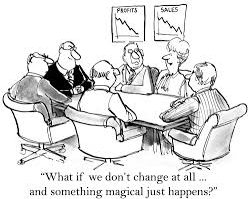
At the same time, it’s important to remain cognizant that nothing remains written in stone. Marketing environments are constantly changing. New competitors come forth. Old competitors change their products or introduce new ones. Regulatory mandates change. Social conditions change and new attitudes emerge.

Simply stated, change is the only constant upon which you can depend.

A three-step approach to PR planning

At Wellons Communications, we keep our clients’ plans updated by conducting a three-step process:

  1. We review and assess what’s happened in the past year.
  2. We consider our client’s overall business objectives and use them as a basis for revising and developing the next steps in our client’s PR plan.
  3. We develop a plan of attack for the upcoming year.

The public relations plan that develops from our three-stage approach helps you know where your PR program is headed and, from our vantage point, helps us verify what we do is in concert with your overall business objectives.

“Everybody has a plan…until they get punched in the mouth.”

— Former heavyweight boxing champion Mike Tyson

Successful business leaders likely would not deign to take advice from an individual with a history like one-time boxing great Mike Tyson. But Tyson’s memorable quote is particularly well-suited when it applies to keeping your PR plans up to date.

Tyson’s quote serves as a reminder that PR plans, particularly plans that address crisis, must be capable of being activated quickly and must be flexible enough to adjust to uncertain situations. Your business must be mindful of all possible negative scenarios and have appropriate responses prepared.

Plans, indeed, are important, but they also must be flexible enough to deal with challenging situations you might not ordinarily address.

If you believe a crisis cannot happen to you, think again.

Start with Hurricane Dorian.

How did the hurricane affect your business? How did you interact with your customers before and after the hurricane’s visit to Central Florida? Were there opportunities (e.g. increased sales to meet unusually high demand for storm-related products)? Were there special concerns you needed to identify and resolve before the storm (e.g. what your clients needed to do in relation to your product or service)?

Were there messages you needed to convey to your target audiences? Was there information you needed to remind your clients about? Did you take any action to let your clients know how they could reach you or ask questions of you before and after the storm?

One of our roles is to ensure our clients are aware of the need for some sort of crisis plan and crisis procedures, even to the point of conducting a test run to help iron out any holes in the plan. Like Tyson said, plans are great until you have to actually use them.

2020 is fast approaching. So, start your PR planning for the new year now.

The new year will be here before you know it.  And that means your PR planning needs to be thought out now in order to get it underway in January.

If you don’t have a PR program, consider augmenting your overall marketing plan with a PR initiative. And if you already have a PR program, it’s time to dust it off and ensure your PR action plan is in sync with your other marketing activities.

Not sure how to develop a robust, affordable and doable plan?

Call us at Wellons Communications. We serve a great number of mid-size businesses that have regional and local needs…and will be happy to review your business’ current situation and see how we can affordably and realistically help you meet your needs.

What is a news peg, and how can you use them to get publicity for your business?

When we first sit down with clients, one of the things we consistently hear is “We want to become better known. We need recognition for our product (or service).”

Public relations, of course, goes considerably beyond getting recognition in print, broadcast and online media. But coverage over and above paid advertising is the primary reason why companies and organizations call on us to augment their marketing program.

News coverage demands…news

The first rule of publicity is that one’s story has to possess newsworthy qualities.

That means the information you serve up to news media has to have some news value that will benefit or interest their audience.

So how do you sift through the mountain of information about your organization and isolate what will be interesting to media…and what won’t?

Examples of news pegs

Basic information about your product or service, by itself, is not particularly newsworthy.

But, when you link your information to another story, the combined effect can be magic. It all comes down to finding a peg on which to hang your story—a news peg (or news hook).

Examples include tying your story to something like:

  • A new wrinkle (and consumer benefit) to your product or service
  • A holiday or significant anniversary
  • An award recognizing achievement via your product or service
  • A high-visibility topic already in the news
  • A special event showcasing something new or different about you
  • An opinion on a topic of interest from an expert on your staff
  • A local twist on a story generating national attention
  • Information from a survey or poll on a topic of interest
  • Identification of a trend you are witnessing, or a trend that you foresee

Connecting to other news pegs

Identifying news pegs is an ongoing process that demands remaining aware of what’s going on in the world – or your industry. One needs to be constantly in tune with new and different trends (or what might signal a trend), what’s popular with consumers or within a trade category (or what might be popular), and of how and where your story can fit into news coverage.

A financial service provider, for example, might want to remind media that one of their authorities is available as a resource and is willing to provide commentary (i.e. a quote) or observe ongoing trends just after the start of the year, when tax preparation goes into high gear.

A restaurant might want to explain why their menu conforms to their target market’s tastes and preferences, or feature a menu item they can totally
“own” in the mind of their audience.

A company serving a narrow segment within a particular trade category (e.g. suppliers and vendors in warehousing) can offer an observation of how their particular industry is changing and provide examples of how they are adjusting to those changes. Or, if they recognize a change in another industry, project how that change may affect their industry.

We scour the media for what’s getting coverage

At Wellons Communications, it’s part of our job to be aware, at all times, at what’s being covered and how we can connect our clients to what’s in the news.

Every day, weekends included, we are news junkies, watching what’s getting coverage, aggressively looking for story opportunities or creating opportunities others might not see.

Rather than simply issue press releases, which media recognize as self-serving, we seek to augment ongoing stories with information reporters will not know unless someone like us tells them.

That means knowing about our clients, what they are doing, learning what they are seeing, and identifying targets who can use that information. It means our clients must tell us what they are doing and seeing and requires us to listen and take that information and connect it to news media.

What’s more, when you bring an experienced, knowledgeable PR team to your side, you get considerably more than simply a publicity team. You acquire a team of marketing professionals who proactively help you sell your ideas while covering your back to fight off challenges that prove damaging to your enterprise.

Consider publicity in your overall marketing mix

If you find yourself spending the vast majority of your marketing budget on paid advertising, you may be overlooking the opportunity afforded you by placement of a high-value news story about your organization.

The cost of augmenting your marketing program with an ongoing public relations/publicity program is minimal, particularly in comparison with the kind of money that is frequently invested in paid advertising. Although news coverage is not guaranteed, the publicity it can generate when it is successful can be substantial…at considerably less cost than advertising.

When you are ready to tell the media about yourselves, give us a call

Wellons Communications has been identifying news pegs — and generating results for clients — for more than a decade.

We have news experience in our professional backgrounds and know how to recognize what’s newsworthy.

Want to learn more? Call or email me (407-339-0879 or will@wellonscommunications.com) and tell me your story. I’ll be happy to relate to you how we can hang your story on the right news peg.

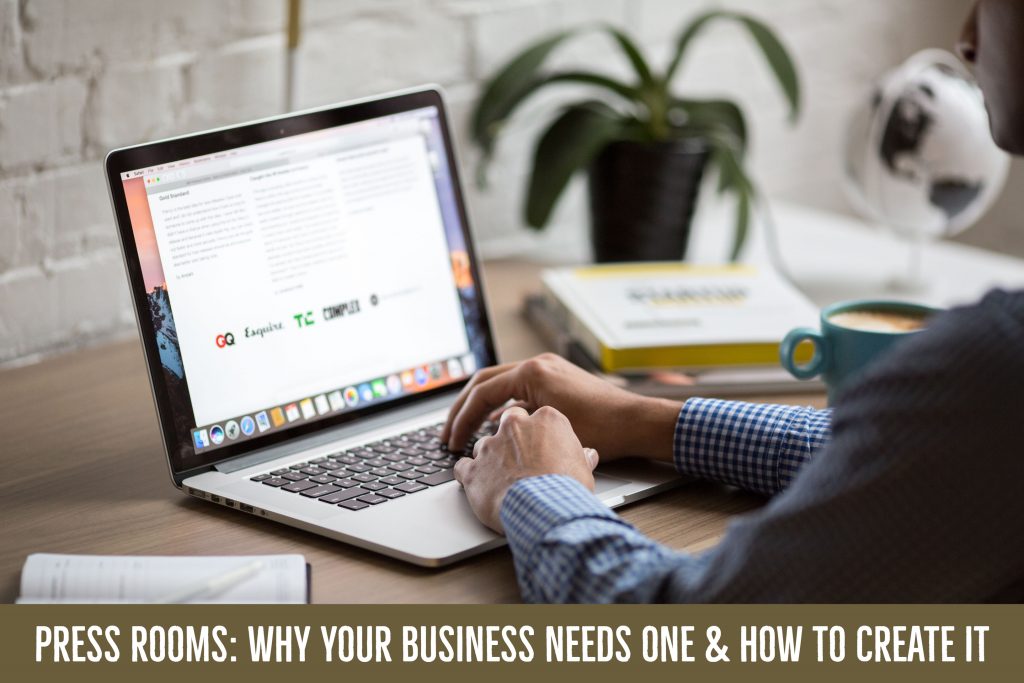
Why your business needs a press room, and how to create one

How many times have you gone online to research a prospective client’s organization only to find yourself mired in promotional gobbledygook that fails to clearly state what the organization does?

Now, put yourself in the shoes of an enterprising journalist under the gun on a rapidly-approaching deadline. Imagine how they must feel while slogging through materials laced with trade jargon, especially if they aren’t familiar with your industry.

That raises an even more basic point: where, on your website, do journalists go to find out the most basic information about you and your organization?

Do you have a press room clearly marked? Or do journalists have to scour your site to find it? And, once they’ve found your press room, what’s in it?

Do you even have a press room?

Press rooms contain the basics

At Wellons Communications, we organize press rooms under the premise that they cannot be too simple.

We approach their development with the same mindset as a journalist: who, what, when, where, why and how.

Like Jack Webb in the now-ancient television series Dragnet, we stick to the facts, ma’am. We put the answers out there as plainly and simply as possible.

Why the simplicity in press rooms?

The information in press rooms is basic for the simple reason that journalists often want the simplest possible explanation to extract and convey to their audience. This is particularly important if a journalist is on deadline or unfamiliar with your organization or industry.

Another important reason simplicity is paramount in press rooms is that you control the information being conveyed. Or, to say it another way, by making the answers available before the question is asked, you have made it as easy as possible for the journalist to say about you what you say about yourself.

This does not mean that you use over-the-top hyperbole. It means you boil your elevator speech down to a phrase or a few well-chosen words that will accurately and clearly tell people who you are and what you do.

What do you put in a press room?

No two press rooms are exactly alike, but there are basic elements that should serve as a foundation. These include:

  • Copy blocks, in varying length, that allow journalists to cut and paste information (a big help if they are on deadline). The blocks can range from 25 to 100 words in length and should include your website address. The purpose of the copy blocks is to define who you are, what you do, and how to get more information about you.
  • A fact sheet that provides the 5 W’s and H in succinct phrasing that can be adopted for use by journalists. The fact sheet should be free of hyperbole and contain only relevant factual information that is important to you, your industry, and your clients.
  • An undated overview release that provides a basic introduction about your organization. Keep it short (two pages max) and readable. The key element is to keep the release undated and limited to information that will not change very often.
  • Recent news. Include a list of the most recent press releases in chronological order. This allows journalists to see what you’ve been saying.
  • Press contact. Who should journalists call for more information? Name, phone number, email address and any other relevant information should be included. This should be one page, no more, and easy to find.
  • Graphics. It’s always nice to include a downloadable logo, photos, and a short video (:20 seconds is plenty).

Let media know you have a press room

The fact that you even have a press room provides a legitimate excuse to contact media and let them know that a) you exist and b) you are a readily available source of information for your organization, your industry, and any related topics that might be important to the media.

You can communicate this via an email, or you may want to go a little further and send the information out via some memorable tchotchke that will linger on a journalist’s desk and have a lengthy life span (i.e. a magnetic bookmark, a mousepad, pen cup or magnetic calendar).

If you are on a tight budget (who isn’t?), create two levels of tchotchkes: a more expensive tchotchke for your A-list media and a less expensive notification for everyone else.

So how do you create a press room?

We’re glad you asked. That’s what we do.

We are experienced and knowledgeable in developing and maintaining press rooms. That’s because we’ve been on the other side (the journalist’s side) combing through the web (and everywhere else) seeking information necessary to create a story about something that we just learned was important.

We know what journalists want and how to format a press room that meets their needs.

If your press room needs updating – or if you simply need a press room for the very first time – call on us.

We will be happy to look over what you have in mind—or even recommend what you need—and furnish you with a press room that will be valuable to you and the media you want to reach.

Are you too much in love with social media?

Social media—and its hold on businesses that are seeking to sell to those millions of fans—has dramatically changed how we market to wanna-be clients.

Businesses like to call on social media because it is relatively inexpensive, allows rapid formulation of messages and makes it easy to distribute information.

But how effective is social media? Does it really sell things and ideas? Or is it more “white noise” in a world where communications have become overloaded?

Social media’s sheer volume offers opportunities to influence customers 

Consider this: According to Social Media Today, “…. (the) total time spent on social media beats time spent eating and drinking, socializing, and grooming.”

That’s a lot of time. And that huge chunk of everyone’s daily life offers a tremendous marketing opportunity. But simply lobbing information on an indiscriminate basis without an organized plan and strategy is not the answer.

Because social media is so prevalent, businesses in love with social media often spew out tons of information that may not, in fact, be “share-worthy” or even interesting. That leads to less-than-satisfactory (or no) results and wastes the time and energy of the business.

In short, there’s more to it than simply “Let’s post a lot of news, information, and graphics on Facebook and Instagram.”

Social media CAN work, but only if it is based on newsworthy information

Cision, who prospered for decades as a leading press release distribution company, has morphed to a distributor of information via electronic resources.

Even though the means of distribution has changed, Cision has never varied from its belief that whatever information is shared, it has to have some value to both the reader and the organization that is issuing the news.

Cision’s philosophy is encapsulated the still-relevant article 7 PR mistakes to avoid in 2017. The theme of the article can be summed up in two ideas: you have to distribute information to reach your audience and your information has to be relevant.

So how do we approach social media at Wellons Communications?

We still subscribe to the old 5 W’s—who, what, when, where, why and how—but supported by modern technology and adjusted to fit prevailing attitudes.

When you put the new technology and attitudes aside, it still comes down to  clearly identifying who can use your information, when they can use it, and clearly stating and explaining why your message matters.

How we go about that is more complex. How and what revolves around putting together a well-thought out plan that integrates messaging and timing and generates results…. all without breaking your bank

We certainly believe social media is paramount in today’s communications environment.

But we look at social media as a means of distribution, not the “magic bullet” that makes people buy products, services and ideas. Posting information on the Internet doesn’t necessarily mean sales will skyrocket. It simply means you have distributed information.

At Wellons Communications, we take a total approach to public relations. We recognize the power of social media, but we also understand the value of traditional public relations, marketing, content, SEO and more.

They all work together to move the needle for clients, and no one plan fits all. There is only one plan that works—and that plan is the one that is best suited to accomplish your marketing goals, within your budget, and delivering the kinds of results that will enable your profitability and success.

Social media is more than likely part of that plan—but if you’re only doing that, and if you don’t have a clear idea of why, it may be time to rethink the relationship.

As you plan ahead and seek to more actively involve public relations in your overall marketing, keep Wellons Communications in mind.

We’re mindful that you only have so much money to invest in marketing and eager to help you use PR to serve as an affordable and reliable means of augmenting and strengthening your overall marketing program.

Social media check-up: Is your business healthy?

With more than 2 billion people on social media, we’d be surprised to find someone who doesn’t think it’s important for his or her business.

Whether you’re just getting started or you’re a seasoned pro, social media inevitably comes with a lot of questions. Am I doing this right? Am I getting the most out of it? Where do I even start? We’ve heard them all.

And we can relate! Social media has been on our minds at Wellons Communications lately. Our CEO recently led a workshop on social media, and as a staff, we did a deep dive on best practices across platforms.

A short check-up never hurts. Below are five essentials for your business’ social media—so you can be sure you’re in tip-top shape.

  • Know your platform
    There are a multitude of social media platforms out there, from Facebook and Instagram to LinkedIn and Google+. Each platform operates differently, attracts a different demographic, and has different requirements. For instance, Instagram is driven by visuals. LinkedIn attracts a more professional crowd. Twitter allows the use of hashtags. Understanding each platform and selecting the right ones for your business can set you up for success.
  • Set a strategy
    Just like with any other marketing and public relations tactic, you must establish a plan. Jumping head first into social media without setting a strategy is like driving down a dark road without headlights. Eventually, you’re going to crash. Ask yourself what you want from social media. Do you want direct ROI? Do you want to be seen as a thought leader? Your goals will drive the strategy you use.
  • Craft your content
    What you post on social media defines your company, just as much as a sales presentation or your website. Content shows viewers what your company is, what it does and what it stands for—so it has to support your goals. What does your brand want to convey? What is your aesthetic, visually and tonally? Do you post videos, photos, articles or something else? Take some time to set some brand standards. After all, posting to a personal account is not the same as posting to a business page.
  • Stay consistent
    To effectively use social media, you have to be engaged. That means posting regularly (this is where that plan comes in!), responding promptly to comments and concerns, and actively listening to what is being said about your company on social media. Are you doing all you can to protect your reputation and keep your voice out there?
  • Keep up-to-date
    The social media landscape is constantly changing and growing. It’s essential to stay in the conversation and up-to-date on the latest trends to remain relevant. Are you reading up on changes on platforms or best practices in your industry? At Wellons, we make sure to brush up periodically to make sure we stay sharp.

If you still have questions or want to ensure your company is getting the most out of this powerful tool, don’t hesitate to reach out. We’d love to share our knowledge and expertise with you. Give us a call at 407-339-0879 or email Will at will@wellonscommunications.com.

How to make the most of your next media event

When people think of public relations, the image that often comes to mind is working a media event, pulling things together while reporters prepare for an on-camera interview. And while those in the biz know that’s certainly not an everyday occurrence, media events can be one of the most fun parts of the job.

They can also be the most challenging, with long hours and lots of logistics.

At Wellons Communications, we’ve worked our share of media events, from restaurant openings with big celebrities to most recently, Altamonte Springs’ Red Hot & Boom. With that solid experience behind us, we have developed a process to help media events go as smoothly as possible.

Here are some of our tips to help your next event go off without a hitch—and with a ton of media coverage.

Target your messages.

What matters to TV reporters might not matter to a freelancer photographer, and what’s important to a blogger might not be what a newspaper reporter wants to know. That is to say, when you’re telling the media about your event, make sure you’re giving them the information they need to do their job. Showing that you understand what they need and will make sure things go smoothly once they’re there goes a long way for getting media to cover your event.

Avoid the one and done.

When it comes to media events, you can’t send it and forget it. Getting live, in-person coverage is harder than getting a publication to run a press release because it involves a lot more coordination on both sides. Make sure you send all of the information multiple times, and don’t be afraid to call to make sure there aren’t any questions.

Be prepared.

When you’re working off-site and out of your element, this step can’t be overlooked. You have to think of everything. Make sure you have a hard copy of any press materials you might need to distribute, but make sure you can access any docs you might need digitally, too. Chance of rain? Think about plastic folders or laminating key documents (yes, we’ve walked out of events with soaking, ruined notebooks before…lesson learned!). Batteries or back-up chargers are always a good idea. And don’t forget to take care of yourself, too! You can’t do your job if you aren’t feeling well. Bring water and snacks, if you need to, and wear weather and event appropriate clothing.

Brief the whole team.

Even if only a few team members will be working on-site, make sure your entire team is in on the plan. They should know what to do if media members call the office, how they can assist you if needed and how they can reach you in any circumstance.

Celebrate success.

At the end of a long event, we just want to kick off our shoes and relax. But too often, it ends there. People don’t look back on the event and learn. What went well? What can we do better next time? Where did we have success? Experience is the best teacher, and this is the team’s chance to reap the rewards from a hard day’s work.

With this checklist in mind, we’ve had some seriously successful media events, and with these tips in mind, we know you’ll be able to maximize your next live media opportunity.

Why you need to include PR in your marketing plan

Let’s face it.

When you put pencil to paper in developing your marketing program, the first question usually is “How much do we have to budget for advertising?”

The answer, inevitably leads to spending an inordinate amount of time (and money) on advertising, which, in turn, often leads to results that are inconclusive or, at best, difficult to quantify.

Often overlooked in the marketing equation is public relations. But PR, if properly employed and conducted on a consistent basis can give you the most bang for your buck.

PR doesn’t cost much and can deliver huge payback

Public relations, usually in the form of publicity, has enormous potential. Positive publicity can amplify your brand name, distinguish your service or product from everyone else’s, and validate what you say about yourself.

The good news is that PR costs considerably less than advertising. The challenge is that PR is not totally predictable. Getting your name in the news depends on what is happening in the news and requires that your product or service has information of news value to share.

And in order to remain in the news, your company has to keep making news. That is where having a qualified PR firm can help. Any qualified firm has strong relationships with the media. They know how to reach the right people and find the angle that maximizes the chance of coverage.

That is another way PR professional can make a big difference– by identifying and clarifying what your product or service does for your target audience. It’s a message that needs to be told many different ways and tailored to fit the particular audience that is reached by a specific media (e.g. transportation company execs gravitate toward business and transportation news outlets).

Further, you have to tell your story again and again. PR professionals are experts at finding new ways to tell your story and keep your name in the news.

How much should I be spending on PR?

No two budgets are exactly alike, just as no two companies are exactly alike. A precise budget for PR is difficult to pin down. A review of basic costs, however, will give you some idea of what’s involved and what you pay for when you use a qualified public relations firm.

Generally speaking, there are two primary costs you will incur when hiring a PR firm:

Monthly fee: A modest number of account service hours times an hourly rate that falls within your budget capabilities.

Out-of-pocket expenses (billed at net): Basic costs like travel, mileage, copying, postage, graphic design costs, etc.

So what does that translate to in terms of a monthly budget? Start with something affordable, say, $750-1,000 per month for a combination of fees and out-of-pocket expenses and revise the budget accordingly as your relationship and results develop.

What should you expect in terms of results?

Unless you have a blockbuster story to tell, results usually do not manifest themselves for about 90 days.

It takes that long to get information prepared, distributed, absorbed by media, and followed up upon.

Why 90 days? For print media, it takes that long to get ahead of print deadlines. For online media, the deadline is much shorter, but it requires some time to break through the messy, competitive clutter of information that online news outlets receive and must consider. For broadcast media, results require video or audio that lends itself to TV, radio or online broadcast.

The point is that PR, if given an adequate budget and sufficient time, can serve as a marketing tool that can equal, exceed, or at a minimum, complement your entire marketing program. In terms of cost-effectiveness, PR is often the best bet for ROI.

Call me (407-339-0879) or email me and allow me to pass along some vivid examples of how (and why) PR must be a key element of your marketing mix.

How PR can help you capitalize on unexpected opportunities

Unexpected marketing opportunities are akin to natural disasters like earthquakes, hurricanes, and cold weather events. You know they are coming, but they are impossible to predict when and where they will happen.

So, how do you forecast unexpected opportunities? How do you take advantage of them when they occur? And how can public relations serve as a means of seizing the moment and putting your product or service into the mind of your target audience?

Do you have the ability to see change before it happens?

Probably not. In fact, very few are blessed with that kind of intuition and those who possess that trait often are as lucky as they are intuitive.

That leaves the overwhelming majority of us relying on our inherent skills and experience to see an opportunity and then figure out a way to take advantage of it. While it may be difficult to foresee opportunities that are not immediately apparent, there are ways and means to sharpen your forward-looking skills.

Anticipate change

We’ve all heard the old adage “the only constant is change.”  It’s just as true today as it was when someone first coined it.

We must remind ourselves that change is never-ending and ask ourselves “What kind of changes should we anticipate?” and “How can I take advantage of the changes?”

As we charged into the 21st century, for example, we all recognized that the onset of digital communications was changing how we do business. Those who embraced the changes that digital communications brought to how we obtain information, what we do with the information, and how we interact with one another have become business legends.

Those who didn’t anticipate change or quickly respond to change (e.g. Kodak, Sears, Nokia, Blackberry) suffered. For an insightful recap relating the stories of corporate giants rooted in the belief that “some things never change” take a glance at an interesting story that appeared in 2013 in Fortune magazine: http://fortune.com/2013/05/08/why-corporate-giants-fail-to-change

How does PR help you change?

Public relations practitioners, like those of us at Wellons Communication, are constantly on the lookout for how the marketplace is changing for their clients and asking “What trends and new directions are newsworthy? Or could be newsworthy?”

Real-time marketing incorporates brand messages into current events – events that your clients and potential customers care about. If these messages are strategically crafted and quickly distributed, public relations can serve as a powerful tool to help you enhance your product or service.

Public relations can react quickly, often involving quick turnaround and on-the-fly responses to immediate events, but they can put your organization’s name at the top of the list in those media that matter to you and your clients.

We all become somewhat numb to the day-to-day experience of business, but for PR practitioners, it is all new.

PR folks don’t see what you see every single business day. From a distance, they can see what is working for you—and see those things that could be working even harder on your behalf. They can visualize unexpected opportunities.

Look and listen. And profit.

Our team at Wellons communications works hard at remaining abreast of current events, both in the everyday consumer workplace, as well as the more limited surroundings of the market category served by of our clients.

We enjoy digging into the news to see what is of interest to media. We look for how the mundane can suddenly be interesting. And we search within the market categories served by our clients for what media could—and should—be covering and how our clients can fit in.

We look and listen for opportunities. And when we see them, we articulate them and seize them. And when we succeed, our clients succeed.

Find out how we can help you succeed. Call or e-mail me (407-339-0879 or will@wellonscommunications.com) and let me share some additional stories about how PR can help you find unexpected opportunities and help you capitalize upon them.

Competing for attention in the Age of Distraction

Think for a moment about all the distractions that compete for attention in your work life.

Phone calls, texts, emails, meetings. Questions from employees. Questions from clients. Unanticipated interruptions. Add to this your personal life, which has the same ongoing level of activity.

WC#1-18, Jan 25, 2018The result? Very little time to stop and ask “Where are we, where are we going, how are we going to get there, and what are we going to say about ourselves that will help us achieve our goals?”

Now, put yourself in the mindset of your target audience and your clients. They suffer from the same busy professional and personal challenges you experience.

The point? Offices – and the people who manage and work in them – are enormously busy. In short, offices are centers of multi-tasking that offer little or no time to pause and contemplate the next steps.

Working in the Age of Distraction

Cal Newport, a computer scientist at Georgetown University, is the author of Deep Work: Rules for Focused Success in a Distracted World.

Newport points out that constant distractions that challenge our work life tend to dominate our work life. They take away from what Newport calls Deep Work, which is the ability to focus without distraction on a demanding task.

According to Newport, Shallow Work (the opposite of Deep Work) fragments and pre-empts one’s ability to come up with one of those benchmark “A-ha” solutions that can make your unique selling proposition stand apart.

Apply Deep Work to communications and you get a sense of how important it is to think differently and clearly, without distraction, and how it can transform how you go about your business and what you say about it.

You can get learn more about Deep Work in a fascinating report that recently was broadcast on National Public Radio.

Getting your message past the distractions

So, how does Wellons Communications help you succeed in the Age of Distraction?

We adhere to the notion of keeping it simple. We develop strategies, approaches, and messages aimed at battling through the communications clutter.

When possible, we use simple, declarative sentences. And we project the same message over and over again, using consistency to ensure that once we have captured attention, our message is reinforced until our audience has absorbed and agreed with it.

What does simplicity do for your marketing?

Our “keep it simple” approach delivers three key benefits to your overall marketing approach:

1. Simple messages are easy to understand.

2. Simple messages answer “What’s in it for me?”

3. Simple messages attract attention.

The most visual example of great message-making in its simplest form is a billboard. They are quick to read, present a single thought, and tell you what they think you need to learn.

Let us simplify your public relations and communications.

If you have read this far, you’ve been distracted enough. If our message has worked, we hope you will want to learn more about how Wellons Communications can assist you in marketing your product or service. You can reach me at 407-339-0879 or by email at will@wellonscommunications.com.

Believe me, I will be happy for the distraction.

UCF Knights: Marketing and Football Champions

While people across the country held their breath watching Alabama’s last-second defeat of Georgia in the College Football Playoff National Championship on Monday, some in Orlando slept soundly.

UCF Marketing ChampionsWe can only assume the athletic department staff at the University of Central Florida was among them. Why? They weren’t concerned with who would be named the national champion—because they had already declared themselves the true champions.

The Knights were the only undefeated team in college football this year. They took down the Auburn Tigers (who had previously beaten Alabama and Georgia) in the Chick-fil-A Peach Bowl. Without a chance to compete in the playoff, they did everything they could do.

While it’s true many have laughed UCF’s claims off, that’s not the point. Whether UCF deserves the title isn’t the point, either.

The point is that this is one of the best marketing moves of 2018 so far, and someone at UCF knows what they’re doing. With controversy comes discussion. So far, the announcement has given the school free publicity in top national publications, such as The Washington Post, Yahoo Sports, USA Today, and ESPN.

Now, the best season UCF has ever had—and might ever have—will result in obtaining top recruits, national recognition and better fan support.

What UCF does with that depends on what the Knights do next season—but they are certainly setting themselves up to have a better chance by making the most of their momentum now.

Building on momentum is something we do a lot here at Wellons, so if you have marketing questions of your own, let us help you take a page from UCF’s playbook. Don’t hesitate to reach out at 407-339-0879 or at will@wellonscommunications.com.

2025 © Wellons Communications | Orlando PR Firm. All Rights Reserved.